
Article
Hyatt's Airline Loyalty Reset Shows Why Partnerships Become Dead-End Experiences
Hyatt is ending its enhanced American Airlines relationship while launching a new Delta collaboration and maintaining a newer Air Canada Aeroplan relationship. The Revenue Unknown is whether airline-hotel partnerships can become real experience systems instead of benefit tables customers only discover when they fail.
- Published
- September 9, 2026
- Updated
- September 9, 2026
- Reading time
- 11 min
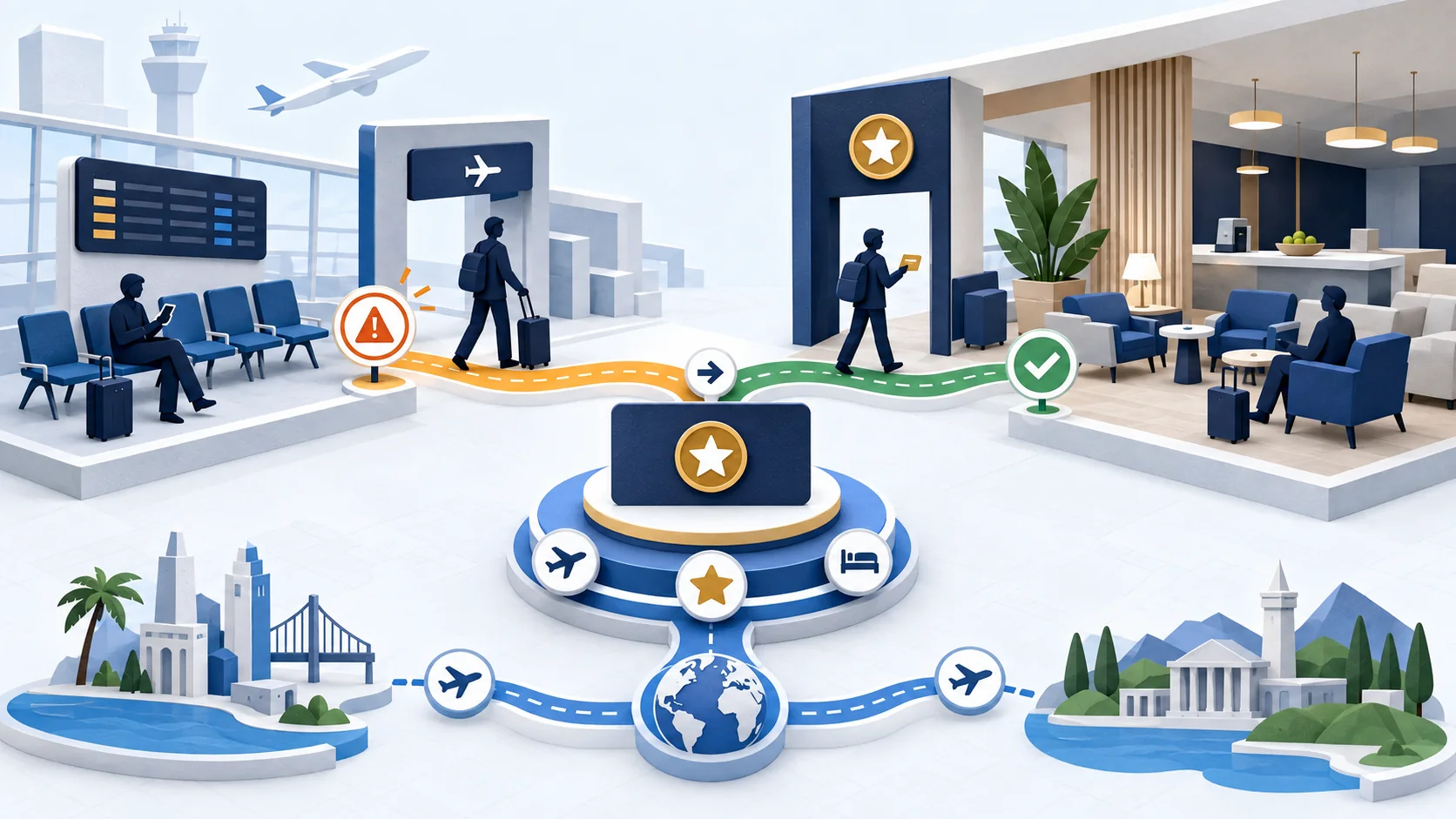
Hyatt's airline loyalty reset is not only a points story.
On September 9, 2026, Hyatt told members that its enhanced relationship with American Airlines would not continue. Linked members still have transition windows, and American says AAdvantage members can continue earning 500 base miles for eligible Hyatt stays after the broader change. But the reciprocal enhanced relationship that made American and Hyatt feel more connected is moving toward an end state.
The same day, Delta and Hyatt announced a new long-term, exclusive collaboration between Delta SkyMiles and World of Hyatt. Delta described the relationship as designed to let members enjoy loyalty benefits across both brands, with initial benefits including dual earn for eligible elite members when they fly Delta or stay with Hyatt.
That was not Hyatt's only airline move in 2026. On July 15, Air Canada and Hyatt launched a new Aeroplan and World of Hyatt collaboration with account linking, earning, redemption, point conversion, status challenge paths, premium cardholder offers, Hyatt awards, and Air Canada flight reward certificates.
Read together, these announcements show something more important than one partnership ending and another beginning.
They show airline-hotel loyalty becoming a live experience system.
For Transformidy, the question is not whether Hyatt made the right partner choice. The better question is whether airline-hotel partnerships are still being underused. Too many partnerships are designed as benefit mechanics: earn points here, redeem points there, match status during a campaign, register before a deadline, read terms, remember exceptions, and hope the front line knows what still applies.
That is not experience continuity.
That is customer self-integration.
The Revenue Unknown is this:
How much travel value remains unused because airline-hotel partnerships reward transactions after the fact instead of recognizing the traveller's actual journey before, during, and after the trip?
The Partnership Dead End
A dead-end experience appears when a customer can see value but cannot move through it cleanly.
Airline-hotel partnerships create this risk constantly. A member may know two brands are linked but not understand which benefits apply, when a registration window closes, whether elite status matters, what booking channel counts, which rates qualify, whether a credit-card benefit stacks, or what happens after a partnership changes.
The most painful version is the unaware customer.
An AAdvantage member may have used Hyatt because the relationship with American felt familiar. They may have linked accounts years earlier. They may have heard about reciprocal benefits from a colleague, a travel blog, a status challenge, or a prior stay. They may not read every program email or transition page. Then, at the moment of use, they discover the benefit no longer works the way they expected.
The hotel associate may be following the rules correctly. American may have published an update. Hyatt may have provided transition language. None of that prevents the customer from feeling rejected by a promise they believed still existed.
That is the dead end: not the end of the partnership itself, but the moment when partnership logic fails to travel into the customer experience.
The customer is not angry because a table of benefits changed. The customer is angry because they organized part of a trip around an assumed relationship and encountered the change only at the boundary.
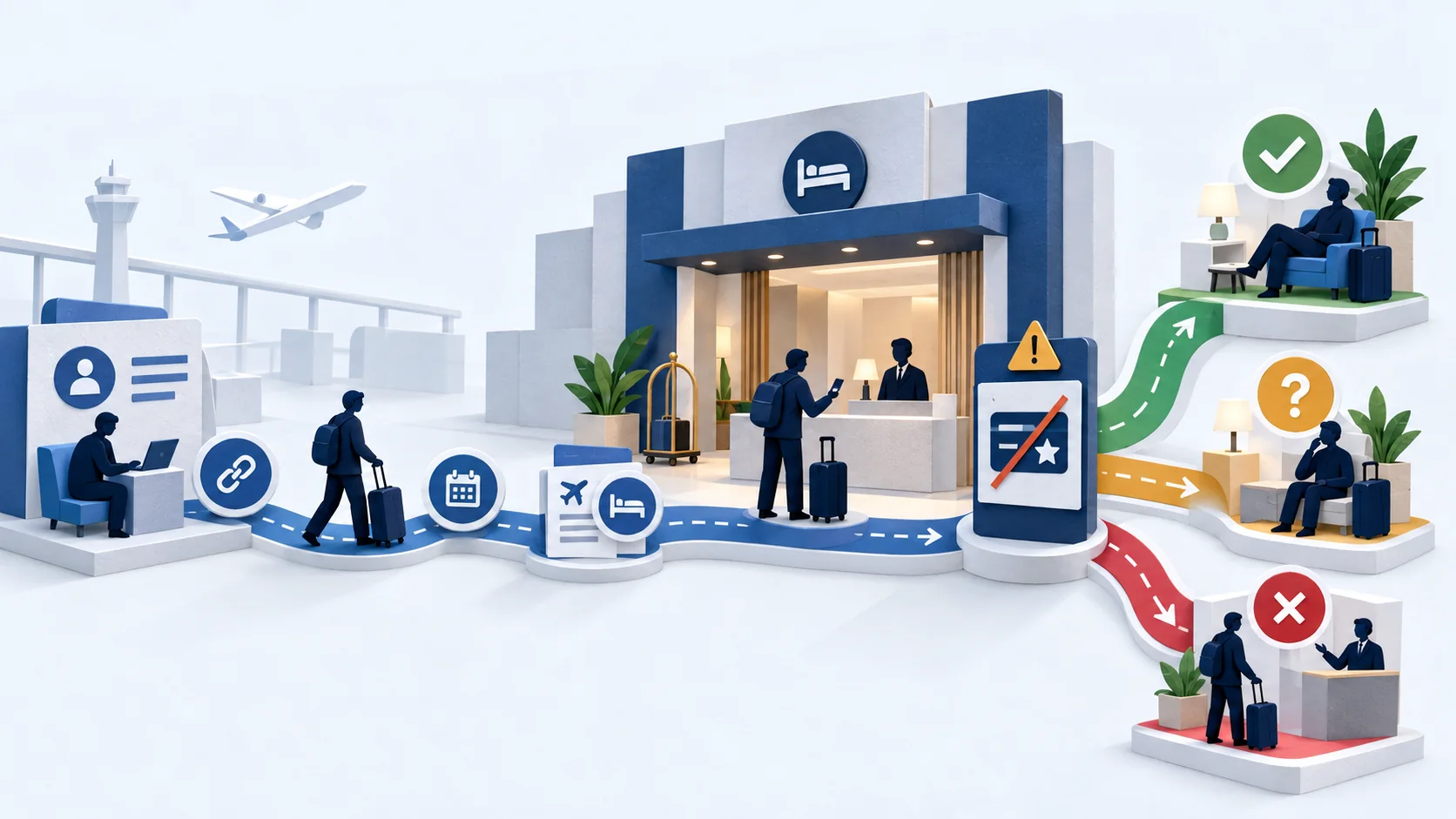
American And Hyatt: The Exit Case
American and Hyatt are now the exit case.
That does not mean the relationship failed in a simple way. Partnerships end for many reasons: economics, exclusivity, member engagement, strategic fit, negotiation leverage, partner overlap, channel conflict, technology constraints, or a better future option. Companies do not need every partnership to last forever.
But when a relationship has trained customers to expect value across two brands, the exit itself becomes an experience.
The operational question is: can the partners unwind the relationship without turning loyal customers into confused customers?
That requires more than a deadline. It requires recognition at the right moment. If a linked AAdvantage member searches Hyatt, opens the Hyatt app, books a stay, checks in, requests a late checkout, asks about earning, or contacts support, the transition should be visible in context. If the customer learns only after they have already acted, the companies may have protected the terms while losing the relationship.
The Revenue Unknown for American and Hyatt is the value at risk from expectation mismatch:
- Which members booked, stayed, or chose based on an old partnership assumption.
- Which customers will blame the hotel, the airline, or both when a benefit disappears.
- Which high-value travellers will shift future loyalty because the transition felt poorly handled.
- Which front-line interactions will absorb anger created by program complexity.
- Which remaining basic benefit, such as eligible AAdvantage mile earning on Hyatt stays, is too weak or too hidden to preserve trust.
This is why partnership endings need customer-experience design, not only legal and loyalty-program administration.
Delta And Hyatt: The Premium Continuity Case
Delta and Hyatt are the premium continuity case.
The announced relationship gives both companies a chance to connect higher-value travel behavior across flight and stay. A Delta Medallion member staying at Hyatt is not only a hotel guest. A World of Hyatt elite flying Delta is not only an airline passenger. In both cases, the traveler is a relationship moving across categories.
The opportunity is not simply dual earn. Dual earn is the visible mechanic. The deeper opportunity is recognition.
If the relationship matures, Delta and Hyatt can learn where premium travel value is actually created: business corridors, event cities, family travel, conference travel, delayed arrivals, long-haul recovery, early check-in needs, late departures, airport transfers, lounge expectations, status reassurance, and post-trip retention.
The risk is that the relationship stays narrow.
If it becomes only an elite earning benefit, it may reward behavior that would have happened anyway. That can still matter, but it leaves the larger journey untouched. The stronger version would help both companies recognize when a travel moment is commercially fragile and when a partner can preserve value.
For example, a delayed evening arrival can be more than an airline disruption. It can become a hotel check-in stress point, a missed dinner, a cancelled meeting, a lost upgrade expectation, or a family travel problem. A connected partnership should be able to ask: which partner owns the next best recovery move?
That is the continuity promise Delta and Hyatt can test.
Air Canada Aeroplan And Hyatt: The Utility Case
Air Canada Aeroplan and Hyatt are the utility case.
The Aeroplan relationship is especially important because it appears broader than a simple earn relationship. It includes account linking, earning and redemption options, point conversion, status challenge pathways, eligible cardholder offers, Hyatt awards, and Air Canada flight reward certificates.
That makes the partnership useful across more kinds of trips. A Canadian traveller might use it for transborder travel, international leisure, family travel, points conversion, premium card value, destination stays, or a mixed airline-hotel redemption plan. The flexibility creates more possible value.
It also creates more possible confusion.
The dead-end risk for Aeroplan and Hyatt is complexity. When a partnership offers many paths, the customer has to know which path fits the trip. If the member cannot understand the rule, find the benefit, or activate it at the right moment, flexibility becomes work.
That is where Air Canada and Hyatt have an experience-intelligence opportunity. The partnership should not only say what is possible. It should guide the member toward the right next move based on travel context.
Is the traveller holding Aeroplan points and searching a Hyatt city. Is the traveller staying at Hyatt before an Air Canada long-haul flight. Is the traveller eligible for a status challenge that would matter on an upcoming trip. Is a premium cardholder leaving value unused because the benefit is buried. Is a family trip better served by hotel awards than flight awards. Is a disrupted itinerary creating a hotel need before the customer asks?
Those are not loyalty-program questions alone. They are journey questions.
The Revenue Unknown Across All Three
The shared Revenue Unknown is not account linking.
Account linking is a setup behavior. It does not prove that the partnership changed the trip.
The value to measure is harder and more useful:
- Did the partnership change which airline or hotel the traveller chose.
- Did it protect a customer during disruption or delay.
- Did it turn unused points into actual trip value.
- Did it make a premium card feel more useful in the journey.
- Did it help a frontline team explain a benefit before frustration formed.
- Did it create new destination demand.
- Did it reveal traveller intent earlier than either partner could see alone.
- Did it reduce abandonment, support contact, complaint volume, or silent defection.
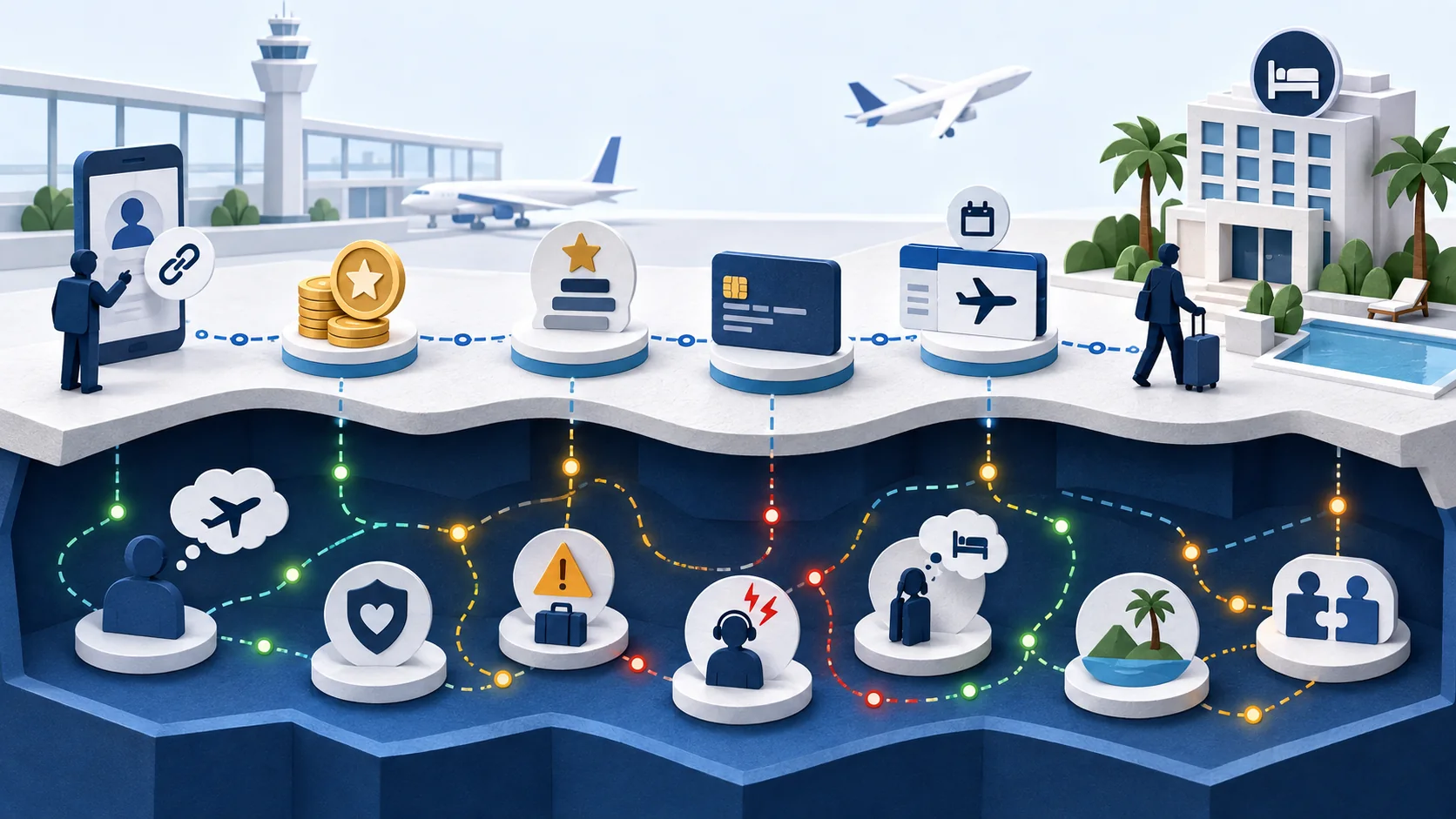
The partnership can be commercially successful and still underperform as an experience. That is the gap most companies miss.
A customer may earn points and still feel confused. A traveler may hold status and still feel invisible. A hotel stay may generate airline value that neither partner recognizes. A delayed flight may create hotel recovery demand that no one routes. A credit-card benefit may exist but never surface when it would change behavior.
That is unused journey value.
What Better Partnership Maintenance Looks Like
Partnerships do not last forever. That is not the problem.
The problem is treating launch as the main act and maintenance as administration.
A strong airline-hotel partnership needs a maintenance discipline. It needs a named owner for the customer promise, not only owners for the commercial contract. It needs shared visibility into benefit usage, failed expectations, support reasons, front-line confusion, and moments where the partnership should have helped but did not.
It also needs an exit discipline. When a partnership changes, the customer should not be left to discover the change through rejection.
Better maintenance would include:
- Contextual transition messaging in booking, app, loyalty-account, check-in, and support moments.
- Front-line explanation tools that make the current benefit state clear.
- Journey-based benefit prompts instead of generic promotion pages.
- Shared measurement of confused or rejected customers during transition windows.
- Post-stay and post-flight learning loops that identify where partner value appeared too late.
- Clear separation between what is ending, what continues, what expires, and what replaces it.
This is the work that keeps a partnership from becoming a dead end.
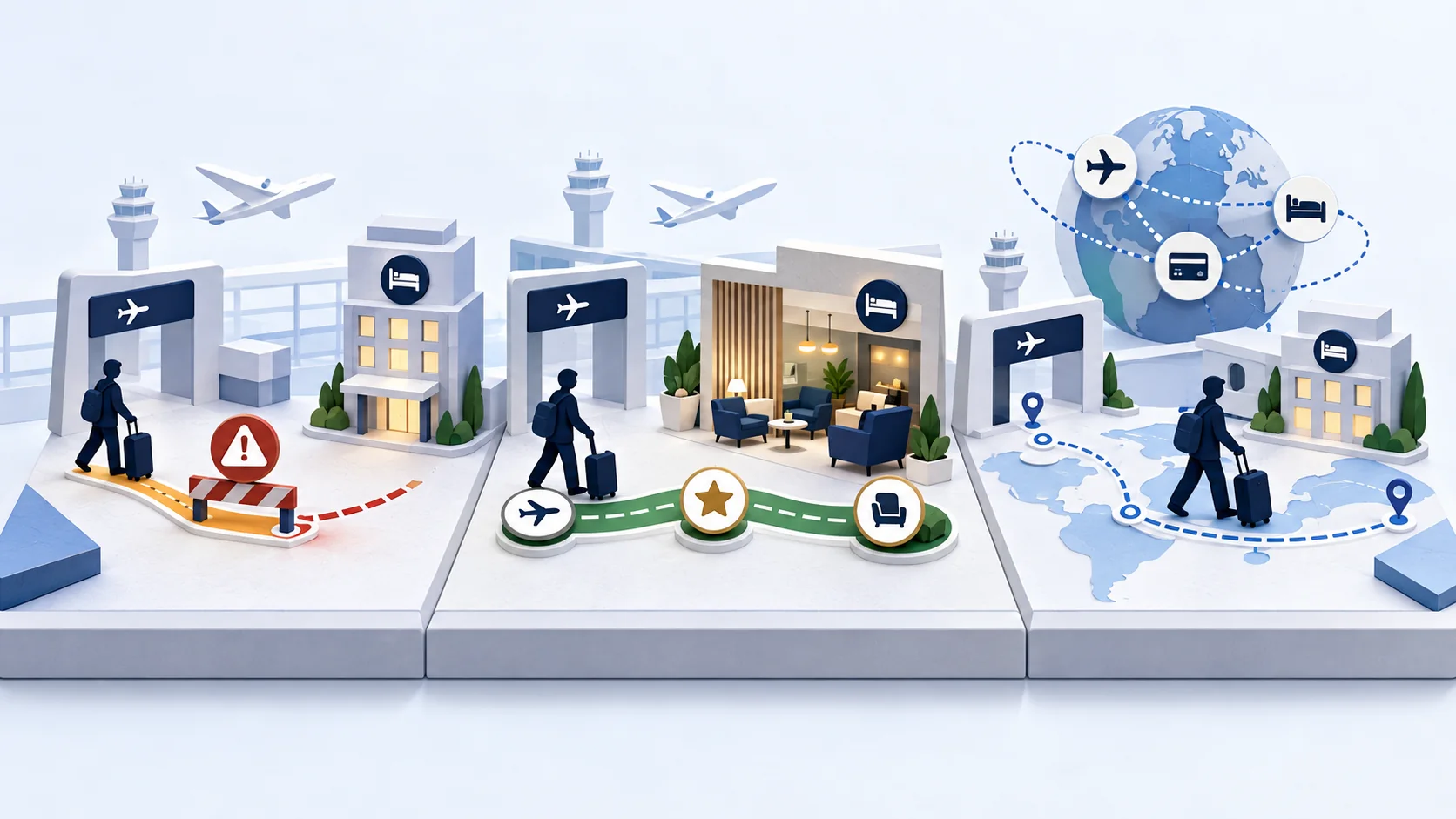
What Experience The Skies Should Watch
For Experience The Skies, Hyatt's airline reset is a useful signal because it sits at the boundary between travel loyalty and lived travel.
Travel brands increasingly compete through ecosystems. Airlines, hotels, credit cards, airports, destinations, rideshare companies, dining platforms, and event operators all touch the same trip. But the customer does not experience those categories separately. The customer experiences one journey.
That is why airline-hotel partnerships should become more than earn tables. They should help the customer preserve confidence across the trip.
The next generation of partnerships should answer practical questions:
- If a flight is delayed overnight, can the airline-hotel relationship surface relevant recovery options earlier.
- If a hotel stay is attached to a major event, can the airline recognize likely flight demand before search.
- If a member has status in one program, can the partner know which moments matter enough to recognize it.
- If a trip involves family, bags, arrival timing, or accessibility needs, can the partnership reduce effort.
- If a cardholder has unused benefits, can the journey reveal them at the right moment.
- If a customer repeatedly books the same flight-hotel corridor, can the partners learn the pattern and shape the next offer.
This is where Hyatt, Delta, Air Canada, Aeroplan, and American all become part of a larger lesson.
Partnership value is not only created when companies connect programs.
It is created when customers no longer have to do the connecting themselves.
Reader Poll
When your organization runs a partnership, how often do you test whether customers can still understand and use the promise at the moment they need it?
Sources
- Hyatt, "Updates on Hyatt and American Airlines' Loyalty Collaboration," September 9, 2026, https://newsroom.hyatt.com/AirlineUpdate
- American Airlines, "Update on American and Hyatt relationship," September 9, 2026, https://news.aa.com/news/news-details/2026/Update-on-American-and-Hyatt-relationship-AADV-09/default.aspx
- Delta News Hub, "Delta and Hyatt introduce new strategic relationship," September 9, 2026, https://news.delta.com/delta-and-hyatt-introduce-new-strategic-relationship
- Air Canada, "Better in both worlds: Air Canada's Aeroplan and World of Hyatt join forces," July 15, 2026, https://www.aircanada.com/media/better-in-both-worlds-air-canadas-aeroplan-and-world-of-hyatt-join-forces-bringing-members-more-ways-to-earn-and-redeem/
- World of Hyatt, "World of Hyatt and Aeroplan," accessed September 9, 2026, https://world.hyatt.com/content/gp/en/rewards/aeroplan.html
- World of Hyatt, "Earn miles with airline partners," accessed September 9, 2026, https://world.hyatt.com/content/gp/en/rewards/air-auto.html
Related Reading
FAQ
What is the main idea of Hyatt's Airline Loyalty Reset Shows Why Partnerships Become Dead-End Experiences?
Hyatt's Airline Loyalty Reset Shows Why Partnerships Become Dead-End Experiences explains a change leaders should not treat as background noise. It shows what evidence is visible, what may be changing underneath it, and which decision window remains open.
Why does Hyatt's Airline Loyalty Reset Shows Why Partnerships Become Dead-End Experiences matter for Experience Intelligence?
The article helps readers see how an experience, relationship, capability, or value condition may be changing before the consequence is fully visible.
What Revenue Unknown does this article help identify?
It frames the unresolved commercial or operating question created by the change: what value, risk, hidden demand, relationship movement, or capability gap may exist but has not yet been measured or decided.
How should leaders use this article in the Special Intelligence series?
Use it as a prompt to separate observed evidence from interpretation, name the decision that still has to be made, and identify what would validate whether the interpretation is right.
Related intelligence
Article
Accountable AI Delegation Is the New Operating Model
# Accountable AI Delegation Is the New Operating Model Production illustration: human-agent collaboration organized around evidence, authority, approval and learning. **Revenue Unknown:** Many organizations are preparing
Article
Apple Waited Until the Foldable iPhone Could Become an Experience Layer
Apple's iPhone Duo is not only a foldable phone announcement. It shows why waiting can be the right experience strategy when a category needs hardware, software, developers, intelligence, and premium economics to become one coherent system.
Article
Apple Is Turning Siri Into an Experience Manager
Apple's Siri AI and Apple Intelligence updates matter because they move AI from answer generation toward experience management. Personal context, on-screen awareness, health intelligence, shopping monitoring, and travel recovery can change where revenue and trust accumulate.