
Article
Accountable AI Delegation Is the New Operating Model
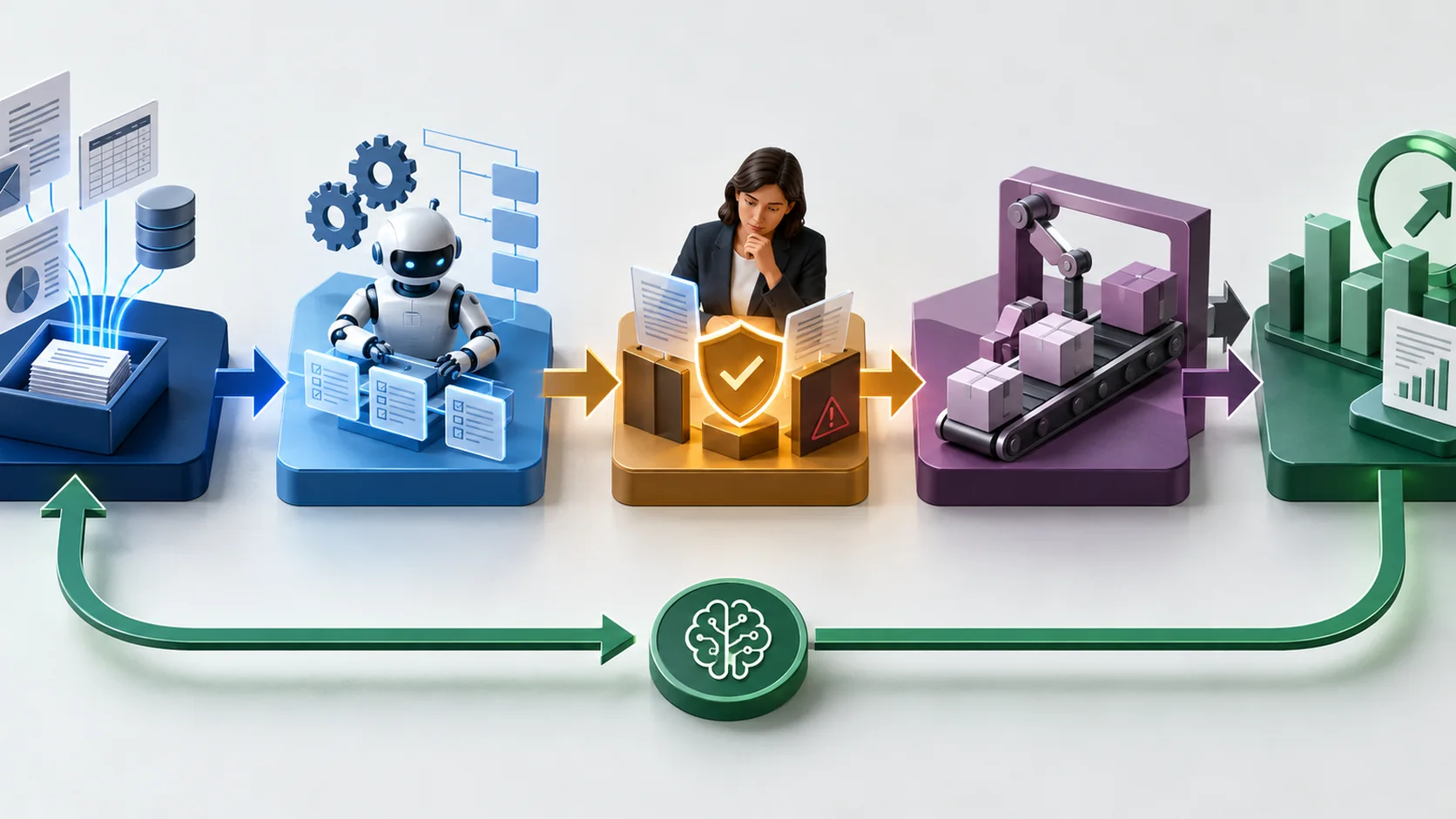
# Accountable AI Delegation Is the New Operating Model Production illustration: human-agent collaboration organized around evidence, authority, approval and learning. **Revenue Unknown:** Many organizations are preparing
- Published
- September 9, 2026
- Updated
- September 9, 2026
- Reading time
- 9 min

# Accountable AI Delegation Is the New Operating Model
Revenue Unknown: Many organizations are preparing for AI agents to take on more complex work, but they have not yet named the operating model that decides what may be delegated, what must be verified, when a human must intervene, and how the outcome becomes organizational learning. The unknown is not whether agents can complete more tasks. The unknown is whether the organization can redesign authority, evidence, cost and accountability around them before autonomy scales faster than judgment.
---
The Global Signal
Enterprise artificial intelligence has moved through three visible phases. First came experimentation: isolated prompts, pilots, productivity tests and executive curiosity. Then came assistance: copilots, chatbots, summarizers and drafting tools embedded into work people already performed. The next phase is delegation. Leaders are no longer asking only whether AI can help an employee finish a task faster. They are asking whether systems can plan, coordinate and execute parts of a workflow with less direct human supervision.
That shift is why the language around agentic AI, elastic enterprises, human-agent collaboration and extended reasoning matters. It points to a real change in ambition. Organizations want work to become more fluid. They want services, data, systems and expertise to reorganize around outcomes instead of sitting inside fixed departmental lanes. They want agents that can interpret a goal, select a path, call tools, check intermediate results and escalate only when needed.
The ambition is understandable. Most organizations are heavy with handoffs. Work waits for approvals, context, data access, status updates and meetings. Many processes contain human effort that is valuable only because the surrounding system is poorly connected. If an agent can gather evidence, prepare a draft, reconcile records, monitor a queue, test a workflow or compare a source against policy, the organization should not pretend that nothing has changed.
But the visible signal can mislead. Agentic capacity is not the same as accountable delegation. A system that can take more steps independently does not automatically know which steps it should own. A model that can reason longer does not automatically inherit the organization's authority structure. A workflow that becomes faster does not automatically become safer, cheaper, more measurable or more trusted.
That is the leadership problem hidden inside the technology story.
---
The Hidden Signal
The hidden signal is delegation without an operating model.

Most companies already delegate constantly. A manager delegates to a team member. A board delegates to management. A customer-service leader delegates judgment to frontline staff within policy. A finance leader delegates spend authority up to a threshold. These arrangements work only when authority, boundaries, evidence, escalation and accountability are understood.
AI agents do not remove those conditions. They make them more important because delegation can now happen at machine speed, across connected systems, and in places where the human owner may not see every intermediate step.
This is where many organizations are exposed. They have AI policies, but not decision rights. They have pilots, but not operating ownership. They have model access, but not evidence governance. They have productivity dashboards, but not outcome learning. They have human review, but not a clear rule for when review is required, who performs it, what evidence must be checked, and what happens when the reviewer disagrees with the agent.
Human-in-the-loop is often treated as the answer. It is only a partial answer. A human can be present in a workflow and still be structurally unable to govern it. If the review arrives too late, lacks source context, carries no authority, or is used only to rubber-stamp throughput, the loop exists cosmetically. The organization has not installed judgment; it has installed delay.
Human-over-the-loop has the opposite risk. It sounds mature because the system has earned trust, but it becomes dangerous when trust is assumed rather than measured. Moving from active review to supervisory monitoring should be an earned state. It should depend on evidence: repeated performance, bounded scope, known failure modes, clear escalation thresholds and outcome tracking.
The real question is not whether a human is in, on or over the loop. The real question is whether the loop has a named owner, a source of evidence, a threshold for intervention, a record of decisions and a way to learn.
---
Why The Visible Metric Misleads
Organizations will be tempted to measure agentic AI the way they measured earlier AI adoption: usage, task completion, speed, cost per interaction, response time and satisfaction with the tool. These numbers are useful, but they are not sufficient.
An agent can complete more tasks and still increase organizational risk. It can reduce handling time while pushing emotional, reputational or compliance problems downstream. It can produce more drafts while increasing review burden. It can improve local productivity while leaving the end-to-end decision unchanged. It can appear inexpensive at the task level while creating hidden cost through retries, rework, oversight, model routing, failed tool calls and unnecessary reasoning.
This is where token economics becomes work economics. The cost of an agent is not only the model bill. It is the total cost of delegated reasoning: prompts, context retrieval, tool calls, review, correction, monitoring, failed attempts and human escalation. A cheap answer that must be reviewed twice may be more expensive than a slower answer that arrives with clean source lineage. A powerful model used for routine work may waste money. A fast model used for high-stakes judgment may create risk that no token saving can justify.
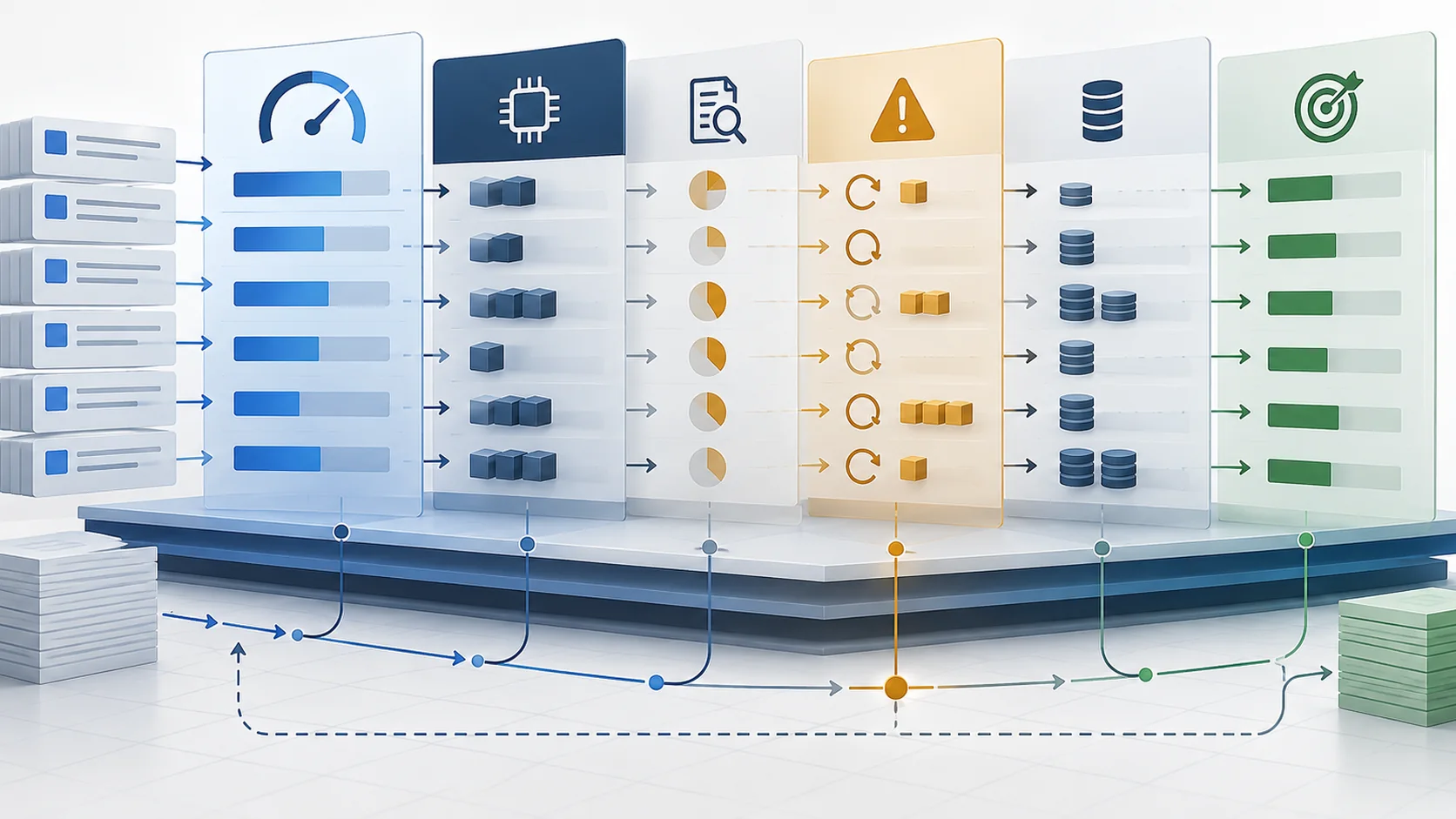
The better measure is value per governed delegation. Did the agent reduce avoidable work. Did it shorten the full decision cycle, not just one task. Did it improve evidence quality. Did it preserve source lineage. Did it escalate at the right moment. Did it create a reusable learning record. Did it change what people had to do next.
That is the point where AI measurement leaves the software dashboard and enters the operating model.
---
The Leadership Move
The leadership move is to treat agentic AI as a delegation system before treating it as an automation system.

Ownership: Every delegated workflow needs a named business owner, a technical owner and a review owner. The business owner defines the outcome and acceptable tradeoffs. The technical owner governs model access, tools, data and system reliability. The review owner decides whether the agent's output is sufficient for the next gate. If these are unnamed, the agent inherits organizational ambiguity.
Tradeoff: More autonomy creates more leverage, but only after boundaries are explicit. A tightly governed agent may feel slower at first because it asks for source context, refuses unclear instructions and escalates sensitive decisions. That friction is not failure. It is the cost of installing judgment. The alternative is speed that looks efficient until the organization has to explain who approved the action, what evidence supported it, and why nobody noticed the failure sooner.
Human consequence: Employees do not experience agentic AI as an architecture diagram. They experience it as changed work, changed expectations and changed accountability. If leaders deploy agents without redesigning roles, people are left supervising systems they do not control, correcting outputs they did not ask for, and absorbing risk nobody named. If leaders design delegation well, agents remove low-value coordination burden and give people more room for judgment, recovery, relationship and decision quality.
---
What Accountable Delegation Requires
An accountable AI delegation model has six parts.
First, there is an evidence layer. Agents must know what they are allowed to use, what counts as a source, what requires verification and what cannot be treated as evidence. This is the foundation. Without source governance, an agent can sound right while building on weak or invented context.
Second, there is an authority layer. The organization must define what the agent can decide, what it can prepare, what it can recommend, and what it cannot touch. Preparing a client email is not the same as sending it. Drafting a production brief is not the same as approving publication. Flagging a risk is not the same as resolving it.
Third, there is a friction layer. Ambiguity, low confidence, missing source lineage, regulated content, reputational risk, customer harm, financial exposure and irreversible action should slow the workflow down. Dynamic cognitive friction is not bureaucracy. It is how the system knows when speed is no longer the right value.
Fourth, there is an AgentOps layer. Agents need monitoring, evaluation, logs, permissioning, failure review, cost tracking and performance thresholds. But AgentOps should not stop at technical uptime. It should ask whether the agent is improving the operating outcome it was delegated to support.
Fifth, there is a production layer. Approved intelligence or agent-prepared work must move into the appropriate system of record. In Transformidy terms, TIP analyzes, TME transforms, and Transformidy One publishes and measures. That boundary matters because most agentic failures are boundary failures before they are model failures.
Sixth, there is a learning layer. Every meaningful delegation should leave a record: what the agent did, what the human approved, what changed, what failed, what outcome followed and what should be different next time. Without that loop, the organization scales activity but not intelligence.
---
Implication For Operators
The organizations that benefit most from agentic AI will not be the ones that simply grant agents the broadest permissions. They will be the ones that know how to earn autonomy in stages.
Start with assisted work where the evidence is visible and the human decision remains clear. Move to delegated preparation when the agent can gather, reconcile and format work reliably. Move to conditional execution only when the decision boundary is narrow, the data is trusted, the rollback path is known and the outcome can be measured. Move to human-over-the-loop only when the workflow has accumulated enough reviewed history to justify less frequent intervention.
This is not a conservative argument against agents. It is a practical argument for making them useful. Autonomy without governance produces either risk or disappointment. Governance without redesign produces delay. The value is in the combination: agents that can act, humans who know where judgment belongs, and an operating system that learns from both.
---
FAQ
What is the main idea of Accountable AI Delegation Is the New Operating Model?
Accountable AI Delegation Is the New Operating Model explains a change leaders should not treat as background noise. It shows what evidence is visible, what may be changing underneath it, and which decision window remains open.
Why does Accountable AI Delegation Is the New Operating Model matter for Experience Intelligence?
The article helps readers see how an experience, relationship, capability, or value condition may be changing before the consequence is fully visible.
What Revenue Unknown does this article help identify?
It frames the unresolved commercial or operating question created by the change: what value, risk, hidden demand, relationship movement, or capability gap may exist but has not yet been measured or decided.
How should leaders use this article in the Special Intelligence series?
Use it as a prompt to separate observed evidence from interpretation, name the decision that still has to be made, and identify what would validate whether the interpretation is right.
Related intelligence
Article
Apple Waited Until the Foldable iPhone Could Become an Experience Layer
Apple's iPhone Duo is not only a foldable phone announcement. It shows why waiting can be the right experience strategy when a category needs hardware, software, developers, intelligence, and premium economics to become one coherent system.
Article
Apple Is Turning Siri Into an Experience Manager
Apple's Siri AI and Apple Intelligence updates matter because they move AI from answer generation toward experience management. Personal context, on-screen awareness, health intelligence, shopping monitoring, and travel recovery can change where revenue and trust accumulate.
Article
Hyatt's Airline Loyalty Reset Shows Why Partnerships Become Dead-End Experiences
Hyatt is ending its enhanced American Airlines relationship while launching a new Delta collaboration and maintaining a newer Air Canada Aeroplan relationship. The Revenue Unknown is whether airline-hotel partnerships can become real experience systems instead of benefit tables customers only discover when they fail.