
Services
Find the decision hiding inside experience evidence.
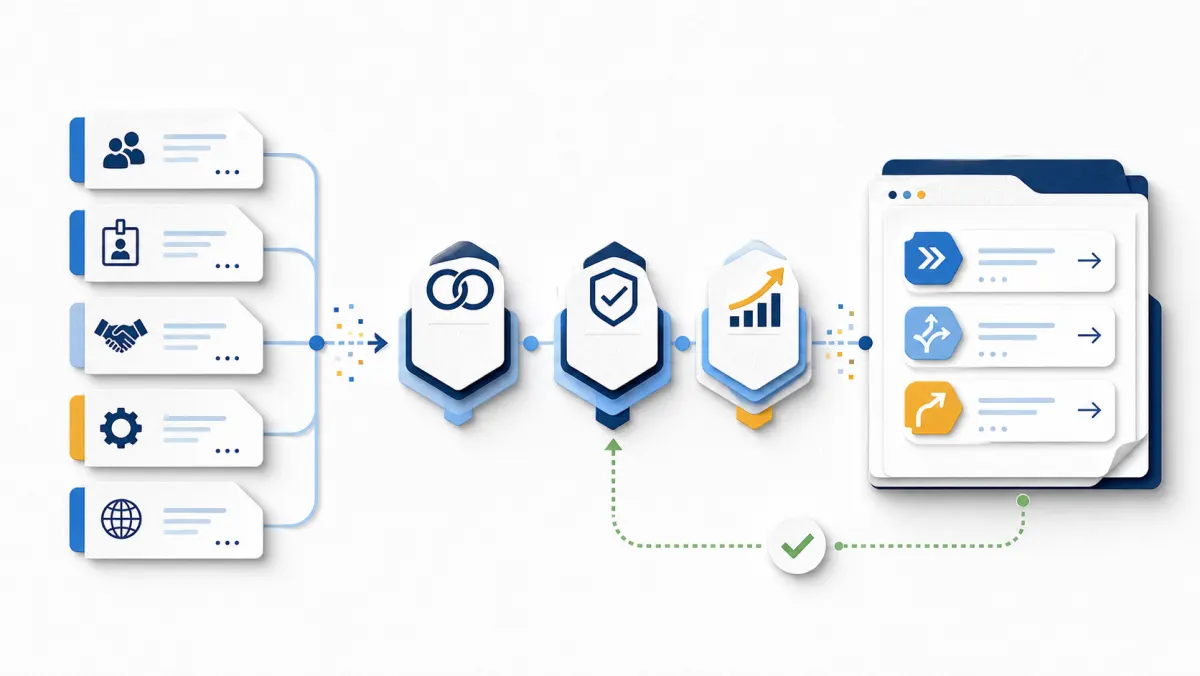
Transformidy services exist for the moment when dashboards, feedback, frontline observations, customer behaviour, AI outputs, and operating data are all present, but the organization still has not named what is at stake or what decision should happen next.
The work is not another report and not an AI wrapper. The work is recognition: reading what changed, who is affected, what value may be moving, which capability is constrained, and what decision should happen next.
Services
Five services, each with a job to do.
Transformidy is useful when the organization already has evidence, but the consequence, owner, decision window, and activation path are still unresolved. The services are not separate products; they are five entry points into real work.
Why this matters
The buyer is not purchasing insight. They are buying lead time before value disappears.
A useful service has bite: it must expose what is at risk, say why the current operating method is insufficient, and make the next decision more possible. Transformidy keeps the work connected from evidence to Revenue Unknown, decision, activation, outcome, and learning.
Failure condition
Decision Blindness is why the services exist.
Decision Blindness is what happens when evidence exists, but the organization does not recognize what it means early enough to own, decide, activate, or learn from it. The services are the correction path.
01 / Strategy
Creates the recognition architecture so evidence can earn attention before the pattern is disputed or ignored.
02 / Revenue Unknowns
Names what decision blindness is hiding: the value, cost, trust, risk, or opportunity question no one owns yet.
03 / Decision Design
Turns recognition into a choice with owner, threshold, timing, trade-off, and activation path.
04 / Continuity
Keeps the decision alive across channels, handoffs, teams, partners, and customer moments.
05 / Briefings and training
Builds the shared reading discipline so the same blindness is less likely to repeat.
Experience Intelligence lens
Reactive evidence should still produce proactive decision windows.
The service question is practical: what can still be decided, protected, recovered, tested, or learned before the next consequence arrives?
Question 01
What changed in the experience?
Question 02
Which actors are affected?
Question 03
Which relationship, capability, or value condition moved?
Question 04
What remains undecided?
Question 05
What value can still be protected, created, recovered, or learned from?
Question 06
Which relationship can still be strengthened, repaired, or preserved?
Question 07
Which capability must improve before the next cycle?
Question 08
What decision window is still open?
Question 09
What outcome would validate the interpretation?
Question 10
What should be learned so the organization recognizes the pattern earlier next time?
Service 01
Strategy and implementation
Create the shared method for seeing what changed, which actors are affected, and which relationship, capability, or value condition moved.
Service 02
Revenue Unknown assessment
Name what remains undecided and what value, risk, relationship, or capability implication still needs ownership.
Service 03
Opportunity and decision design
Define the decision window that remains open, the owner, the threshold, and the next action that can still alter the outcome.
Service 04
Experience continuity and activation
Protect, recover, strengthen, preserve, or test the experience across channels, teams, partners, and moments.
Service 05
Briefings, training and research
Turn the outcome into learning so leaders recognize the pattern earlier in the next cycle.
01
Experience Intelligence Strategy and Implementation
Build the organizational capability.
Pressure
Evidence exists everywhere, but every team reads it through its own lens and no one owns the moment when a pattern becomes decision-worthy.
Value at stake
The organization keeps paying for more visibility while still being surprised by value leakage, trust erosion, operational drag, and missed timing.
Transformidy move
Install the recognition architecture: how evidence earns attention, how patterns earn action, who owns decisions, and how learning compounds.
Why it is different
Because the failure is not CX alone, data alone, or AI alone. It is the missing operating model between evidence and action.
Entry question: How should this organization recognize and act on what matters?
02
Revenue Unknown Assessment and Monitoring
Find unresolved commercial questions.
Pressure
A pattern is forming, but it has not been translated into value, cost, risk, opportunity, trust, access, or public-value consequence.
Value at stake
By the time the number appears in churn, complaints, budget variance, lost balance, or retention, the decision window has narrowed.
Transformidy move
Name the unresolved commercial question precisely enough that leaders can prioritize, monitor, own, and act on it.
Why it is different
Because a Revenue Unknown is not a metric. It is the question the organization has not yet known how to ask.
Entry question: What do we not yet understand that may conceal value or risk?
03
Opportunity and Decision Design
Turn an unknown into a decision.
Pressure
Leaders agree something matters, then stall because the owner, threshold, trade-off, test, and activation path are unclear.
Value at stake
The organization mistakes agreement for action and inherits the default decision after the useful window closes.
Transformidy move
Convert the unknown into a decision-ready opportunity with owner, window, threshold, value at stake, activation path, outcome measure, and learning loop.
Why it is different
Because recommendations do not create value unless they survive ownership, timing, trade-offs, and handoffs.
Entry question: What decision needs to be made, by whom, and before when?
04
Experience Continuity and Activation
Prevent value from being lost between moments, teams and channels.
Pressure
Intent appears in one place, but stops as it moves through channels, teams, partners, systems, and moments.
Value at stake
Customers, employees, partners, or citizens stand inside a dead-end experience while each function believes it performed locally.
Transformidy move
Identify where context, trust, intent, or value stops, then design the owner, recovery route, activation path, and measurement that restore continuity.
Why it is different
Because the Revenue Unknown is often hiding in the handoff: what value is lost when intent has appeared but no useful next step exists?
Entry question: Where is the experience breaking before value can be realized?
05
Executive Briefings, Training and Research
Build recognition capacity and strategic readiness.
Pressure
Leaders need shared interpretation, but the organization keeps receiving reports, trend decks, and AI summaries that do not change decision behaviour.
Value at stake
Teams become informed without becoming more capable of recognizing what matters next.
Transformidy move
Use briefings, training, and research to build recognition capacity around live evidence, emerging patterns, and decision windows.
Why it is different
Because the point is not content consumption. It is an organization that reads evidence better after the engagement than before it.
Entry question: What do leaders need to understand, watch or learn now?
The next sections show the operating loop, then a financial-services example where fee friction and advice value route into all five services.
How we do it
We turn existing experience evidence into action.
Organizations rarely lack information. The harder question is what the evidence means, where revenue or value is at stake, and what decision should happen while there is still time to act.
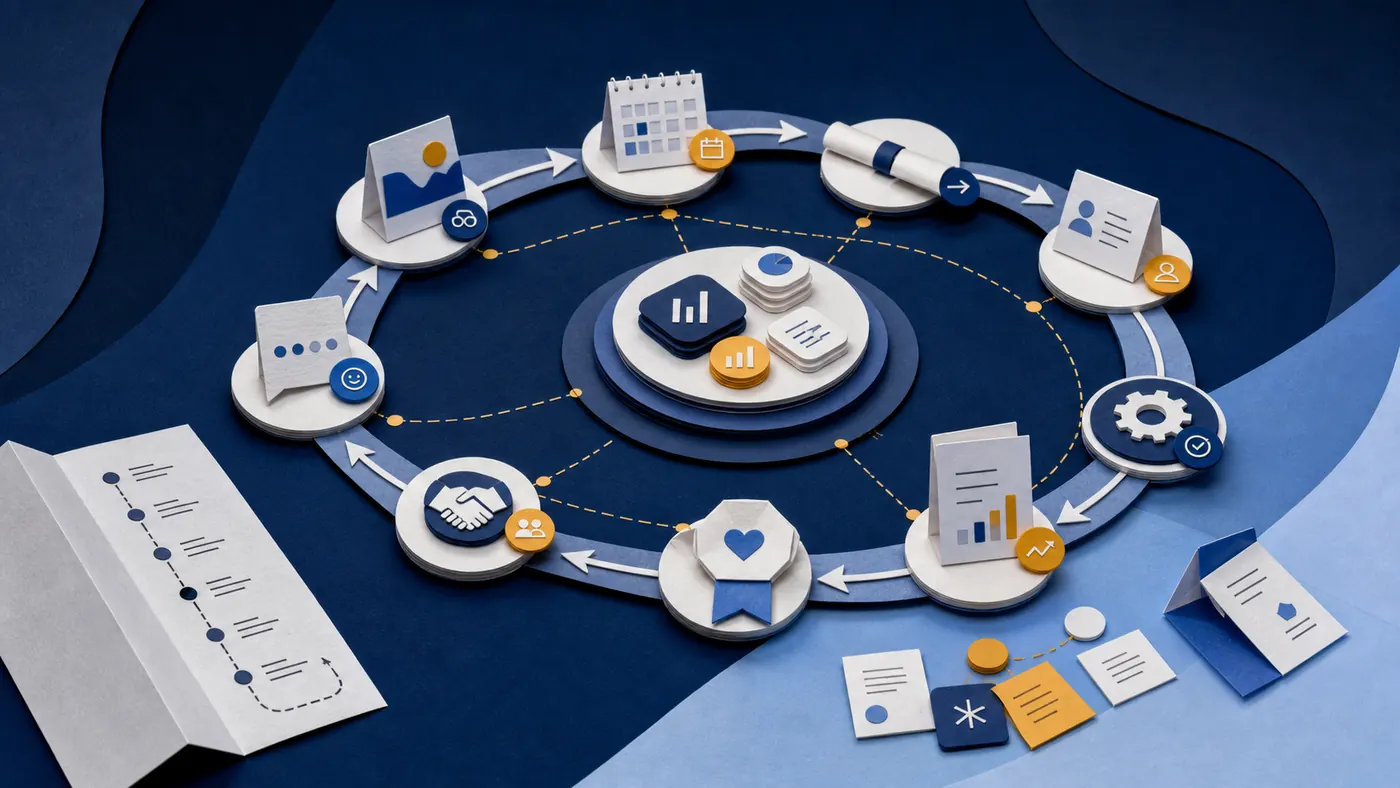
01
Read the evidence against a business consequence
We do not start by inventorying data. We ask what relationship, capability, value, risk, or public consequence the evidence may be pointing toward.
02
Name the unresolved value question
We turn fragments into the unresolved question: what value may be lost, delayed, hidden, transferred, or newly possible, and who needs to own it?
03
Route the question into a decision
We define what should happen next, who owns it, when the window closes, which service capability is needed, and how learning returns to the system.
Revenue at risk
29%
of consumers stopped using or buying from a brand because of poor customer experience.
Source: PwC 2025 Customer Experience Survey →01 / Evidence
What the organization already has.
02 / Recognition
The moment leaders understand what it means.
03 / Revenue Unknown
The value, cost, risk, or opportunity at stake.
04 / Decision
The choice made while options remain open.
05 / Activation
The operating move that carries the decision into the experience.
06 / Outcome
What the decision produces.
07 / Learning
How the next recognition cycle improves.
Evidence sources
Intelligence can come from more than dashboards.
Experience evidence can be structured or observed, quantified or qualitative, generated by customers or employees, owned by partners, or read with help from AI. The work is deciding what deserves recognition.
Source 01
Customer feedback and behaviour
Source 02
Employee observations and frontline workarounds
Source 03
Brand experience and trust moments
Source 04
Partner, ecosystem, and handoff evidence
Source 05
Operational, financial, and journey data
Source 06
AI-assisted pattern reading, when it helps
Where it applies
The method travels across industries because the evidence changes, not the question.
A sports venue, hospital network, public service, bank, airline, streaming platform, retailer, or restaurant may hold different evidence. The advisory question is similar: what is forming, what value is at stake, and what should happen next?

Example / Financial services
Service fees become a relationship and value problem before they become attrition.
Consider a bank or wealth business seeing service-fee pressure and advice-value doubt. The obvious response is to review pricing, complaints, or satisfaction. Transformidy asks the stronger question: what evidence says customers no longer understand the value exchange, what trust or revenue is at stake, which capability is constrained, and which service should move the decision forward?
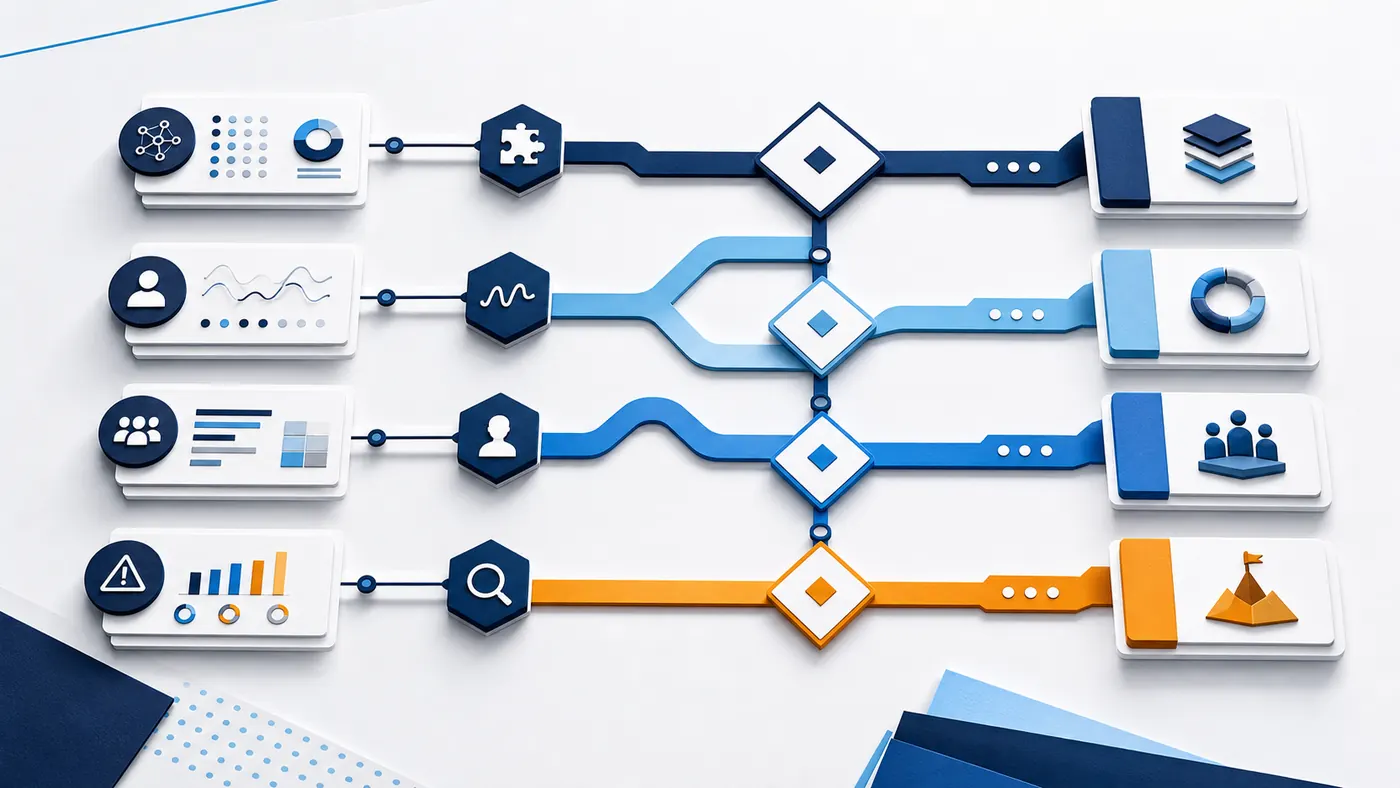
01
Service-fee complaints rise fastest among digitally active customers who rarely contact the branch, suggesting trust may be weakening before attrition is visible.
02
Advisor meeting notes show more clients asking whether managed advice is still worth the fee, exposing a value-exchange question.
03
Contact-centre transcripts mention fee waivers, app limitations, and unclear advice value in the same conversations, revealing fragmented capability.
04
Balance migration starts before formal attrition appears in the monthly retention report, showing value may already be moving.
05
Frontline teams create local explanations, but product, advice, digital, and service teams do not share one read of the pattern.
How the example routes to services
The scenario only works when it changes what the organization can do next.
The point is not that financial services needs a better fee narrative. The point is that relationship pressure, capability gaps, and value movement have to be recognized, decided, activated, and learned from. Each service owns a different failure point in that work.
Experience Intelligence Strategy and Implementation
Build one recognition architecture across advice, fees, digital service, branch behaviour, complaints, and balance movement.
Revenue Unknown Assessment
Name the unresolved question: how much trust, retained balance, advice revenue, and lifetime value are at risk when fees feel disconnected from visible advice value?
Opportunity and Decision Design
Define the decision: reframe fees, adjust advice triggers, test a waiver threshold, redesign onboarding, or protect a segment before migration becomes churn.
Experience Continuity and Activation
Carry the decision through the app, advisor scripts, contact centre, branch moments, renewal communications, and exception handling.
Briefings, Training and Research
Equip executives and teams to recognize the pattern again, monitor the outcome, and update the playbook before the next fee or advice cycle.
Where to start
Start from the business condition, then choose the capability.
You do not need to know the service name. You need to know what is unresolved: what changed, who is affected, what value is at stake, which decision is stuck, or where learning keeps getting lost.
Try the method
What evidence is already asking for a decision?
Pick the evidence field that feels most active. Transformidy starts by turning that activity into a named Revenue Unknown, not another report.
AI in the work
AI can help read evidence. It should not replace recognition.
Transformidy uses AI where it helps with pattern reading, synthesis, scenario exploration, research acceleration, and content operations. The advisory value remains human and organizational: what the evidence means, what relationship, capability, or value movement matters, and what decision deserves action.
How we think differently
Transformidy is not a journey-map shop, a dashboard factory, or an AI wrapper.
The difference is the operating question. We connect experience evidence to revenue, risk, trust, public value, decision ownership, and learning, then keep the loop alive after the first recommendation.
01
Traditional CX work often freezes a journey map at one moment.
Transformidy treats the experience chain as a living loop with evidence, decisions, outcomes, and learning.
02
Traditional reporting explains what already happened.
Transformidy names the Revenue Unknown while leaders still have options.
03
Traditional AI projects can start with the tool.
Transformidy starts with the business condition, then uses AI only where it improves recognition.
Next
Bring the evidence you already have.
We can start with a question, a friction pattern, a set of reports, field observations, customer feedback, AI outputs, or an opportunity you suspect is hiding in plain sight.