
Article
Southwest Just Made the Airport Lounge a Revenue Unknown
Southwest Airlines will open its first airport lounges with Chase in late 2027. The move creates a Revenue Unknown: can a low-cost carrier add premium airport continuity without weakening the brand simplicity that made it distinctive?
- Published
- September 2, 2026
- Updated
- September 2, 2026
- Reading time
- 16 min
Southwest Airlines is about to test a question the airline industry has usually treated as settled.
Can a low-cost carrier operate airport lounges without becoming something else?
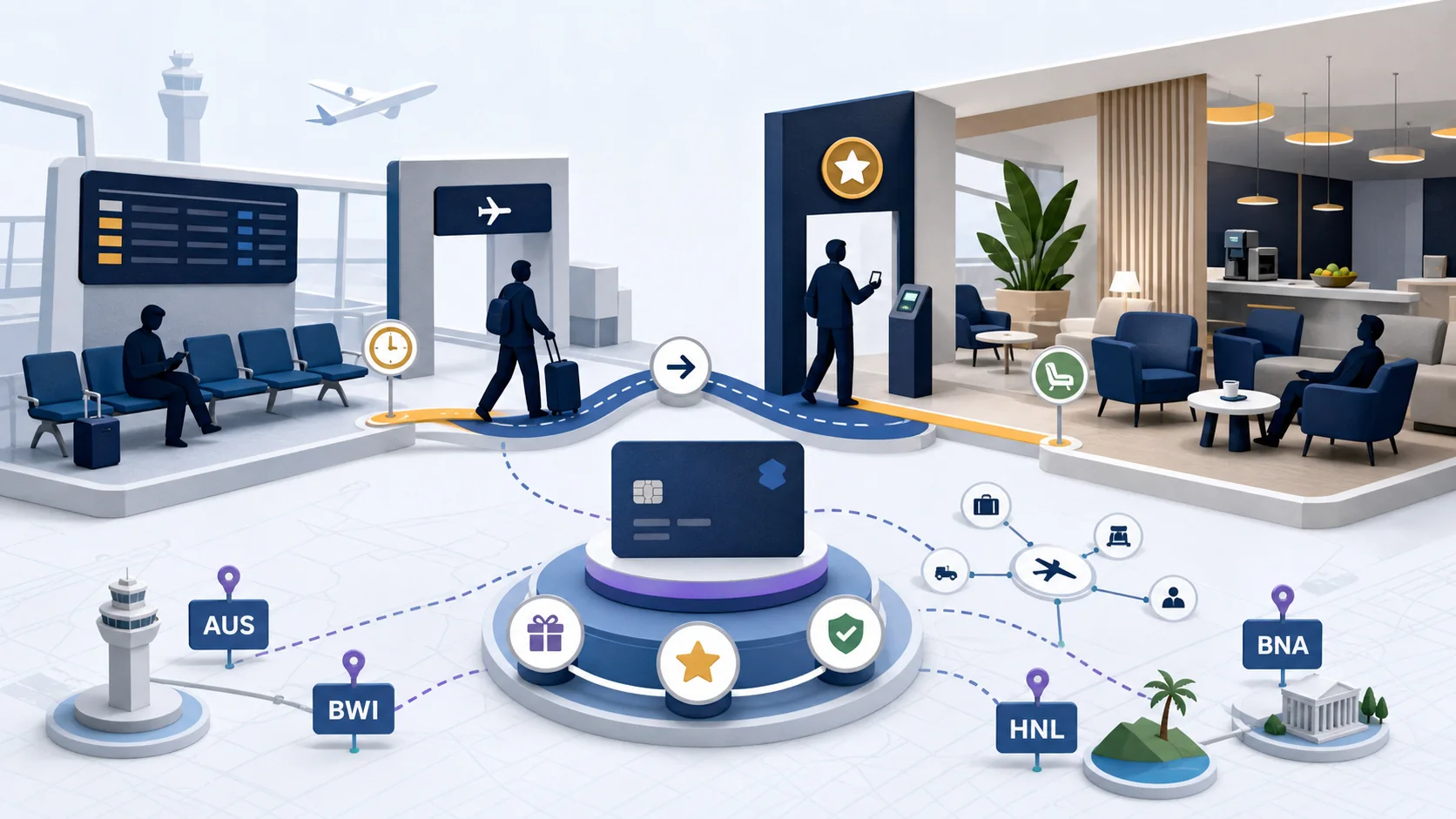
On September 2, 2026, Southwest announced plans for its first airport lounge network. The first four lounges are planned for Austin-Bergstrom International Airport, Baltimore/Washington International Thurgood Marshall Airport, Daniel K. Inouye International Airport in Honolulu, and Nashville International Airport. Construction has begun on the first four locations, and Southwest says the first guests are expected in late 2027. At least seven more lounges are planned across high-demand business and leisure markets.
Southwest is building the network with Chase. A new premium Southwest Rapid Rewards credit card issued by Chase is expected in 2027 and will provide access to the lounge network. Southwest describes the lounges as an extension of its hospitality, Rapid Rewards, and 30-year Chase partnership.
That is the observable evidence.
The more important question is what changed.
For decades, Southwest built its identity around a different promise from the major network carriers. It stood for simplicity, frequency, friendly service, low fares, operational consistency, and a form of travel that did not ask customers to decode too many status rules before reaching the gate. It did not need lounges to be loved. In fact, avoiding lounges fit the model. Lounges add space cost, airport complexity, access rules, staffing, food and beverage operations, capacity management, and a new distinction between customers who are inside the room and customers who are not.
That is why this announcement matters. Southwest is not simply adding a room with coffee, chairs, and premium snacks. It is changing the airport experience system around its brand.
The Revenue Unknown is this:
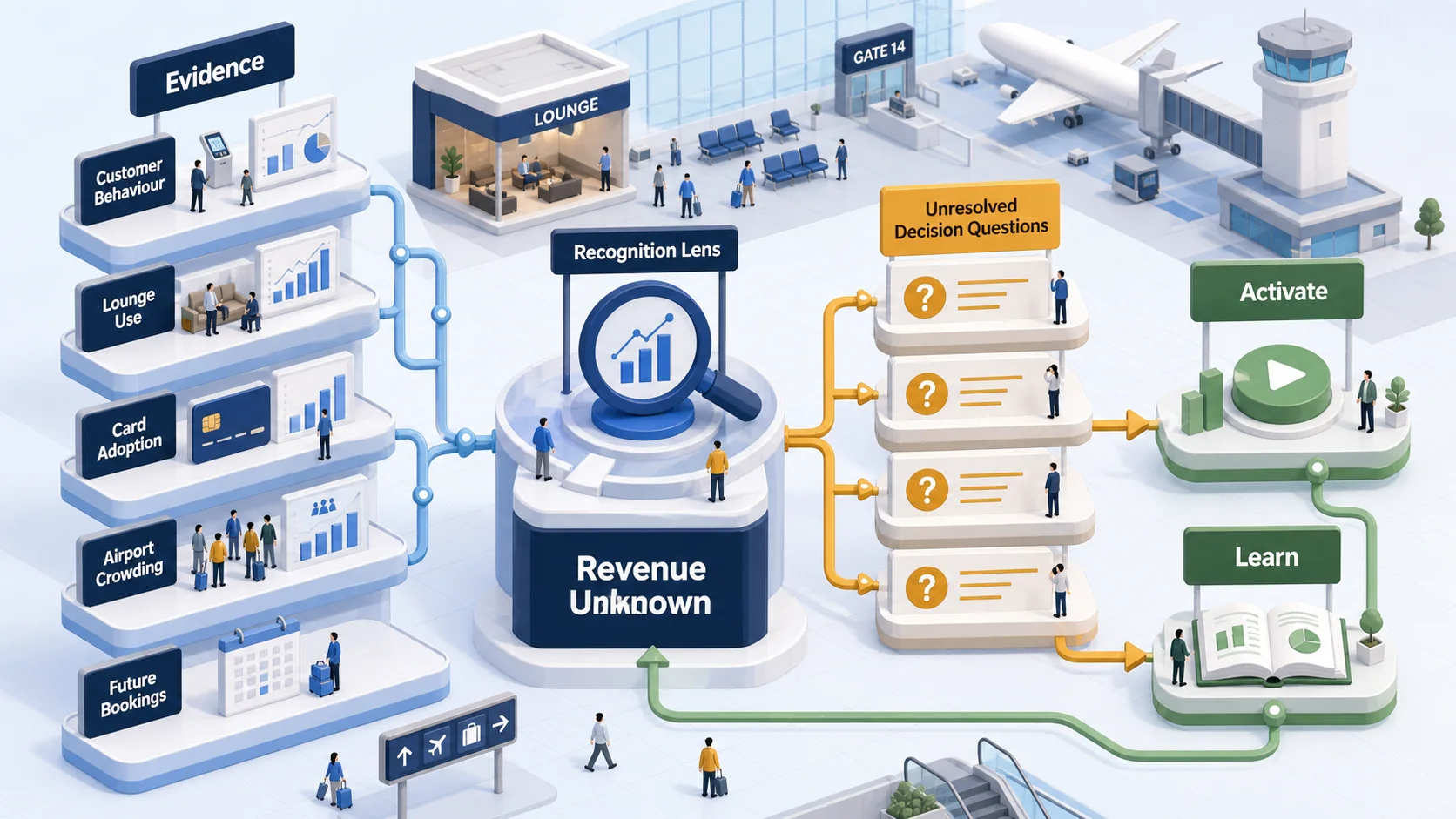
Which Southwest customers will spend more, stay more loyal, shift more travel to Southwest, or move more financial-services activity into the Southwest-Chase ecosystem because the airline now owns more of the airport experience?
That question is unresolved. It is not answered by the announcement. It will be answered by adoption, usage, crowding, card economics, customer interpretation, loyalty behaviour, airport execution, and whether Southwest can add premium continuity without making the rest of the experience feel less Southwest.
Why This Is Bigger Than Lounges
Airport lounges are usually interpreted through a familiar frame: premium passenger comfort.
That frame is too narrow here.
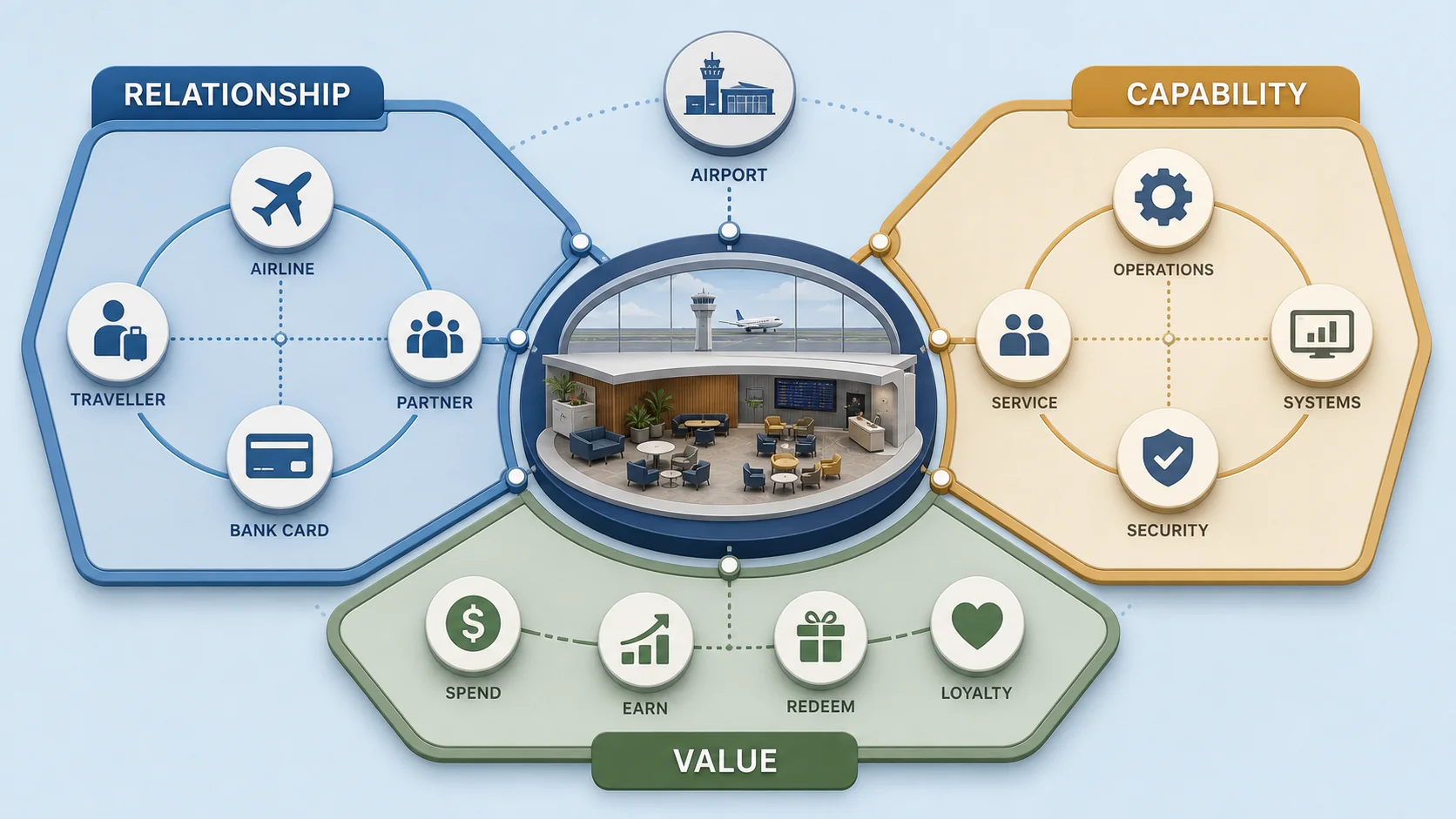
Southwest is entering a category that historically belonged to full-service network airlines, global alliances, premium credit-card issuers, and independent lounge operators. For those companies, lounges are not just customer-service spaces. They are status symbols, yield-management tools, credit-card acquisition benefits, retention levers, airport real-estate bets, and brand environments.
Southwest has always had loyalty, but it has not needed the same kind of airport hierarchy to make that loyalty work. Rapid Rewards, friendly service, route convenience, and a clear operating model carried much of the relationship. A traveller did not have to ask whether Southwest was trying to behave like Delta, United, American, or American Express.
Now Southwest is creating a premium doorway inside the airport.
That doorway can strengthen the relationship if it gives frequent travellers a better before-flight experience while preserving the airline's sense of approachability. It can weaken the relationship if customers read the move as another step away from the Southwest they trusted.
This is the same tension Southwest is already navigating through assigned seating, fare segmentation, new fee structures, international partnerships, and other customer-experience changes. The airline is trying to create new value without losing the meaning of the old one.
That is not a branding problem alone. It is an experience intelligence problem.
The Experience System That Changed
Before the announcement, the Southwest airport experience was mostly built around the gate, the boarding process, the crew, the flight, and the reliability of getting where the customer needed to go. The airport waiting period existed, but Southwest did not fully own it as a premium relationship moment.
The lounge changes that.
The customer's before-flight experience can now include a Southwest-branded place to wait, eat, work, recharge, recover, and feel recognized. The Chase relationship enters the journey before the aircraft door closes. The airport becomes a more important partner. The card becomes not just a payment instrument, but a key to a physical travel experience. Rapid Rewards becomes less abstract because it can be felt in the terminal.
This creates new continuity. It also creates new failure points.
If the lounge is calm, well-located, properly staffed, locally relevant, easy to access, and visibly connected to the customer's journey, it can strengthen the relationship. If the lounge is crowded, confusing, hard to enter, inconsistent across airports, or disconnected from disruption recovery, it can become a premium dead end: a promised experience that fails exactly when the customer needs it.
The experience does not begin when the lounge opens. It begins now, because customers, cardholders, competitors, airports, and partners start forming expectations the moment the plan is announced.
Three State Movements To Watch
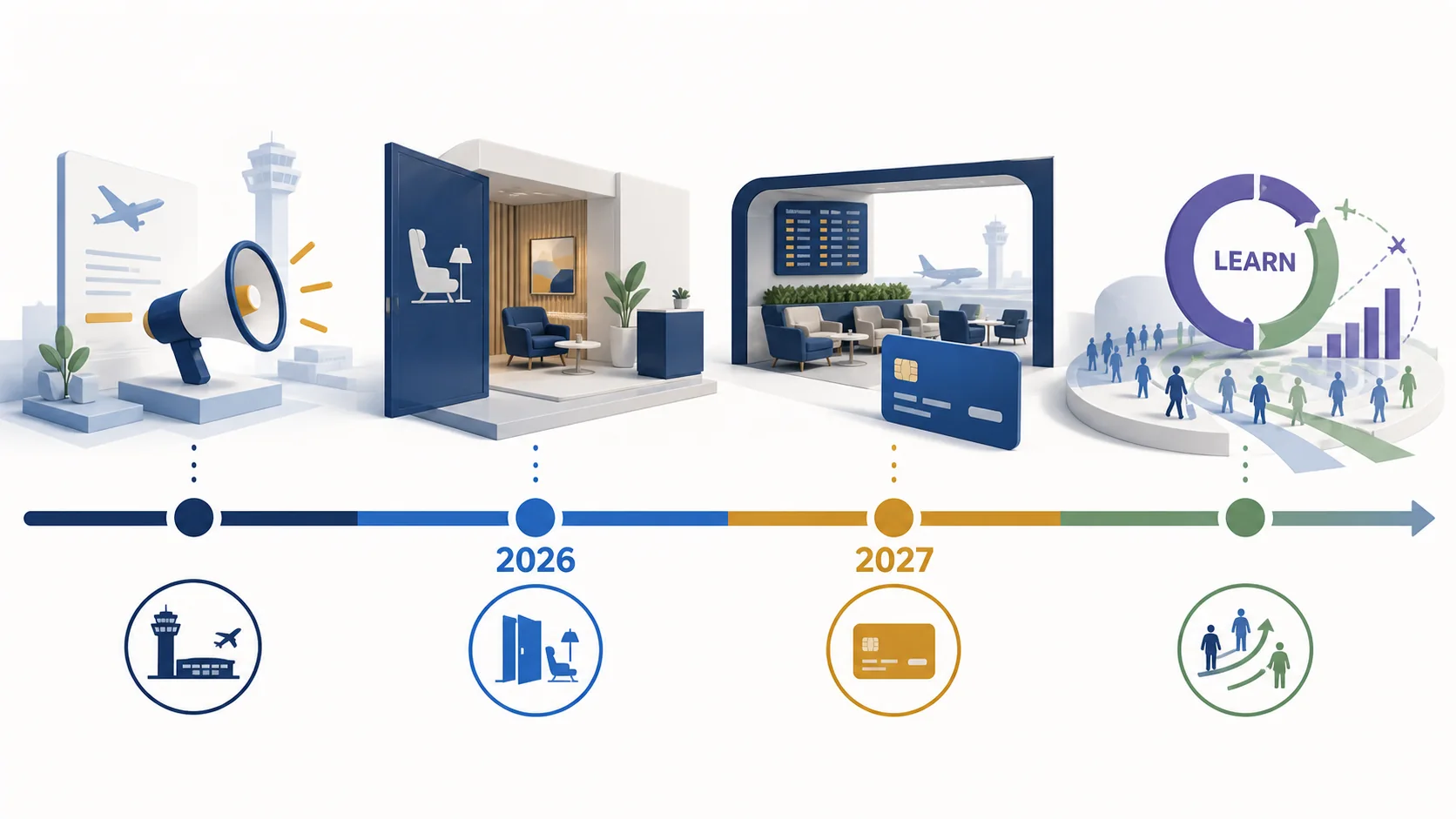
Transformidy would read this story through three state movements: Relationship State, Capability State, and Value State.
Relationship State is the current condition of continuity between actors. In this case, the key relationships include Southwest and loyal travellers, Southwest and Chase, Southwest and airports, Southwest and premium-seeking customers, Southwest and employees who must support the changed experience, and Southwest and customers who valued the airline's older simplicity.
The lounge network could strengthen the Southwest relationship with business travellers, high-frequency leisure travellers, and cardholders who previously found the airport experience underpowered. It could also weaken the relationship with customers who see the airline adding complexity while moving away from the egalitarian feeling that made it distinctive.
Capability State is the current condition of an actor or ecosystem's ability to sense, recognize, decide, coordinate, communicate, deliver, recover, adapt, validate, and learn. Lounges require a capability Southwest has not historically needed at scale. The airline must coordinate airport real estate, construction timing, food and beverage operations, access rules, crowd control, credit-card integration, staffing, cleaning, technology, local market design, and disruption response.
The risk is not that Southwest cannot build a lounge. The risk is that lounges add a new operating layer to an airline already changing several customer-facing systems at once.
Value State is the current condition of value being created, perceived, accessible, exchanged, protected, delayed, transferred, hidden, diminished, lost, or made newly possible. Southwest and Chase may create new value through card acquisition, card spend, loyalty retention, premium customer capture, higher share of wallet, and improved trip confidence. Airports may gain more differentiated terminal experiences. Travellers may gain a better pre-flight environment. Partners may gain new connection points.
But value can also leak. If lounge access is too limited, customers may feel excluded. If it is too broad, crowding can destroy the premium promise. If the new card is priced badly, adoption may disappoint. If lounges are beautiful but poorly connected to the actual travel day, the value remains decorative.
The lounge is a visible object. The state movement is the real story.
The Chase Question
Chase is not a side note. It is central to the Revenue Unknown.
Premium credit cards increasingly compete through travel experiences. Lounge access has become a way to make an intangible financial product feel physical. A customer may understand cash back or points intellectually, but a lounge makes the card relationship visible in a moment of stress, boredom, delay, or anticipation.
For Chase, Southwest lounges can deepen the co-branded card relationship in a market where premium travel benefits are crowded. The question is whether Southwest customers who may not have thought of themselves as lounge customers will now see premium card value differently.
That is a different kind of demand from the classic lounge customer. A Southwest traveller may be loyal because of route convenience, friendliness, habit, family travel, fare value, or the feeling that Southwest has been less complicated than competitors. The new credit card has to convert that relationship without making it feel like a fee wall around a brand that used to feel more open.
The Revenue Unknown for Chase is not simply how many cards it can issue.
It is:
Which Southwest travellers will reinterpret a credit-card relationship as part of their travel experience, and how much payment, loyalty, and travel behaviour will move because of that reinterpretation?
That question will be answered before, during, and after lounge launch. Application volume matters, but so do activation, retention, lounge usage, card spend, customer satisfaction, travel frequency, and whether cardholders actually shift more trips to Southwest.
The Airport Question
The first four airports are not random signals.
Austin, Baltimore/Washington, Honolulu, and Nashville each tell a different experience story. Austin is a fast-growing market with business, technology, leisure, and convention demand. Baltimore/Washington is one of Southwest's major East Coast strongholds and a gateway with both business and leisure relevance. Honolulu adds long-haul leisure, partner, and vacation significance. Nashville is a growing travel market with strong leisure and business momentum.
The portfolio matters because lounges behave differently by airport.
At a heavy business airport, the lounge may be judged by productivity, speed, power, work calls, quiet space, and predictability. At a leisure-heavy airport, the lounge may be judged by family comfort, food, vacation anticipation, recovery after long travel, and whether it reduces stress. At a connecting or gateway market, the lounge may be judged by how well it supports long waits, partner itineraries, and disruption recovery.
Southwest says at least seven more lounges are planned in high-demand business and leisure markets. The expansion sequence will reveal which airport experiences Southwest thinks are most valuable to own.
The airport Revenue Unknown:
Which airport moments create enough relationship and value movement to justify lounge investment, and which markets only look attractive because lounge demand is being inferred from competitor behaviour rather than Southwest-specific customer evidence?
That distinction matters. Copying an industry feature is not the same as recognizing a customer-state movement.
The Disruption Opportunity
The strongest version of a Southwest lounge may not be the sunny-day version.
It may be the disruption version.
When flights are on time, a lounge is a comfort benefit. When weather, crew constraints, mechanical delays, air-traffic congestion, or schedule recovery strain the system, a lounge becomes a relationship-recovery surface.
That is where Experience The Skies should pay close attention.
During disruption, travellers need more than a seat and a snack. They need clarity, power, rebooking help, water, food, family support, calm communication, and a visible path to what happens next. A lounge cannot solve a cancelled flight. But it can protect the relationship if it becomes part of a larger recovery system.
The unresolved question:
Can Southwest use lounges to protect traveller confidence during disruption, or will lounges become one more promise that fails when the airport experience is under pressure?
This is where operational capability and experience design meet. If lounge staff cannot answer rebooking questions, if digital systems do not connect, if access rules become confusing during irregular operations, or if crowded lounges turn away the customers most in need of support, the lounge may expose capability fragmentation rather than solve it.
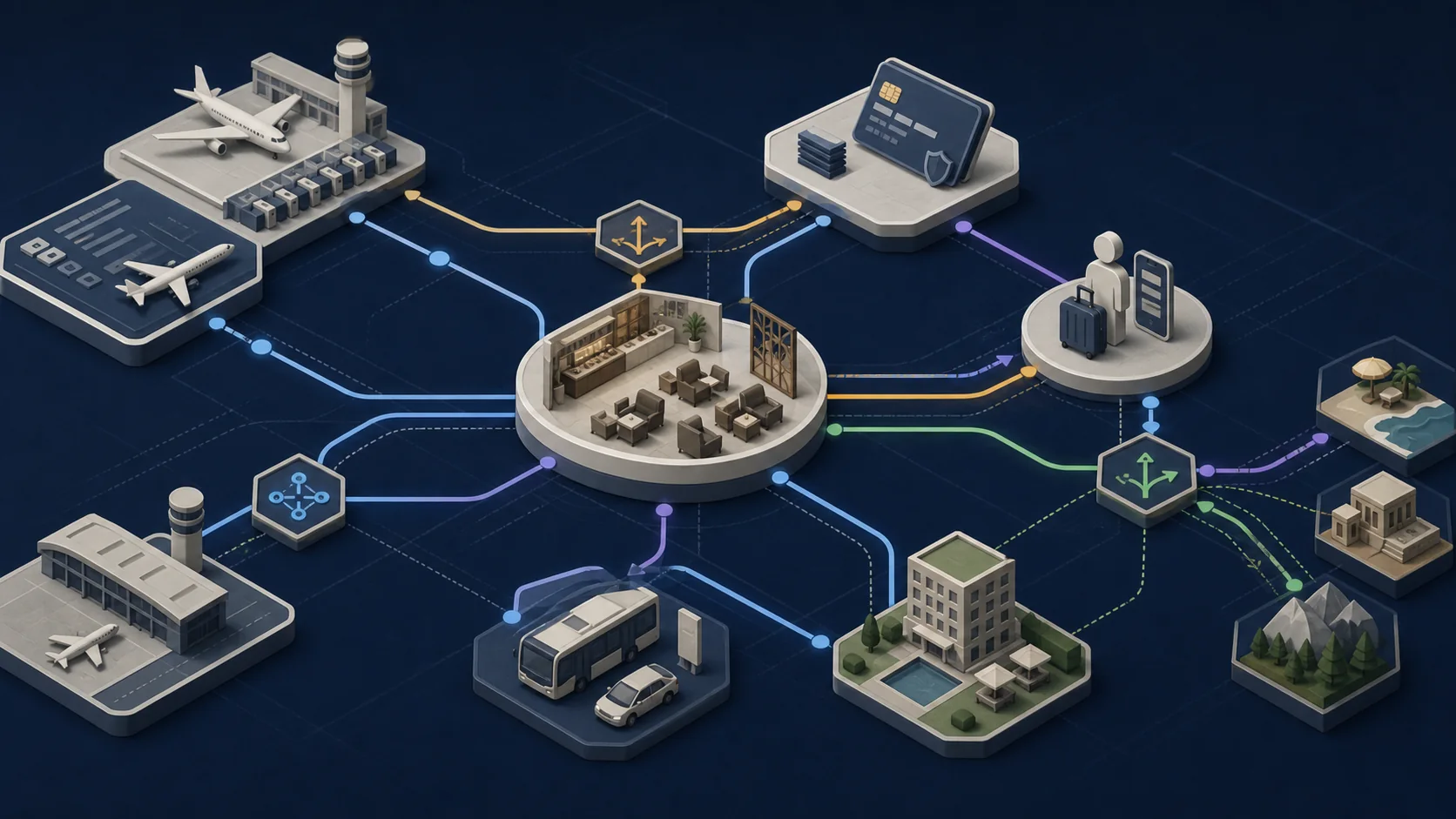
The opportunity is to make the lounge a continuity node, not a decorative amenity.
The Retail And Membership Lesson
Retail Mashup should pay attention for a different reason.
Southwest and Chase are turning a travel relationship into a retail-financial-services ecosystem. The customer does not merely buy a ticket. They may apply for a card, earn rewards, enter a lounge, redeem benefits, spend in-destination, book a hotel, rent a car, and make future travel choices through a broader relationship.
That is structurally similar to membership retail.
Costco does not only sell products. It sells access, confidence, habit, perceived value, and an economic relationship customers renew. Amazon Prime does not only sell shipping. It connects shopping, video, music, payment, subscription behaviour, and household convenience. Starbucks does not only sell coffee. It turns payment, ordering, rewards, frequency, and local routine into one relationship.
Southwest now has to decide whether its lounge and card ecosystem behaves like a membership that creates continuity or like a premium add-on that complicates the core offer.
The retail Revenue Unknown:
Which travel customers will behave more like members once Southwest gives them a physical benefit tied to a financial-services product?
That is not only an airline question. It is a retail question, a payments question, and a loyalty-design question.
What Competitors Should Watch
Competitors should not watch only the lounge renderings.
They should watch whether Southwest can change the meaning of premium in a low-cost context.
Delta, United, American, Alaska, JetBlue, and Air Canada already understand lounges as part of the premium and loyalty experience. Credit-card networks and issuers understand them as acquisition and retention tools. Airports understand them as high-value real estate. But Southwest may be testing something slightly different: a hybrid experience where the base airline remains broad, familiar, and accessible, while a new continuity layer captures customers who want more airport certainty without leaving Southwest.
That could matter if it works.
If Southwest proves that lounge access can be attached to its brand without making the airline feel less simple, other low-cost or hybrid carriers may revisit whether the lounge category is truly incompatible with their model. If the move fails, the lesson may be that premium infrastructure cannot be bolted onto a brand whose trust was built through simplicity.
Competitors should watch five signals.
First, card adoption. Does the new premium Southwest card attract existing loyalists, new premium travellers, or both?
Second, lounge utilization. Are the lounges used consistently, or only during peak waves and disruption?
Third, customer interpretation. Do customers describe the move as a natural extension of Southwest hospitality or as evidence that Southwest is becoming just another airline?
Fourth, operational performance. Does the lounge system hold up during disruption, crowding, staffing constraints, and airport-specific bottlenecks?
Fifth, booking behaviour. Do cardholders and lounge users shift more travel to Southwest, choose higher fares, or show stronger retention?
The competitors' Revenue Unknown is:
How much premium demand has been sitting inside the low-cost carrier customer base, waiting for the right experience bridge?
What Could Go Wrong
This move has obvious upside, but the failure modes are real.
The first is overcrowding. Lounges are vulnerable to their own popularity. If access is too broad, the benefit weakens. If access is too narrow, the business case may suffer. Southwest and Chase will need to manage access carefully because the lounge promise collapses quickly when the room feels less comfortable than the gate.
The second is brand confusion. Southwest's historical strength came from making travel feel less hierarchical. A premium lounge can still fit that brand if it is positioned as hospitality and journey continuity. It fits less well if customers experience it as class segmentation.
The third is operational distraction. Southwest is not only adding lounges. It has also been changing seating, fares, fees, partnerships, and premium products. Each change may make sense individually. Together, they increase the risk that customers and employees lose the simple mental model of what Southwest is.
The fourth is weak integration. If lounge access, Rapid Rewards, card benefits, app flows, disruption support, airport wayfinding, and customer-service recovery do not connect, the lounge becomes another disconnected feature.
The fifth is value overreach. Premium lounges require enough high-value customer behaviour to justify the investment. If the economics depend on assumptions about travellers who do not actually shift spend, the visible facility may hide a weak Revenue Unknown.
The mistake would be treating the lounge as proof that premiumization is working.
The lounge is not proof. It is a test.
The Decisions Southwest Has To Make Before 2027
The 2027 opening target gives Southwest time. But the decision window is already open.
Before launch, Southwest has to decide how access works. The new premium Chase card will provide access, but the broader rules will determine whether the lounge feels exclusive, confusing, attainable, or strategically useful. Day passes, status access, guest policies, family rules, disruption exceptions, and capacity controls will all carry relationship meaning.
Southwest has to decide how the lounges sound. If the language is too luxury-coded, it may feel like brand drift. If it is too casual, the value of a premium card may be harder to justify. The stronger language is likely not luxury. It is hospitality, calm, readiness, recovery, and continuity.
Southwest has to decide how the lounges operate during disruption. This is the real test. A lounge that is useful only when everything is going well leaves value on the table. A lounge that becomes a trusted place during delays can protect relationship state when the airline needs it most.
Southwest has to decide how employees are prepared. Lounge staff, gate agents, customer-service teams, flight crews, airport partners, and digital teams will all influence how the new experience is interpreted. If the lounge promise is not understood internally, customers will feel the handoff problem externally.
Southwest has to decide how it will learn. The airline should not wait until the network is built to understand whether the model works. It can begin now with pre-launch research, card-offer testing, traveller-segment analysis, airport-market analysis, partner readiness, and simulations of disruption scenarios.
The best question for Southwest is not: how do we launch lounges?
The better question is:
What customer, employee, airport, and partner state movements would prove the lounge network is strengthening the Southwest experience rather than merely adding premium cost?
What Leaders Outside Aviation Should Learn
This story is useful far beyond airlines.
Every organization eventually faces a version of the same problem. A company built around one kind of experience sees a new value pool forming somewhere nearby. It can ignore the opportunity and preserve simplicity. It can copy competitors and dilute itself. Or it can recognize the underlying state movement and design a bridge that fits its own relationship with customers.
Southwest's lounge decision is a bridge.
It connects waiting to hospitality.
It connects Rapid Rewards to physical experience.
It connects credit-card value to airport behaviour.
It connects airport real estate to customer retention.
It connects disruption recovery to loyalty.
It connects a low-cost brand to a premium decision without yet proving whether the connection will hold.
That is why the move matters. The visible news is that Southwest is opening lounges. The experience intelligence story is that Southwest is trying to create a new continuity layer around travel before competitors, credit-card issuers, airports, and customers define that layer without it.
The Revenue Unknown remains open.
Will Southwest find a new premium relationship inside its existing customer base?
Will Chase gain a more durable travel-card reason to belong?
Will airports see stronger ecosystem value?
Will customers feel more recognized, or more segmented?
Will employees and operations teams be given enough capability to deliver the promise?
Will the lounges protect value during disruption, or only decorate normal travel?
The answers will not come from the announcement. They will come from the evidence Southwest chooses to watch before, during, and after the lounges open.
That is the lesson.
The lounge is the artifact. The Revenue Unknown is the movement around it.
Reader Poll
Where do you think Southwest's biggest lounge-related Revenue Unknown sits?
Sources
- Southwest Airlines investor release: first-ever lounges to debut in Austin, Baltimore, Honolulu, and Nashville
- Skift: Southwest to Launch Airport Lounges in 2027
- The Wall Street Journal: Southwest Airlines Jumps Into the Airport Lounge Competition
- Southwest Airlines: airline partnerships
Related Reading
How concentrated is your revenue across your top customers? If your largest customer left, how would it impact annual revenue?
FAQ
Is Southwest Airlines opening airport lounges?
Yes. Southwest announced on September 2, 2026 that it will open its first airport lounge network. The first lounges are planned for Austin, Baltimore/Washington, Honolulu, and Nashville, with first guests expected in late 2027.
Who is Southwest partnering with for the lounges?
Southwest is partnering with Chase. The companies plan to connect the lounge network to a new premium Southwest Rapid Rewards credit card issued by Chase in 2027.
Why is this unusual for Southwest?
Southwest historically built its brand around low fares, simplicity, friendly service, and a less hierarchical travel experience. Airport lounges are more common among network carriers, premium credit-card issuers, and full-service airline loyalty ecosystems.
What is the Revenue Unknown in Southwest's lounge strategy?
The Revenue Unknown is whether lounge access will cause Southwest customers to spend more, stay more loyal, shift more travel to Southwest, adopt the premium Chase card, or value Southwest differently without weakening the airline's simplicity advantage.
What should competitors watch?
Competitors should watch card adoption, lounge utilization, customer interpretation, disruption performance, and whether lounge users shift future bookings or fare choices toward Southwest.
Related intelligence
Article
Apple's Next Revenue Unknowns After Tim Cook
John Ternus begins as Apple's CEO on September 1, 2026. Tim Cook leaves him a company built on experience continuity, services, retail, privacy, silicon, and trust. The next question is which Revenue Unknowns Apple can recognize early enough to shape.
Article
The Trust Recession
Trust weakens when customers, employees, partners, or the public stop accepting promises without proof of organizational coherence.
Article
The Playbook Before the Rollout
Two governments built automated systems that made consequential decisions about their citizens. One never wrote down, before deployment, what pre-launch testing an AI system had to pass. The other built a public assurance playbook years earlier, and has kept updating that playbook as the technology