
Article
Claim Silence Is a Dead-End Experience
A claim or appeal is submitted, and then goes quiet — no status, no timeline, no owner. Here's why claim silence is a dead-end experience, and why it deserves more care than most.
- Published
- August 6, 2026
- Updated
- August 12, 2026
- Reading time
- 9 min

A note on why this article requires extra care
Claims — insurance, healthcare, benefits — sit at the intersection of real financial and personal stakes and heavily regulated processes. This article deliberately stays at the level of the *pattern*, not specific companies, specific claim types, or specific regulatory obligations, because those details vary by jurisdiction, product, and regulator, and getting them wrong in a published piece would cause real harm to a reader relying on it. Anyone editing this further should treat every regulatory or procedural claim as requiring direct verification against current, jurisdiction-specific guidance before publication.
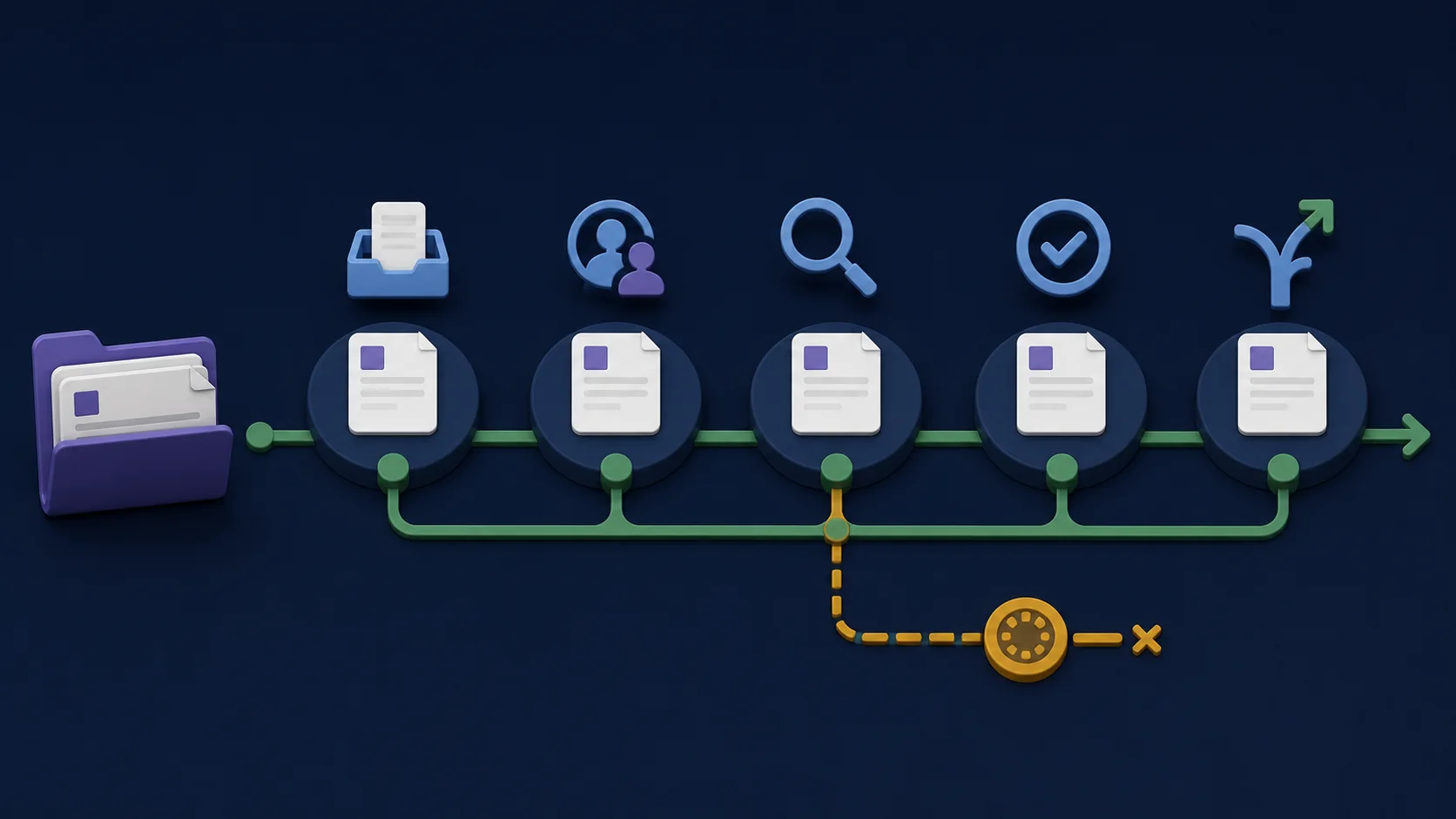
The moment the paperwork goes quiet
Someone files a claim — an insurance claim after a loss, an appeal after a denial, a request for care authorization. They've done the hard part: gathered documents, filled out forms, sometimes navigated a genuinely confusing process to get this far. And then, in a meaningful number of cases, nothing visible happens for a period of time that feels, to the person waiting, indefinite.
This is a particularly consequential version of the dead-end pattern, because unlike a marketing form or a product page, the person on the other end of a stalled claim is often dealing with a real loss, a real medical need, or a real financial exposure while they wait. The stakes of silence are simply higher here than in most of the other patterns in this series.
Why this is a dead end, not just "claims take time"
Processing time itself isn't the dead end — complex claims legitimately require investigation, documentation, and review, and no organization can promise instant resolution for every case. The dead end is the *absence of visible progress* during that time. Applying the four-question test:
- Is there a next step the claimant can see? Often not — many claim processes provide a submission confirmation and then nothing until a final decision.
- Is there an owner the claimant can identify and reach? Frequently unclear — claims often move between departments or reviewers without a single visible point of contact.
- Is there a recovery path if the claimant believes something is wrong or delayed? Sometimes formally available (an appeals or escalation process) but often poorly communicated at the moment it would actually help.
- Is there an activation path for evidence the claimant has already provided, if more information turns out to be needed? Often the claimant only discovers something is missing when the claim is denied for lack of information — rather than being asked proactively while the gap could still be closed.
The unresolved claimant question
Which claimants, patients, or members abandon an action they might have continued — an appeal, a follow-up, a request for reconsideration — if ownership and timeline had been clear?
This is deliberately an open question, and one that should be handled with particular care in any published version: it is plausible that unclear status and timeline cause some claimants to give up on claims or appeals they were otherwise entitled to pursue, but making that claim specific (a rate, a dollar figure, a named cause) without a verified, authoritative source would cross from pattern observation into an unsupported and potentially harmful assertion. This article should not attempt that leap without dedicated, sector-specific research.
How claim continuity could be made visible
- Status continuity — a real, current status the claimant can check, described in plain language, not internal process codes.
- Timeline continuity — a stated expected timeframe, communicated proactively rather than only on request.
- Ownership continuity — a identifiable point of contact for the claim, even if the underlying work is distributed across a team.
- Information continuity — proactively surfacing what's missing while there's still time to provide it, rather than denying for incompleteness after the fact.
- Escalation continuity — a clearly communicated, genuinely accessible path to appeal or ask for reconsideration, offered before frustration forces the claimant to find it themselves.
Why this deserves a place in the series, with a caveat
Claim silence is one of the clearest examples of the core thesis of this series — evidence exists, intent is expressed, and the organization's own process, not malice, is what creates the dead end. It belongs in this series for that reason. But because the stakes for individual readers are real (financial hardship, denied care, lost opportunities to appeal), any future version of this article should lean more heavily than most of the series on citing specific, current, regulator-published guidance about claimant rights and standard practices, rather than general pattern description alone.
The visibility test
For any organization handling claims of any kind, the relevant internal test is not "how fast do we resolve claims" but "how clearly can a claimant tell what's currently happening with theirs, without calling and waiting on hold to find out." If the honest answer is "they can't," that's the dead end this article describes.
Before, during and after the dead end
This pattern should be managed across three decision windows, not only after the failure becomes visible. Before the dead end, the organization should watch for the signals that intent, trust, value or responsibility is starting to stall. During the dead end, the priority is to preserve context, name an owner, keep a useful next step visible and protect whatever value can still be recovered. After the immediate moment passes, the organization should measure what changed, identify which Revenue Unknown remains unresolved and redesign the experience so the next cycle starts earlier.
Transformidy infographic
Dead-end experience vs friction
Friction slows movement. A dead-end experience blocks recognition, decision, recovery, or continuity.
- 01
Friction
The person can continue, but with extra effort, delay, or confusion.
- 02
Dead end
The person cannot complete, recover, escalate, or know what happens next.
- 03
Recognition gap
The organization sees activity, but misses the blocked experience condition.
- 04
Decision needed
Someone must own the path, exception, handoff, or recovery rule.
FAQ
Why do insurance and healthcare claims go silent after submission?
This article addresses the question through the lens of experience continuity, the unresolved Revenue Unknown, and the decision window leaders still have before the pattern repeats.
What is claim silence as a dead-end experience?
This article addresses the question through the lens of experience continuity, the unresolved Revenue Unknown, and the decision window leaders still have before the pattern repeats.
What is the Revenue Unknown created by unclear claim status?
This article addresses the question through the lens of experience continuity, the unresolved Revenue Unknown, and the decision window leaders still have before the pattern repeats.
What should organizations do to keep claimants informed during a claim?
This article addresses the question through the lens of experience continuity, the unresolved Revenue Unknown, and the decision window leaders still have before the pattern repeats.
Related intelligence
Article
How to Find Dead-End Experiences Before Customers Defect
Dead-end experiences don't announce themselves — they hide inside metrics that look fine. Here's a practical way to find them before they show up as defection.
Article
Hotel Recovery Is Not Finished When the Apology Is Sent
A sincere apology closes a complaint. It doesn't necessarily rebuild the confidence a guest needs to book that hotel again. Here's why service recovery often stops one step too early.
Article
Healthcare Referrals Leave Patients Stranded Between Providers
A referral is a handoff between two providers who don't share a single system or, often, direct communication. Here's why that handoff is a common point where care intent quietly stops.