
Article
How to Find Dead-End Experiences Before Customers Defect
Dead-end experiences don't announce themselves — they hide inside metrics that look fine. Here's a practical way to find them before they show up as defection.
- Published
- September 8, 2026
- Updated
- August 12, 2026
- Reading time
- 9 min
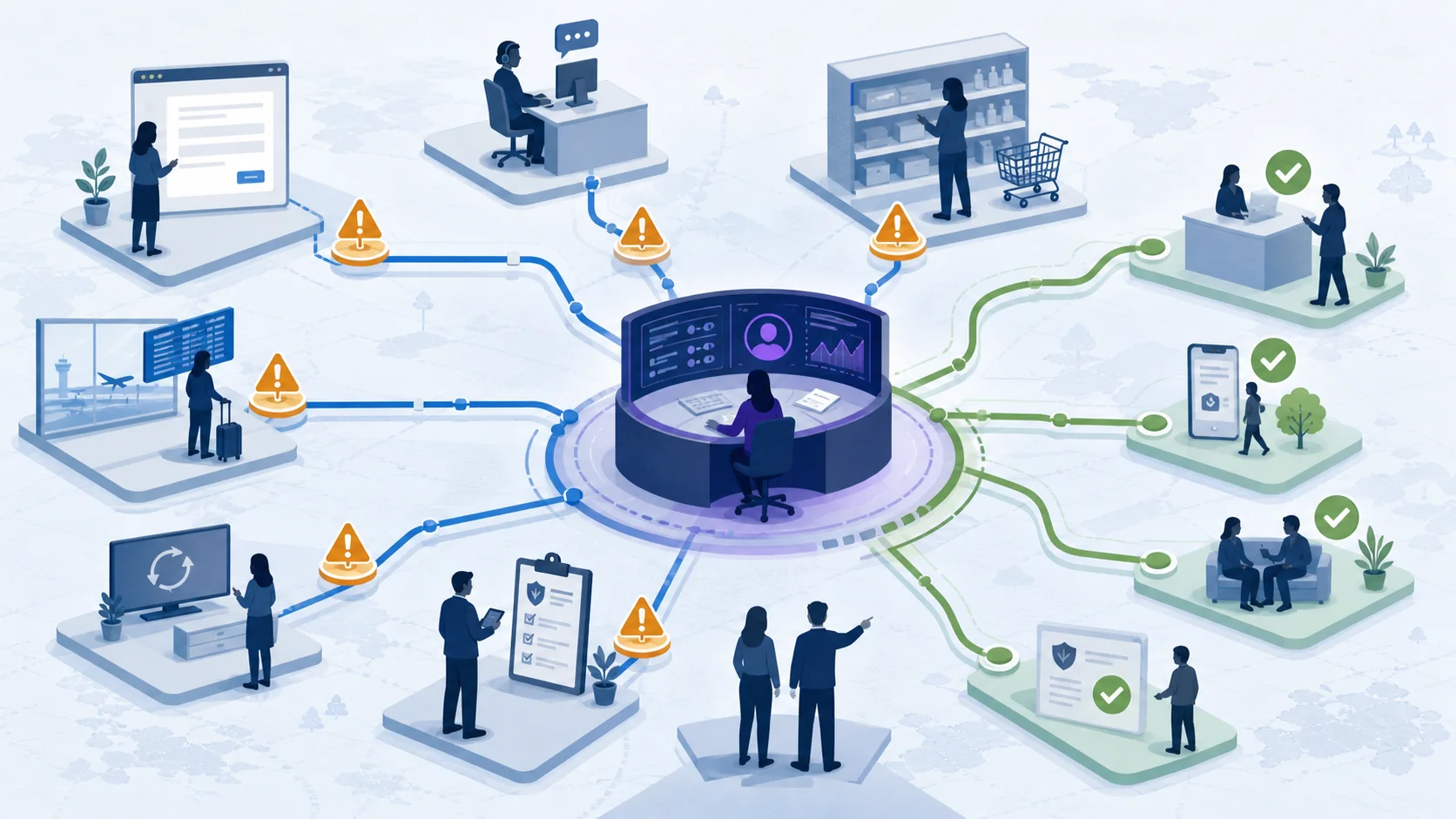
Dead ends hide inside metrics that look healthy
By the time a customer defects, cancels, or stops engaging, the dead end that caused it is usually old news. The actual break — the moment intent stopped moving — happened earlier, often while the surrounding metrics still looked fine. Ticket volume was normal. Conversion was on target. Engagement dashboards showed nothing alarming. The dead end was invisible precisely because most organizational measurement is built to track activity and outcomes in aggregate, not to notice the specific moments where an individual person's intent stopped being carried forward.
This article is the practical companion to the rest of the series: a way to go looking for dead ends deliberately, rather than discovering them retroactively through churn, complaints, or lost revenue you can't quite explain.
Start from evidence, not from assumptions
The instinct, when hunting for experience problems, is to start with a journey map or a survey. Both have value, but neither reliably surfaces dead ends, because both tend to describe the experience as designed, not the experience as it actually breaks. Dead ends are found by tracing actual evidence — actual forms submitted, actual claims filed, actual usage drop-offs — and asking a specific, narrow question at each point: did this expressed intent reach a next step, an owner, a recovery path, or an activation path?
If the answer is no, you've found a dead end. If the answer is unclear — if no one in the organization can confidently say what happens next — that uncertainty is itself diagnostic. Dead ends often live exactly where ownership is ambiguous enough that no one has had to answer the question before.
Where to look first
Based on the patterns already documented across this series, four categories of moment are disproportionately likely to contain dead ends, because they are moments where the organization explicitly asks someone to express intent and then hands that intent off internally:
- Expressed-intent moments — forms, applications, quote requests, claims: anywhere a person deliberately provides information because they want something to happen next. (See Form Submission Is Often Where Intent Disappears and The Job Application Black Hole Is a Dead-End Experience.)
- Constraint moments — out-of-stock pages, capacity limits, eligibility denials: anywhere the organization tells someone "not this, not now" without offering an alternative. (See Out-of-Stock Is Not the End of Demand.)
- Disruption moments — cancellations, outages, service failures: anywhere the organization's process is built to resolve its own operational problem, which may not be the same as the person's actual problem. (See When Flight Disruption Becomes a Dead-End Experience and Claim Silence Is a Dead-End Experience.)
- Silent-decline moments — usage drop-offs, disengagement, quiet dissatisfaction: anywhere someone's behavior changes gradually and nothing in the organization notices before the change becomes a decision to leave. (See Streaming Churn Is Often a Broken Continuity Signal and AI Adoption Metrics Can Hide Dead-End Outcomes.)
These four categories aren't exhaustive, but they're a practical starting map, because they recur across every industry this series has examined.
A simple diagnostic sequence
For any moment you suspect might be a dead end, work through this sequence:
1. Name the expressed intent. What, specifically, did the person want to happen next?
2. Trace what actually happens after that moment, not what the process documentation says should happen. Follow the real system, the real handoff, the real queue.
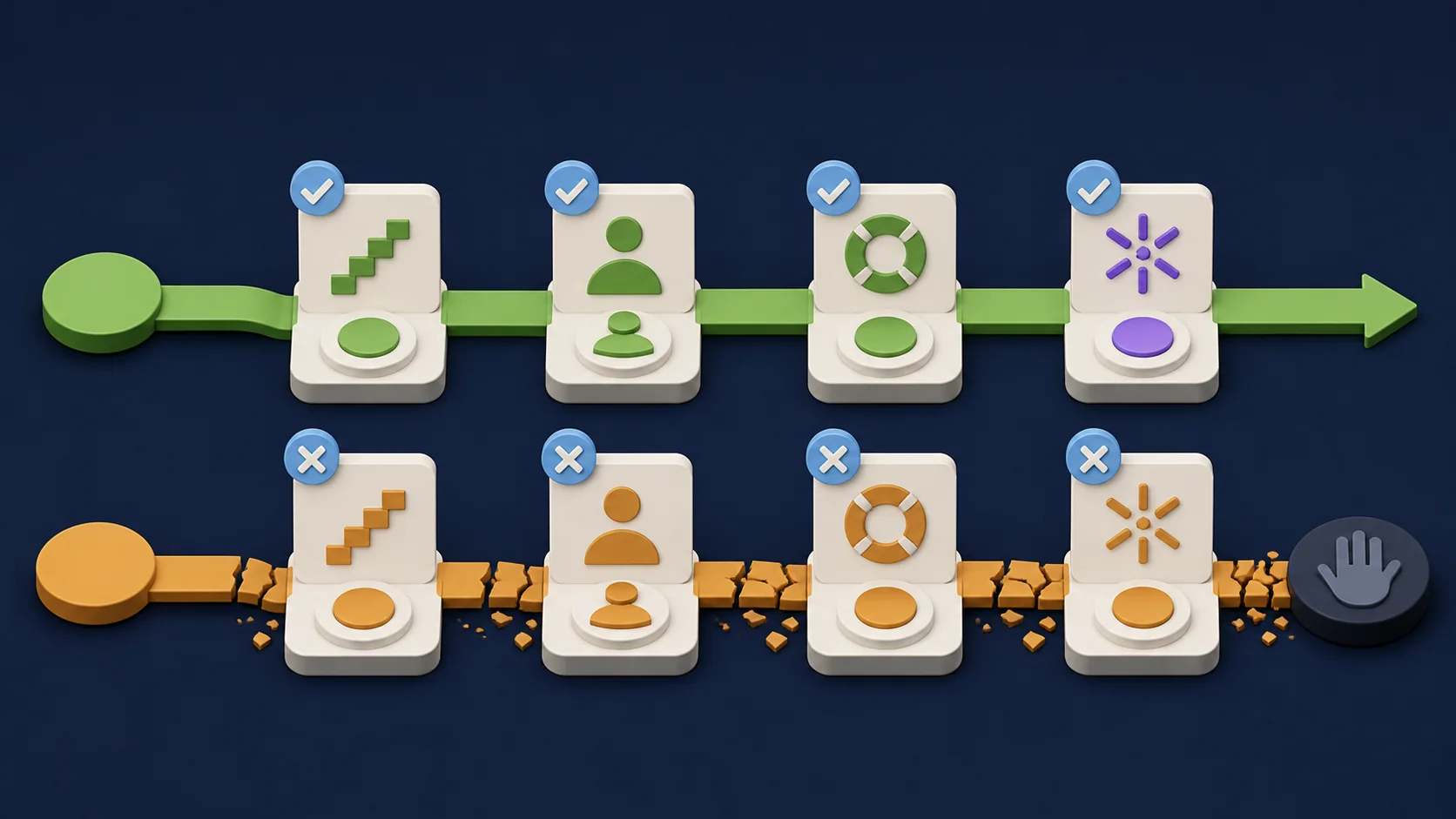
3. Apply the four-question test from What Are Dead-End Experiences?: is there a visible next step, a named owner, a recovery path, and an activation path?
4. If any answer is no or unclear, you've found a candidate dead end. Don't fix it yet — first ask what Revenue Unknown it creates: what unresolved commercial question does this break expose?
5. Test one repair narrowly, per the continuity discipline in What Is Experience Continuity?, rather than attempting to fix every instance of the pattern across the organization simultaneously.
Why proof beats inventory
It's tempting, once you start looking, to build a comprehensive inventory of every dead end in the organization. Resist that instinct as a first move. An inventory without a proven repair is a map, and a map doesn't recover any value on its own. One dead end, closed with a named owner and a measured outcome, is worth more than twenty documented but unaddressed. Once one repair is proven, the pattern, the measurement approach, and the ownership model transfer to the next dead end far more easily than they would have if the first move had been a full audit.
The signal to watch
The organizations most likely to have dead ends they haven't found are the ones where operational metrics look stable while frontline teams, support staff, or partner organizations keep raising the same unresolved issue through different channels. If that pattern sounds familiar, it's usually a sign that the dead end has already been recognized somewhere in the organization — just not by anyone with the authority or visibility to act on it yet.
Before, during and after the dead end
This pattern should be managed across three decision windows, not only after the failure becomes visible. Before the dead end, the organization should watch for the signals that intent, trust, value or responsibility is starting to stall. During the dead end, the priority is to preserve context, name an owner, keep a useful next step visible and protect whatever value can still be recovered. After the immediate moment passes, the organization should measure what changed, identify which Revenue Unknown remains unresolved and redesign the experience so the next cycle starts earlier.
Transformidy infographic
Dead-end experience vs friction
Friction slows movement. A dead-end experience blocks recognition, decision, recovery, or continuity.
- 01
Friction
The person can continue, but with extra effort, delay, or confusion.
- 02
Dead end
The person cannot complete, recover, escalate, or know what happens next.
- 03
Recognition gap
The organization sees activity, but misses the blocked experience condition.
- 04
Decision needed
Someone must own the path, exception, handoff, or recovery rule.
FAQ
How do you find dead-end experiences before customers leave?
This article addresses the question through the lens of experience continuity, the unresolved Revenue Unknown, and the decision window leaders still have before the pattern repeats.
What are the most common places dead-end experiences hide?
This article addresses the question through the lens of experience continuity, the unresolved Revenue Unknown, and the decision window leaders still have before the pattern repeats.
Why do dead-end experiences not show up in normal metrics?
This article addresses the question through the lens of experience continuity, the unresolved Revenue Unknown, and the decision window leaders still have before the pattern repeats.
Should organizations build a full dead-end inventory first, or fix one problem first?
This article addresses the question through the lens of experience continuity, the unresolved Revenue Unknown, and the decision window leaders still have before the pattern repeats.
Related intelligence
Article
Hotel Recovery Is Not Finished When the Apology Is Sent
A sincere apology closes a complaint. It doesn't necessarily rebuild the confidence a guest needs to book that hotel again. Here's why service recovery often stops one step too early.
Article
Healthcare Referrals Leave Patients Stranded Between Providers
A referral is a handoff between two providers who don't share a single system or, often, direct communication. Here's why that handoff is a common point where care intent quietly stops.
Article
Frontline Warnings Become Dead Ends Without Decision Ownership
A frontline employee raises a warning — a workload problem, a recurring customer issue, a capacity strain. It reaches a manager. Whether it reaches anyone who can actually decide something is a different question.