
Article
A Third of Walmart's Operating Income Now Comes From Ads and Memberships
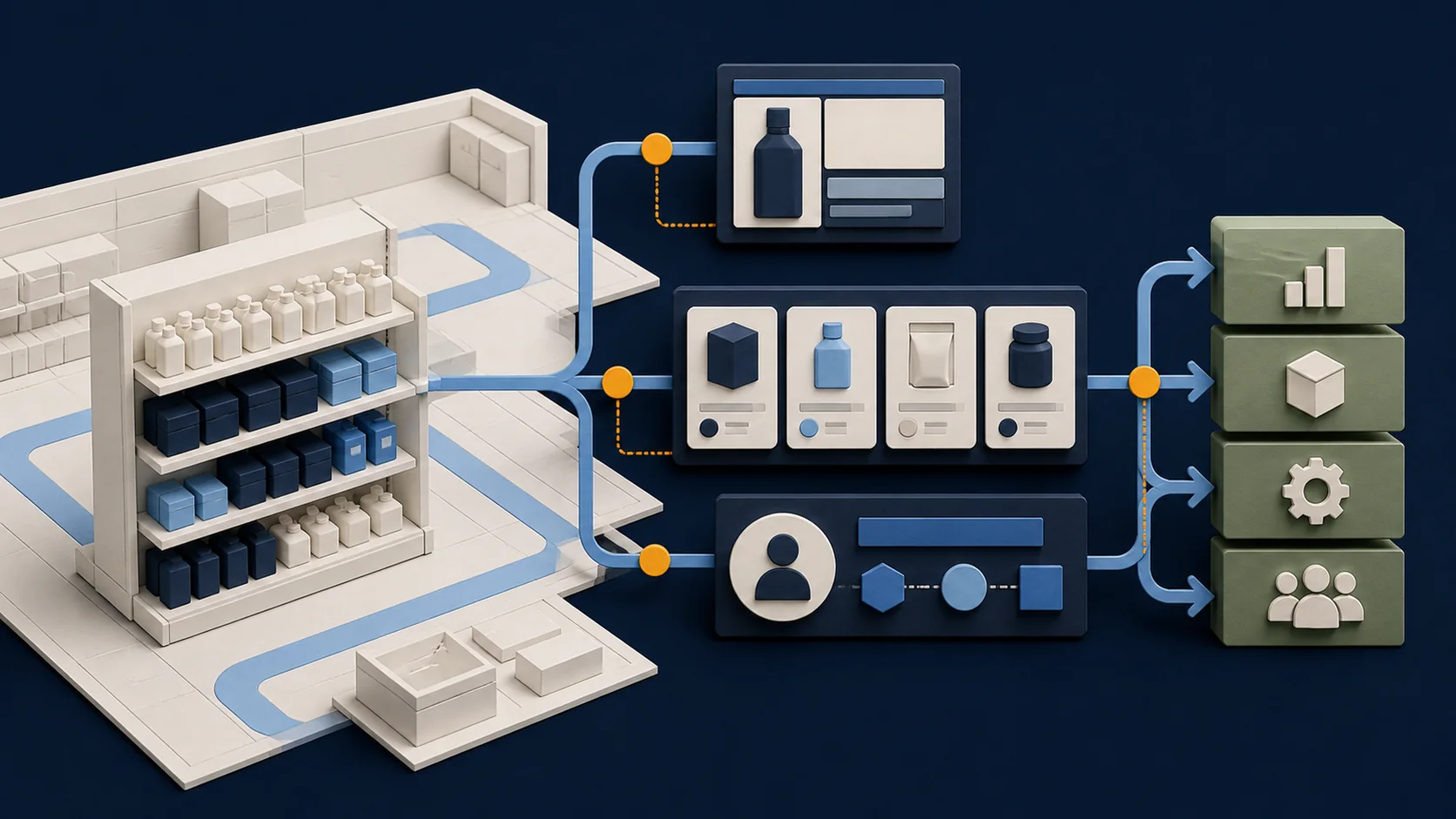
Advertising and membership fees now account for a third of Walmart's operating income. Walmart Connect grew 41% in a quarter when retail sales grew about 5%, eight times faster. Retail media margins exceed 70%. Walmart is no longer just a retailer that also sells ads.
- Published
- February 20, 2026
- Updated
- June 18, 2026
- Reading time
- 8 min
2026 updated analysis
What changed since the original article
This page keeps the original Transformidy article as the canonical record and leads with the current interpretation, source notes, and Revenue Unknown framing.
41% vs. 5%
Walmart Connect grew 41% in Q4 fiscal 2026 in the US, excluding VIZIO, while total retail sales grew roughly 5% in the same period, meaning the advertising business grew across the full fiscal year at six times the rate of overall retail sales. Walmart's global advertising business overall generated nearly $6.4 billion for the fiscal year, up 46%.
CFO John David Rainey put the scale of that shift in the most direct terms available: advertising and membership fees together "accounted for a third of Walmart's operating income in the fourth quarter." That is not a marginal contribution from a side business; it is a structural statement about where a meaningful share of Walmart's actual profit is now being generated, distinct from and growing far faster than the core merchandising business most people still associate with the Walmart name.
Rainey separately described Q4's Walmart Connect performance as "the best year over year number we've had for any quarter that I can remember in probably the last three years," a specific, on-record acknowledgment that this quarter represented an acceleration, not just a continuation, of the advertising business's growth trajectory.
Global advertising revenue and year-over-year growth
Advertising and membership fees accounted for a third of Q4 operating income, per CFO John David Rainey.
The 200,000-Seller Auction
The specific mechanism driving Walmart Connect's growth is worth naming directly, because it explains why the advertising business is accelerating rather than simply maintaining a steady rate: more than 200,000 active marketplace sellers now compete on Walmart's platform, and marketplace seller advertising spend is growing faster than spend from Walmart's traditional first-party brand partners. That growing pool of competing advertisers drives rising cost-per-thousand-impressions as auction dynamics intensify, a self-reinforcing cycle where more competition produces higher prices, which in turn produces higher advertising revenue for Walmart independent of any change in the number of Walmart shoppers themselves.
Retail media margins exceeding 70% compound that dynamic further. Every incremental dollar Walmart captures from this auction-driven ad system contributes disproportionately to operating income relative to a dollar of traditional retail revenue, which typically carries much thinner margins after cost of goods, logistics, and labor. That margin gap is the direct financial explanation for why Walmart's leadership is prioritizing this growth engine and why it now represents a third of the company's operating income despite still being a smaller absolute revenue line than core retail.
For any business built around a large customer base or marketplace, this pattern is worth studying directly: an advertising or platform-fee layer built on top of existing traffic and seller relationships can generate margin economics fundamentally different from, and potentially more profitable than, the core transactional business that built the audience in the first place. Walmart's data shows that dynamic playing out at genuinely enormous scale.
Retail Revenue Growth vs. Retail Media Growth
One grows steadily at low margin. The other grows in multiples at margins retail cannot match.
Retail revenue growth: roughly 5% in Q4, reflecting mature, low-single-digit-margin merchandising growth typical of a company Walmart's size. Retail media growth: 41% in the same quarter, at margins exceeding 70%, driven by an intensifying auction among more than 200,000 competing marketplace sellers, a fundamentally different growth engine operating on top of the same customer base.
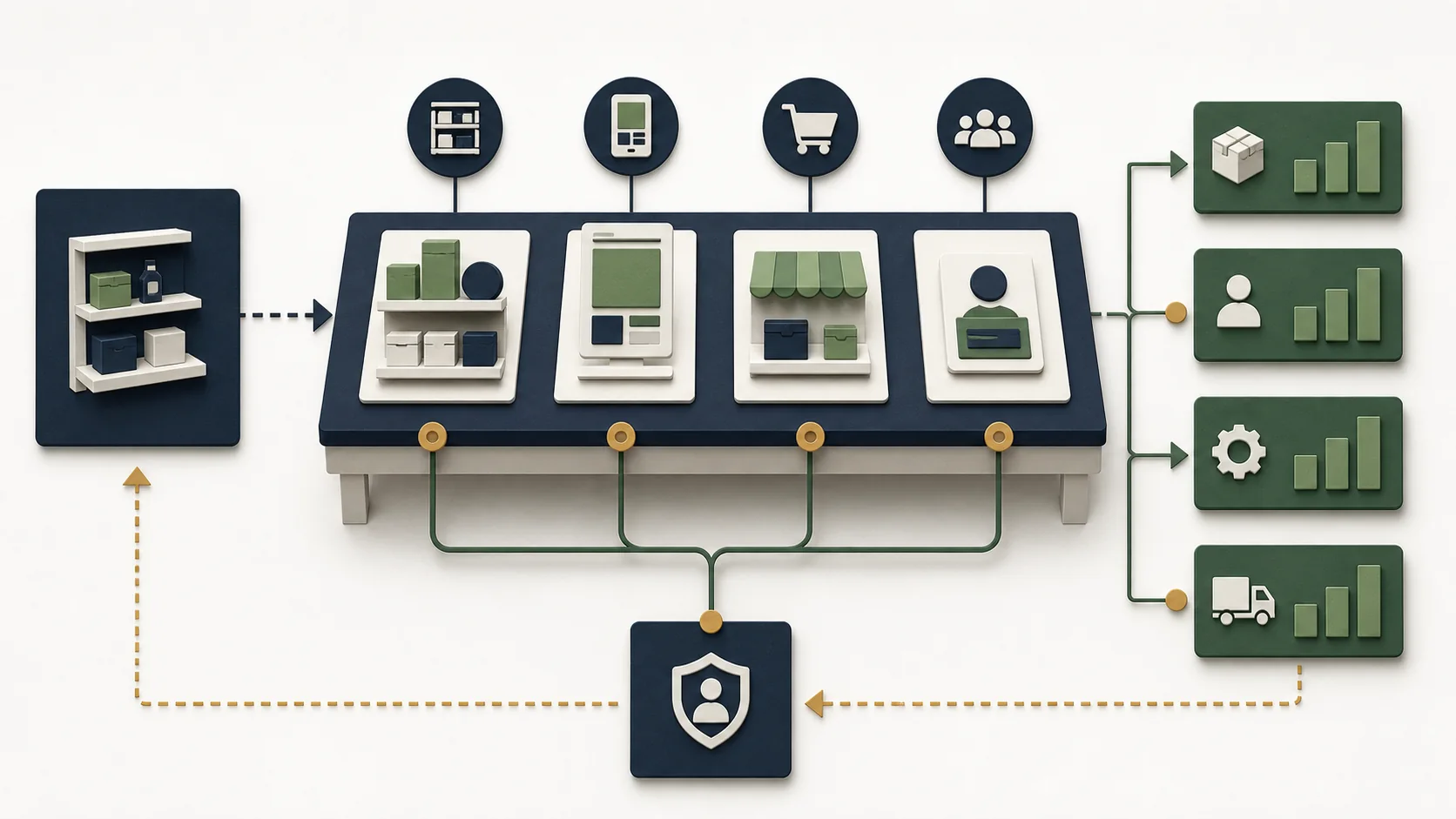
"Advertising and membership fees together accounted for a third of Walmart's operating income in the fourth quarter."
The Leadership Move
The structural choice for Walmart's leadership is whether to continue prioritizing retail media infrastructure investment given its dramatically higher margin profile, even as it introduces new competitive dynamics, rising CPMs, seller auction pressure, into the marketplace seller relationship.
- Ownership
Walmart's executive leadership own the decision to continue expanding retail media infrastructure, onsite advertising, in-store screens, connected TV, at a pace far exceeding core retail investment, a strategic bet that the margin advantage justifies the added platform complexity.
- Tradeoff
Prioritizing retail media growth means marketplace sellers face intensifying advertising cost pressure as competition for placement grows, a real cost passed partly onto sellers and potentially onto consumers through pricing. The tradeoff Walmart is accepting is capturing significantly higher-margin revenue growth in exchange for a more complex, advertising-driven relationship with its seller base.
- Human consequence
Marketplace sellers competing in an intensifying advertising auction experience real, rising costs to maintain visibility on the platform, a direct financial consequence of the same dynamic producing Walmart's record advertising growth.
Next Move
If you evaluate Walmart or comparable retail-platform businesses: Track advertising and retail media growth rates separately from core retail sales, since the two can diverge by a multiple of six to eight times in a single quarter, as Walmart's data shows.
If you are a marketplace seller on a platform with a growing advertising layer: Monitor rising CPM trends directly, since intensifying seller competition for ad placement is the specific mechanism driving platform advertising revenue growth, a cost dynamic likely to continue as the seller base grows.
FAQ
How much does advertising now contribute to Walmart's operating income?
CFO John David Rainey stated that advertising and membership fees together accounted for a third of Walmart's operating income in the fourth quarter of fiscal 2026. Walmart's global advertising business generated nearly $6.4 billion for the full fiscal year, up 46% from the prior year.
How fast is Walmart Connect growing compared to Walmart's core retail sales?
Walmart Connect grew 41% in Q4 fiscal 2026 in the US, excluding VIZIO contributions, while total retail sales grew roughly 5% in the same period, meaning the advertising business grew roughly eight times faster than core retail sales in that quarter, and at six times the rate across the full fiscal year.
What is driving Walmart Connect's growth specifically?
Two compounding factors: retail media margins exceeding 70%, which let advertising income grow faster than revenue and help fund fulfillment investment, and increasing advertiser competition, with more than 200,000 active marketplace sellers now bidding for ad placement, driving rising cost-per-thousand-impressions as auction dynamics intensify. Marketplace seller ad spend is growing faster than spend from Walmart's traditional first-party brand partners.
What does this shift mean for how Walmart should be understood as a business?
That Walmart increasingly resembles a media and advertising platform layered on top of a retail operation, not simply a retailer running an ancillary ad product. With advertising and membership fees contributing a third of operating income at margins far above retail's, Walmart's profitability is increasingly shaped by its advertising auction dynamics as much as by its core merchandising and pricing strategy.
Sources & References
Original article archive
Original article published February 20, 2026: "Walmart Powers Up Customer Wins with Multi-CX Streams". Preserved here for provenance, historical context, and citation continuity.
Walmart is quietly but decisively repositioning itself from a traditional big-box retailer into a tech-powered growth engine where customer experience is the primary lever for revenue, margin, and shareholder returns. This shift is now clearly visible in its Q4 FY26 numbers and the way leadership talks about “fast, convenient, and personalized” as the future of its business.
Key Takeaways
Walmart's customer experience transformation, powered by AI like Sparky, is driving measurable revenue growth and retention. Here are the core insights from Q4 FY26 results and related initiatives:
- Omnichannel revenue acceleration: eCommerce grew 24% globally (27% in U.S.), contributing 520 basis points to comp sales, with store-fulfilled options boosting transactions and average ticket.
- High-margin diversification: Advertising surged 37% to nearly $6.4B annually, fueled by first-party data from engaged digital journeys; membership fees rose 15.1%, locking in loyalty.
- Sparky's retention engine: The AI assistant lifts average order value by 35% for users, handles proactive replenishments and decision support, and reaches 50% app penetration, fostering habitual use.
- Experience-led economics: Operating income outpaced revenue at 10.8% growth, funded by productivity gains in supply chain and digital fulfillment, enabling ROA of 8.2%.
- Customer mission focus: GenAI tools like Sparky reframe shopping around life moments (e.g., party planning, reorders), blending value, convenience, and confidence to capture share.
Walmart goes From Everyday Low Prices to Everyday Connected Journeys
Walmart’s Q4 FY26 results show that customer-centric transformation isn’t happening at the margins—it is now the business model. Total revenue grew 5.6% (4.9% in constant currency), while operating income rose 10.8%, meaning profit is growing nearly twice as fast as sales. That kind of spread is the signature of a retailer successfully monetizing digital experiences, mix shift, and productivity, not just unit growth.
Several structural signals stand out:
- Global eCommerce sales grew 24% in Q4, driven by store‑fulfilled pickup, delivery, and marketplace.
- eCommerce contributed roughly 520 basis points to U.S. comp sales and now represents 23% of overall mix.
- Global advertising revenue grew 37% in the quarter and 46% for the year, reaching nearly $6.4 billion. The high-margin, data-led income that is only possible with scaled, engaged customers across channels.
- Membership fee revenue grew 15.1% globally, underlining the strategic importance of recurring relationships through Walmart+ and Sam’s Club.
For a CX-minded lens, Walmart is no longer simply “selling products.” It is orchestrating connected journeys—search, discovery, decision, purchase, fulfillment, and re‑purchase—across store, app, and third‑party AI ecosystems. The earnings language reinforces this, highlighting an “integrated, omnichannel ecosystem” and “tech‑powered experiences” as central to growth, not support functions.
Designing for Value, Convenience, and Confidence
Underneath the financials is a deliberate redesign of the experience around three customer promises that consistently emerge in Walmart’s own data: value, convenience, and confidence in decisions.
- Value that feels personalized, not generic
- Walmart’s strategy is to combine its traditional price leadership with AI‑driven recommendations that know when a customer wants national brands versus private label, and where they’re willing to trade up.
- This is being operationalized via generative AI search that understands natural-language missions like “help me plan a football watch party” and returns curated baskets rather than static product lists.
- Convenience across modes, not channels
- Customers increasingly shop both online and in-store, and Walmart is leaning into this hybrid reality: nearly half of its customers use both channels, and store‑fulfilled pickup and delivery are core to the 24% global eCommerce growth.
- U.S. eCommerce grew 27% in Q4, with sales through expedited store‑fulfilled delivery channels up more than 50%, tightening the link between local inventory, last‑mile speed, and digital loyalty.
- Confidence via decision support
- Walmart’s generative AI capabilities are being used to summarize reviews and highlight priority features, reducing cognitive load and making it easier for customers to feel confident about purchases.
- AI assistants such as “Sparky” are being used to anticipate replenishment orders, answer service questions, and remind customers about services like auto care or pharmacy pickups. They are quiet but powerful trust builders.
These experience investments map tightly to what Walmart Data Ventures sees in customer demand: 70% of customers say an easy‑to‑navigate site or app is a deciding factor, 66% value seamless integration between online and in‑store, and more than 55% say personalization shapes their brand choices. Walmart is clearly designing into these expectations, not around them.
Monetizing Experience: Where CX Meets Revenue
What makes Walmart’s transformation particularly relevant for business leaders is how directly its CX moves are translating into revenue and higher‑quality income.
1. multi-CX Streams as a revenue multiplier
The company explicitly connects sales momentum to “growth in customer transactions led by digital” and “broad-based share gains” in its U.S. business. In Q4:
- Walmart U.S. net sales grew 4.6%, with comp sales up 4.6% and both transactions and average ticket positive.
- eCommerce’s 27% surge and 520 bps contribution to comp shows that digital is not cannibalizing stores; it is amplifying them by making trips bigger and more frequent.
When customers use the Walmart app in stores, their average spend is significantly higher—one internal datapoint cited for certain AI shopping features suggests app‑engaged trips can be 25% larger, underscoring the revenue impact of bridging physical and digital behavior. As adoption compounds, the app becomes less a “channel” and more a revenue‑generating cockpit for every Walmart relationship.
2. Advertising and data as high‑margin growth engines
Walmart’s global advertising business—anchored by Walmart Connect and now amplified by assets like VIZIO—grew 37% in Q4 and 46% for the full year, reaching nearly $6.4 billion. This is pure monetization of customer attention and insight:
- Better first‑party data from omnichannel behavior fuels more precise targeting.
- More relevant placements improve customer experience, not detract from it, making advertising feel like curation rather than clutter.
For CX leaders, the lesson is clear: when you design experiences that customers willingly use, you earn the right to build high‑margin media and data businesses on top. Walmart is quietly becoming a retail media powerhouse because it first invested in being a daily, trusted utility in people’s lives.
3. Membership and loyalty as strategic infrastructure
Membership fee revenue increased 15.1% globally, while Sam’s Club saw 6.1% growth in membership income, fueled by higher member counts, renewals, and Plus member penetration. Membership is not just a financial line item; it is the structural glue that:
- Locks in recurring relationships and predictable revenue.
- Provides richer behavioral data to personalize offers, rewards, and digital experiences.
- Justifies investment in differentiated benefits, from delivery to fuel savings to health services.
By orienting around members rather than just shoppers, Walmart is creating a flywheel where experience drives membership, membership drives data, and data powers both value and new revenue streams.
Tech-Powered Productivity: Funding Better Experiences
Another under‑appreciated dimension in Q4 FY26 is how Walmart is using technology to improve economics as it improves experience. Operating income grew faster than revenue at both the consolidated and U.S. segment level, supported by gross margin expansion and expense leverage.
Key levers include:
- Improved eCommerce economics from better mix, higher marketplace participation, and more orders fulfilled from stores rather than remote warehouses.
- Strong inventory management that keeps in‑stock levels high, which is critical for customer satisfaction while limiting markdown risk.
- Productivity‑enabling technologies in supply chain, store operations, and digital that free up capital for growth investments.
This matters because many retailers struggle to justify CX innovation when margins are thin. Walmart is demonstrating a different pattern: use tech to modernize operations and fund experience, then let better experience drive higher‑margin digital, media, and membership revenue. The result: return on assets of 8.2% and return on investment of 15.1%, even as the company steps up capital expenditures to approximately 3.5% of net sales going forward.
What Transformidy Clients Can Learn from Walmart
For Transformidy’s clients—particularly in retail, grocery, and membership‑driven sectors—Walmart’s trajectory offers a practical blueprint rather than an unattainable outlier. Three guiding principles emerge:
- Treat CX as a business model, not a cost centre
- Walmart’s financials show that when experience is designed to compress friction, anticipate needs, and support confident decisions, it drives both top‑line growth (traffic, ticket) and better mix (digital, advertising, membership).
- CX metrics should sit alongside revenue and margin in your boardroom dashboards, because they are increasingly causal, not just correlative.
- Build omnichannel journeys around customer missions, not internal silos
- Whether it’s “help me plan a party” or “help me manage my weekly shop,” Walmart’s generative AI approach reframes the experience around customer missions rather than category hierarchies or departmental boundaries.
- For other organizations, this means designing journeys end‑to‑end—from discovery to fulfillment—around life moments, jobs‑to‑be‑done, and membership value, then aligning technology and teams accordingly.
- Monetize attention and trust responsibly
- Advertising, marketplace, and data monetization only scale when customers feel the experience is getting better for them, not more cluttered or exploitative.
- Walmart’s rapid media growth is a signal that when you get the value equation right through relevant offers, helpful recommendations, and time saved. Customers will accept and even welcome commercial messaging.
For leadership teams, the key question shifts from “How do we add an app or an AI feature?” to “How do we systematically turn better customer experiences into durable, diversified revenue?” Walmart’s FY26 performance suggests that when this question is answered well, the payoff is measurable—higher comps, faster‑growing operating income, richer revenue streams, and stronger returns on capital.
Transform for Better
Walmart’s Q4 FY26 story is not just about a strong quarter; it is about a retailer that has embraced a future where growth is earned through relevancy, simplicity, and intelligent orchestration of every customer interaction. By anchoring its strategy in omnichannel convenience, personalized digital experiences, and membership‑led loyalty, Walmart is converting experience into economics at scale.
For organizations navigating their own transformation, the path forward is clear: clarify the customer missions that matter most, connect your physical and digital assets around those journeys, and build new revenue engines on the trust you create along the way. That is how you reduce friction, unlock growth, and, ultimately, Transform for Better.
Walmart CX 10-Question FAQ
Q1: What were Walmart's key Q4 FY26 financial highlights?
A: Revenue grew 5.6% to over $190B, operating income rose 10.8%, eCommerce increased 24%, and advertising hit nearly $6.4B for the year.
Q2: How is eCommerce contributing to Walmart's comp sales?
A: It added 520 basis points in Q4, now 23% of U.S. mix, driven by 27% growth in store-fulfilled pickup and delivery.
Q3: What role does advertising play in Walmart's growth?
A: Global ad revenue grew 37% in Q4 (46% yearly), leveraging omnichannel data for precise, non-intrusive placements via Walmart Connect.
Q4: How does Walmart+ membership drive retention?
A: Fees rose 15.1% globally, supporting perks like delivery and fuel savings that encourage repeat engagement and data-rich personalization.
Q5: What is Sparky, and when was it launched?
A: Sparky is Walmart's agentic AI assistant in the app, debuted mid-2025, handling reviews, recommendations, and reorders via natural language.
Q6: How does Sparky impact order value and retention?
A: Users see 35% higher average order value; it boosts frequency through proactive features like replenishment reminders, reaching 50% app users.
Q7: What customer needs does Sparky address?
A: Decision confidence (review summaries, comparisons), convenience (occasion planning, service nudges), and personalization (pattern-based suggestions).
Q8: How is Walmart using genAI beyond Sparky?
A: For search that curates baskets (e.g., "football watch party"), multimodal inputs, and omnichannel ties to store inventory.
Q9: Why is Walmart's margin expansion notable?
A: Gross margin gains and expense leverage let operating income grow faster than sales, funding CX investments while delivering 15.1% ROI.
Q10: What can other retailers learn from Walmart?
A: Prioritize mission-based journeys, monetize trust via media/membership, and use tech for productivity to sustain CX at scale—Transform for Better.
HOW CAN TRANSFORMIDY HELP
If you are planning to learn more about Walmart's multi-CX success, this is the moment to architect your customer experience. Transformidy is available to assist in helping you understand how your brand can leverage your existing CX streams or expand to new ones..
Contact us or set up a 30-minute complimentary consultation for more information on our services, insights, or showcases. We look forward to hearing from you.
FAQ
How much does advertising now contribute to Walmart's operating income?
CFO John David Rainey stated that advertising and membership fees together accounted for a third of Walmart's operating income in the fourth quarter of fiscal 2026. Walmart's global advertising business generated nearly $6.4 billion for the full fiscal year, up 46% from the prior year.
How fast is Walmart Connect growing compared to Walmart's core retail sales?
Walmart Connect grew 41% in Q4 fiscal 2026 in the US, excluding VIZIO contributions, while total retail sales grew roughly 5% in the same period, meaning the advertising business grew roughly eight times faster than core retail sales in that quarter, and at six times the rate across the full fiscal year.
What is driving Walmart Connect's growth specifically?
Two compounding factors: retail media margins exceeding 70%, which let advertising income grow faster than revenue and help fund fulfillment investment, and increasing advertiser competition, with more than 200,000 active marketplace sellers now bidding for ad placement, driving rising cost-per-thousand-impressions as auction dynamics intensify. Marketplace seller ad spend is growing faster than spend from Walmart's traditional first-party brand partners.
What does this shift mean for how Walmart should be understood as a business?
That Walmart increasingly resembles a media and advertising platform layered on top of a retail operation, not simply a retailer running an ancillary ad product. With advertising and membership fees contributing a third of operating income at margins far above retail's, Walmart's profitability is increasingly shaped by its advertising auction dynamics as much as by its core merchandising and pricing strategy.
Related intelligence
Article
Department Store Strategy: Identity vs. Omnichannel
Department stores pursued omnichannel integration to compete with specialists and e-commerce. But integration without identity eroded customer loyalty. Successful stores rebuilt around curation and experience, not channel consolidation.
Article
Millennials Are Going to Dine Out 14 Times a Month in 2026
Millennials plan to dine out 14 times a month in 2026, well above the 10-times average across all Americans. 55% say they will spend even more on restaurants next year. The generation restaurants most need to design a dine-in experience for has already told OpenTable who they are.
Article
Three in Four Restaurant Orders Never Touch a Dining Room
Nearly 75% of restaurant traffic is now off-premise. The National Restaurant Association's own economist calls it not a trend but a business model. Most restaurants are still designed, staffed, and measured as if the dining room is the main event.