
Article
Fewer Customers Are Punishing Bad Experiences. The Losses Stayed the Same.
Qualtrics found $2.94 trillion in global sales at risk from bad customer experiences in 2026, and the share of consumers cutting spending after a bad experience actually fell from 54% to 47%. Fewer people are punishing bad experiences. The dollar figure barely moved.
- Published
- January 1, 2020
- Updated
- June 18, 2026
- Reading time
- 8 min
2026 updated analysis
What changed since the original article
This page keeps the original Transformidy article as the canonical record and leads with the current interpretation, source notes, and Revenue Unknown framing.
The Two Numbers That Should Move Together, and Didn't
Qualtrics XM Institute's 2026 research, drawn from more than 20,000 consumers across 14 countries and 18 industries representing 57% of global household consumption, found $2.94 trillion in global sales at risk from bad customer experiences, made up of $2.075 trillion in reduced spending and $865 billion in spending that stops entirely. In the same research, the share of consumers who reduce spending after a poor experience fell from 54% the previous year to 47%.
Those two numbers, read together, do not fit the story either one tells in isolation. If seven fewer percentage points of the consumer base are punishing bad experiences, the intuitive expectation is that the total dollar figure at risk falls by a comparable margin. It did not fall in step with the percentage decline; the overall risk figure stayed in the same broad multi-trillion-dollar range this research has reported in recent editions.
The explanation is not a data error; it is a reminder that a percentage of a population and a total dollar figure are two different measurements that only move in lockstep under specific conditions, conditions that evidently were not met here. A smaller share of consumers punishing bad experiences can still produce a similar dollar total if the remaining punishers represent higher per-customer spending, if certain high-stakes industries carry a disproportionate share of the total, or if overall consumer spending grew enough to offset the smaller percentage.
Global sales at risk from bad customer experiences, even as the punishment rate fell from 54% to 47%
Based on more than 20,000 consumers across 14 countries and 18 industries.
Where the Risk Actually Concentrated
Qualtrics' industry and geographic breakdowns point toward where the concentration is likely happening. Fast food and online retail customers are the most likely to cut spending after a bad experience, at 62% and 58% respectively, well above the 47% global average. Geographically, the US carries the largest absolute dollar figure at risk, $973 billion, while Mexico faces the highest risk as a share of its own sales at 8%, followed by Brazil and the UAE at 7% each.
Those figures suggest the falling global average is not evenly distributed relief. A business operating in fast food or online retail, or serving a market like Mexico, Brazil, or the UAE, is very plausibly still facing punishment rates well above the declining global figure, even as headlines about the overall trend suggest improvement. The global average, in other words, can mask a stable or worsening picture at the level that actually matters to any individual business: its own customers, in its own market.
This is the structural lesson worth taking from the finding, beyond the specific numbers. A single blended global statistic, whether it is trending up or down, tells a business very little about its own specific exposure unless it is broken down to the industry and geography level the business actually operates in. The 54%-to-47% headline is real and directionally true at a global level, and it is also nearly useless on its own for any specific business trying to size its actual risk.
The Global Average vs. Your Specific Exposure
One is comforting. The other is what actually applies to your business.
Global average: the punishment rate fell from 54% to 47%, a broadly positive-sounding trend easy to cite without further context. Specific exposure: fast food (62%) and online retail (58%) customers remain well above that average, and Mexico, Brazil, and the UAE carry higher relative risk than the US despite its larger absolute dollar figure, meaning the global average tells an individual business little about its own actual position.
The Leadership Move
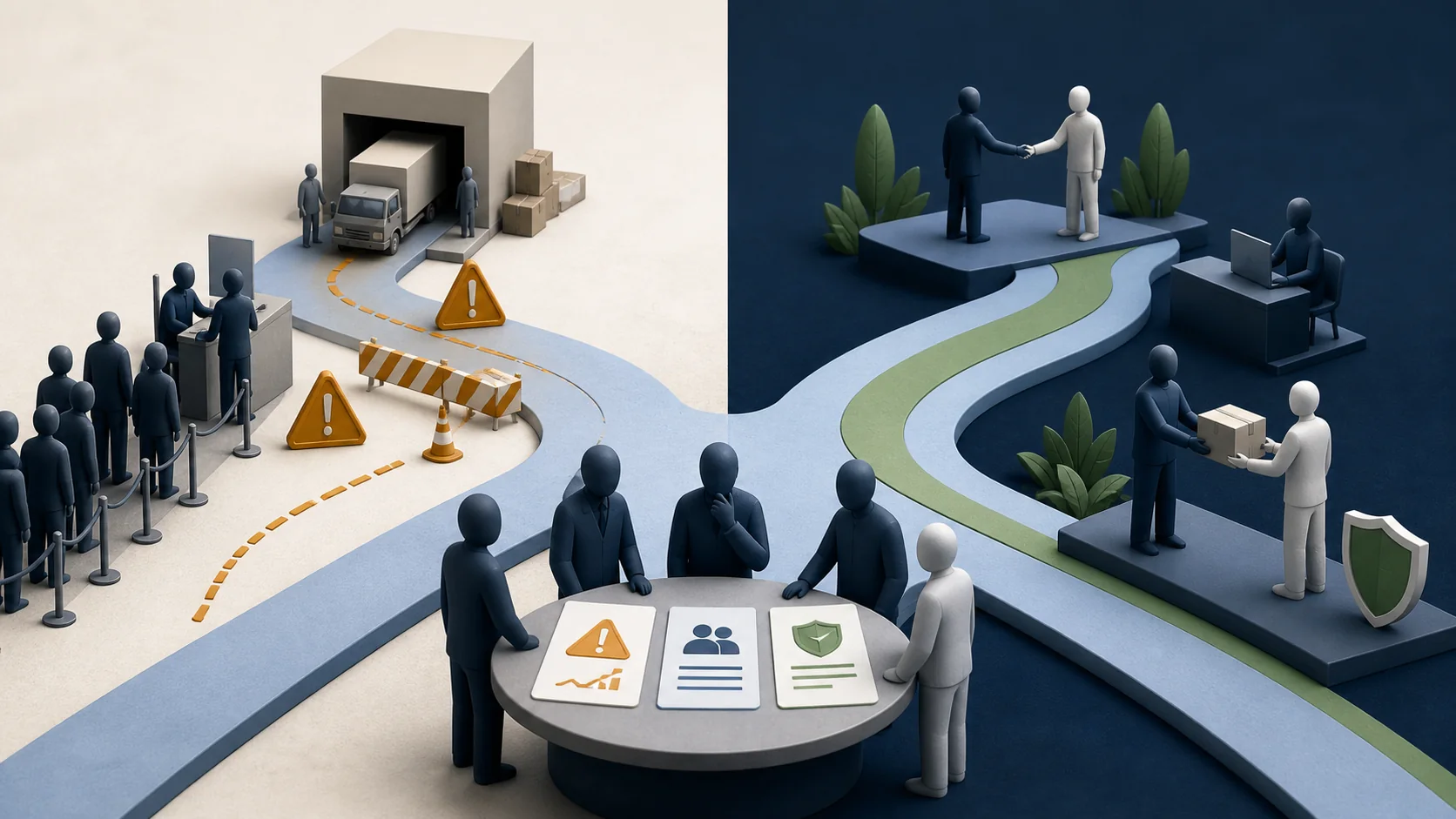
The structural choice for CX and risk leadership is whether to report a favorable global trend statistic at face value, or to break it down to the industry and geography level actually relevant to the business before drawing conclusions about improving customer tolerance.
- Ownership
CX and risk leadership own the responsibility to disaggregate global benchmark statistics like this one into the specific industry and geographic segments the business actually operates in, rather than reporting a favorable global average without that context.
- Tradeoff
Disaggregating a global statistic into industry- and geography-specific figures takes more analytical effort than citing the headline number. The tradeoff against skipping that work is presenting a falling risk percentage as good news internally when the business's own specific exposure, in a high-risk category like fast food, online retail, or a high-relative-risk market, may not have improved at all.
- Human consequence
Customers in the highest-risk categories, fast food and online retail specifically, are experiencing poor service at rates that translate into spending cuts well above the declining global average, a lived reality the comforting headline percentage does not reflect for them.
Next Move
If you cited a falling customer-tolerance statistic recently: Check the industry- and geography-specific breakdown behind it before treating the global trend as applicable to your own business.
If you operate in a high-risk category like fast food or online retail: Assume your actual exposure sits closer to the 58-62% range than the 47% global average, and size your experience investment accordingly.
FAQ
How much global revenue is at risk from bad customer experiences in 2026?
Qualtrics XM Institute's 2026 research estimates $2.94 trillion in global sales at risk, made up of $2.075 trillion in reduced consumer spending and $865 billion in spending that stops entirely, based on a survey of more than 20,000 consumers across 14 countries and 18 industries, representing 57% of global household consumption.
Did fewer consumers actually cut spending after a bad experience this year?
Yes. The share of consumers who reduce spending after a poor experience fell from 54% the previous year to 47% in the 2026 research. That decline did not produce a corresponding drop in the total dollar figure at risk, which stayed in the same multi-trillion-dollar range.
How can the percentage fall while the dollar total stays roughly the same?
A smaller share of consumers punishing bad experiences can still produce a similar or larger dollar total if the consumers who do cut spending are cutting more per person, if overall consumer spending has grown, or if the industries with the highest per-customer stakes make up a larger share of the total. The percentage and the dollar figure are measuring different things and are not guaranteed to move together.
Which industries face the highest risk from poor experiences?
Fast food and online retail customers are the most likely to cut spending after a bad experience, at 62% and 58% respectively. Geographically, the US carries the largest absolute dollar figure at risk at $973 billion, while Mexico faces the highest risk as a share of sales at 8%, followed by Brazil and the United Arab Emirates at 7%.
Sources & References
Original article archive
Original article published January 1, 2020: "Transformidy: Experience Transformation Zero To Hero". Preserved here for provenance, historical context, and citation continuity.
Hello! Welcome to our first insight. We are excited to use this space to introduce Transformidy to the world. We will showcase who we are, our values, and what we can do to turning your company into an experience powerhouse and generating loyalty and business growth at the same time.
Everything About Transformidy
Who Are We?
Transformidy is a combination of the verb "Transform" and the suffix "idy". It means to define or design a process or condition in experiences. Specifically, it is the design of processes that allow companies to engage, procure, interface, and communicate with different stakeholders whether they are customers, employees, other businesses, etc.
These experiences are part of corporate strategy building process and are responsible for revenue generation, overall satisfaction, and community participation. After all, a company can build the best widget but would not be successful if there are no experiences for others to engage, enjoy, or amplify.
When Were We Founded?
Transformidy was found in 2020 as the world is starting to cope with the beginning of its first pandemic in over 100 years. Societies are living under new sets of conditions that strives for a significant rethinking and reset. One area that requires more attention and improvement is customer experience.
Gartner writes that, 81% of the companies compete on customer experience by 2020 but many of them do not have the marketing budget to engage consumers.

First impression matters. Kinesis Inc. writes that 94% of consumers have their first impression of a brand through its website design over their products or services.
It is now the perfect time for companies to improve, innovate and transform their experiences and build a deeper connection during disruptive times. We are here to help.
Why Is Transformidy Important In The Marketplace Today?
Core Values
In a 2018 PwC Study, 73% of the responders point to customer experience as an important factor in purchasing decisions and yet only 49% of US consumers say their received a good experience.
Percentage Of Respondents Point To Customer Experience As An Important Factor In Purchasing Decisions (in percentages)
0Transformidy's core values are authenticity, trust, quality, engagement and simplicity. We employ these values in how we connect and assist companies in their transformation.
The marketplace is evolving at a rapid pace. Companies using the same methods to reach customers may not be experiencing the same results today. Transformidy simplifies processes with outside the box thinking to build loyalty and engagement. "How can we help?" takes on a bigger meaning today.
Percentage of US Consumers Say That they Received Good Customer Experience (in percentages)
0Which Areas Can Transformidy Assist?
Engaging, acquiring, and maintaining customers are core aspects of the customer experience cycle. Successful companies pay attention to all these components to effectively build a customer base and experience process (see the infographic for a breakdown) on the major elements.

Transformidy uses a proprietary framework to evaluate how companies are creating and managing their customer experiences. Let's discuss how your customer needs are communicated, filled, and managed. No rock should be left unturned when it comes to delivering customer needs.
Are You The Right Fit?
Transformidy caters to different types of companies looking to build, improve, or transform their customer experience across industries. We are available for consulting engagements, media quotes, training, and speaking engagements on a variety of topics such as trends, strategies, and technologies in customer experience. Let's set up a meeting to discuss further.
Insights and Showcases
We are creating insights and showcases as a way to educate and build awareness.
Insights
In Insights, we will demystify trending topics and highlight strategies for success.
The following are topics we would discuss:
- How are subscription models useful for my company?
- Who are the new customers?
- How can I use content creators to push my brand?
- What are the new privacy guidelines (for example, GDPR and CCPA), and how would they affect me?
- What data should I collect and use to manage my customer needs?
Showcases
We will highlight companies making great strides in the customer experience landscape.
Storytelling builds brand awareness and showcases products and services. Let's discuss how your company can shine in the Showcases series.
How Can We Help?
Transformidy is available to assist in different aspects of your company's customer experience journey from transformation work, training, and partnership.
Contact us or set up a complimentary consultation for more information on our services, insights, or showcases. We look forward to hearing from you.
FAQ
How much global revenue is at risk from bad customer experiences in 2026?
Qualtrics XM Institute's 2026 research estimates $2.94 trillion in global sales at risk, made up of $2.075 trillion in reduced consumer spending and $865 billion in spending that stops entirely, based on a survey of more than 20,000 consumers across 14 countries and 18 industries, representing 57% of global household consumption.
Did fewer consumers actually cut spending after a bad experience this year?
Yes. The share of consumers who reduce spending after a poor experience fell from 54% the previous year to 47% in the 2026 research. That decline did not produce a corresponding drop in the total dollar figure at risk, which stayed in the same multi-trillion-dollar range.
How can the percentage fall while the dollar total stays roughly the same?
A smaller share of consumers punishing bad experiences can still produce a similar or larger dollar total if the consumers who do cut spending are cutting more per person, if overall consumer spending has grown, or if the industries with the highest per-customer stakes make up a larger share of the total. The percentage and the dollar figure are measuring different things and are not guaranteed to move together.
Which industries face the highest risk from poor experiences?
Fast food and online retail customers are the most likely to cut spending after a bad experience, at 62% and 58% respectively. Geographically, the US carries the largest absolute dollar figure at risk at $973 billion, while Mexico faces the highest risk as a share of sales at 8%, followed by Brazil and the United Arab Emirates at 7%.
Related intelligence
Article
McDonald's CEO Named the Exact Chain Reaction Behind a Bad Quarter
McDonald's CEO told investors directly: this was not a strategy problem. Restaurant teams were overwhelmed by too many menu deployments in a single quarter, service times rose, and satisfaction scores fell as a direct result. He named the mechanism, not just the symptom.
Article
Apple Is Reportedly Building a MacBook Designed to Lose the Spec Sheet Comparison
Apple's new MacBook Neo runs an iPhone chip, not a Mac chip, and starts at $699 to $899, roughly $100 to $300 below the MacBook Air. It has no Thunderbolt. Apple built its first laptop specifically to lose a spec sheet comparison, on purpose, to win a price comparison instead.
Article
A Third of Walmart's Operating Income Now Comes From Ads and Memberships
Advertising and membership fees now account for a third of Walmart's operating income. Walmart Connect grew 41% in a quarter when retail sales grew about 5%, eight times faster. Retail media margins exceed 70%. Walmart is no longer just a retailer that also sells ads.