
Article
Pop Mart Deliberately Crashed Its Own Resale Market
Pop Mart increased Labubu plush production more than tenfold, to roughly 30 million units a month. Resale prices then fell up to 80% from their peak. The company calls that a win: it intends to sell products, not financial products.
- Published
- June 20, 2025
- Updated
- June 18, 2026
- Reading time
- 8 min
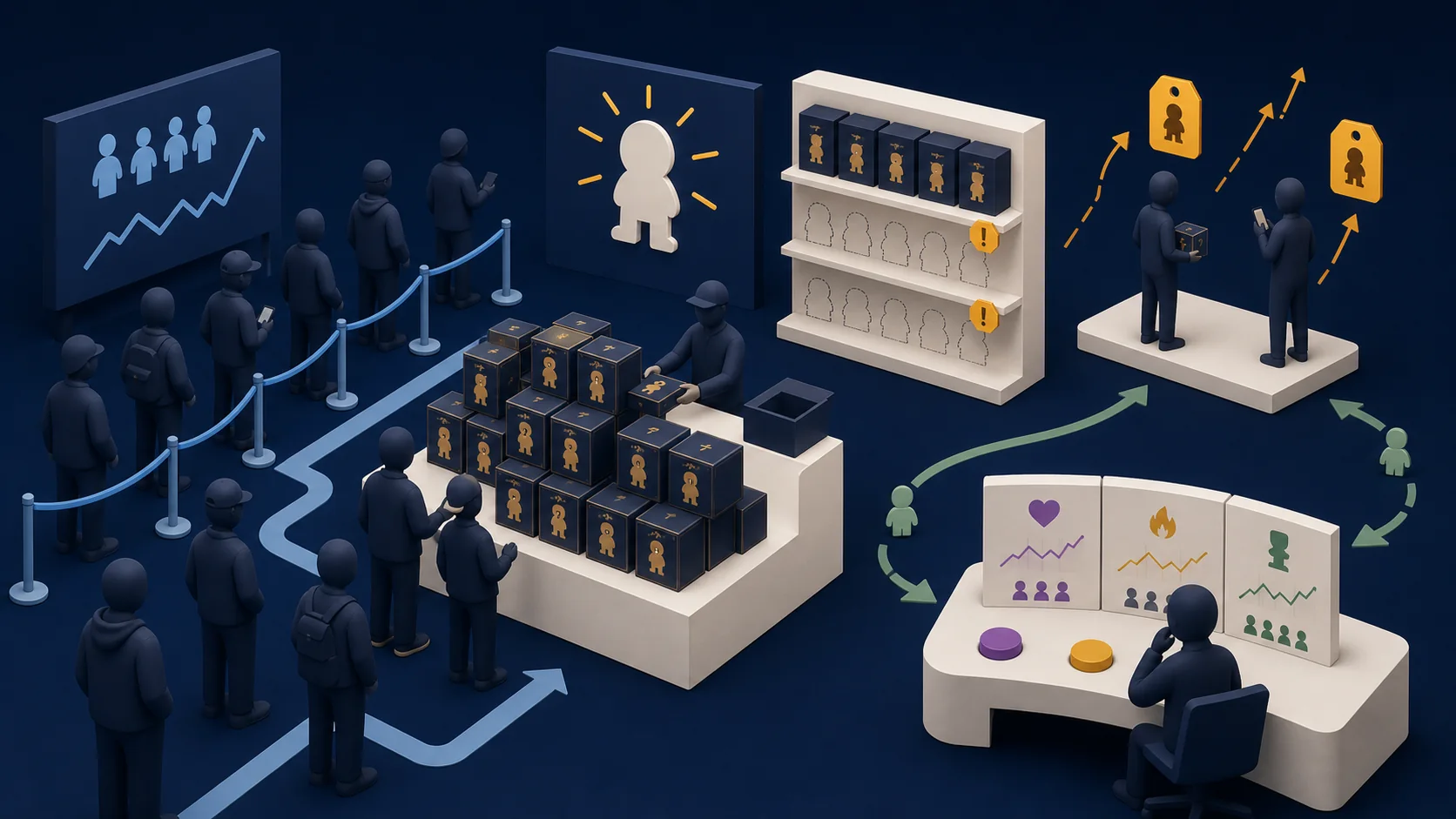
2026 updated analysis
What changed since the original article
This page keeps the original Transformidy article as the canonical record and leads with the current interpretation, source notes, and Revenue Unknown framing.
Tenfold Production, 80% Price Drop
Yuan Junjie, president of Pop Mart's supply chain center, stated the company increased plush toy production capacity more than tenfold from the prior year, reaching about 30 million units in August 2025 alone. In direct response, resale prices across Pop Mart's collectible lines fell sharply: Labubu 3.0 sealed boxes and full collections down roughly 80% from peak, Twinkle Twinkle's "Sweet Dreams Forecast" down 35%, its "Lucky Strike" hidden edition down 42%, Molly's "Pocket Friends" down 51%, and Molly's "Don't Mess With Me" hidden figure down 69%.
Those declines are large enough that, read in isolation, they would suggest a brand in serious trouble. Pop Mart's actual financial results say the opposite. Full-year 2025 revenue reached 37.12 billion yuan, up 185% year over year, and revenue from The Monsters IP line, which includes Labubu, hit 14.16 billion yuan, up 365.7% year over year and representing roughly 38% of total company revenue. The core business was accelerating, not slowing, at precisely the moment the resale market was collapsing.
The causal link is direct and quantified: a tenfold production increase mechanically increases supply, and increased supply mechanically compresses resale scarcity premiums, regardless of underlying consumer demand. Pop Mart's own executive naming the production figure explicitly confirms this was not an accidental byproduct of scaling too fast; it was a deliberate operational decision with a predictable, and apparently intended, effect on the secondary market.
Production capacity increase, and Labubu-inclusive IP revenue growth, in the same year
Resale prices for Labubu 3.0 collectibles fell roughly 80% from peak as a direct, deliberate result.
"Not Financial Products"
Pop Mart's own stated rationale, delivered at a 2024 earnings briefing, frames the strategy explicitly: the company intends "to sell products, not financial products." That distinction is the core of the strategic logic. A resale market driven by extreme scarcity premiums, one secret blind box edition reportedly sold for more than 2,000% above retail during peak 2025 demand, generates viral attention, but it also converts the product into something closer to a speculative asset than a toy, with the accompanying risks: price volatility, accusations of artificial scarcity, and a customer base increasingly composed of flippers rather than genuine collectors or fans.
By deliberately increasing supply and accepting the resulting resale price collapse, Pop Mart traded the viral, headline-generating extremity of a 2,000%-markup resale story for a more durable, higher-volume primary sales business. The financial results suggest that trade paid off directly: 365.7% growth in the exact product line whose resale market just collapsed is not the pattern you would expect if falling resale prices reflected genuine cooling interest.
The broader lesson for any brand managing a hype-driven or collectible product category is that a booming resale market is not automatically an asset worth protecting. It can just as easily represent value leaking out of the company's own pricing power into resellers' margins. Pop Mart's decision to intentionally undercut that resale market, backed by a tenfold production increase and validated by accelerating primary revenue, is a specific, quantified example of choosing sustainable volume over speculative scarcity.
Protecting Scarcity vs. Scaling Supply
One captures viral headlines. The other captures the revenue.
Protecting scarcity: limiting production to sustain resale markups and viral "sold for 2,000% above retail" stories, value that flows mostly to resellers, not the company. Scaling supply: a tenfold production increase that collapses resale premiums but converts speculative attention into accessible, high-volume primary retail sales, capturing 365.7% revenue growth directly for Pop Mart.
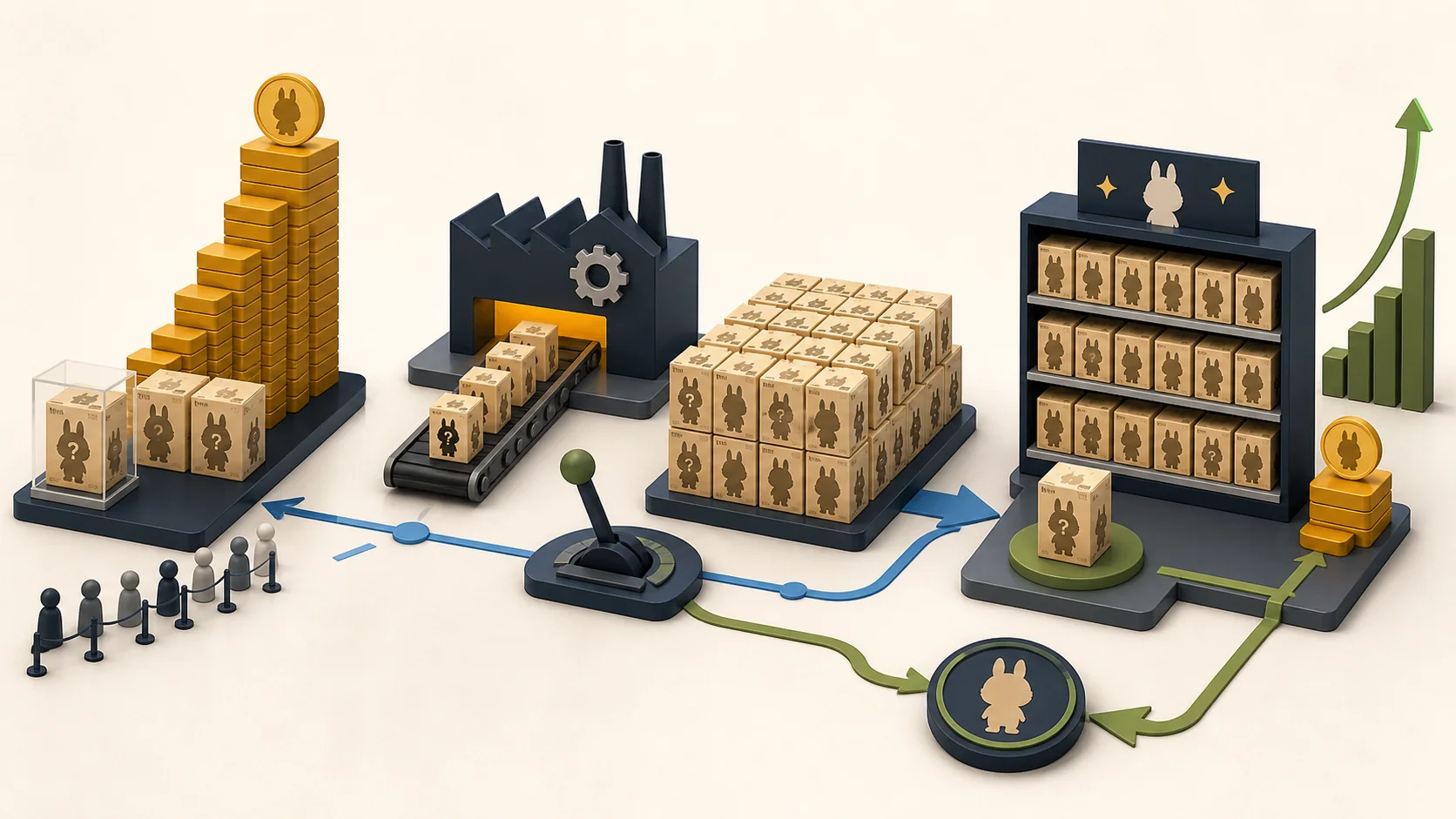
"The company intends to sell products, not financial products."
The Leadership Move
The structural choice for any company managing a hype-driven collectible or limited-supply product is whether to protect resale scarcity for its viral marketing value, or to deliberately scale supply and capture volume growth directly, accepting the resale market's collapse as a byproduct.
- Ownership
Pop Mart's supply chain and product leadership own the decision to scale production more than tenfold specifically to compress resale scarcity, a deliberate strategic choice communicated directly by the company's own supply chain executive rather than an unplanned consequence of demand exceeding forecasts.
- Tradeoff
Scaling supply sacrifices the viral marketing value of extreme resale markups and the scarcity-driven cultural cachet that comes with them. The tradeoff Pop Mart accepted is a less dramatic secondary-market story in exchange for a directly captured, accelerating primary revenue stream, evidenced by the 365.7% growth figure.
- Human consequence
Everyday collectors and fans, previously priced out of Labubu by resale markups as high as 2,000% above retail, gained meaningfully better access to the product at or near its intended price, a direct, felt benefit of the company's supply decision.
Next Move
If you manage a hype-driven or collectible product line: Evaluate whether your resale market is capturing value for your own business or leaking it to resellers, and consider Pop Mart's deliberate supply-scaling approach as a way to reclaim that value directly.
If you are analyzing a falling resale price as a demand signal: Check whether a supply-side decision, not declining underlying demand, is the actual driver, the way Pop Mart's own production data explains its resale price collapse.
FAQ
How much did Pop Mart increase Labubu production, and what happened to resale prices?
Pop Mart's supply chain center president Yuan Junjie stated the company increased plush toy production capacity more than tenfold year over year, reaching about 30 million units in August 2025. As a direct result, resale prices for Labubu 3.0 collectibles fell approximately 80% from their peak, with declines across other Pop Mart IP lines ranging from 35% to 69% depending on the specific product.
Was the falling resale price a sign the brand was losing popularity?
The company's own financial results say otherwise. Pop Mart's full-year 2025 revenue grew 185% to 37.12 billion yuan, and Labubu-specific revenue, sold under The Monsters IP line, grew 365.7% year over year to 14.16 billion yuan, representing roughly 38% of total revenue. Primary retail demand accelerated even as resale prices fell, indicating the price decline reflected increased supply, not decreased demand.
Why would a company deliberately undercut its own product's resale value?
Pop Mart executives stated at a 2024 earnings briefing that the company intends "to sell products, not financial products," framing extreme resale markups as a threat to the brand's long-term accessibility and reputation rather than a marketing asset worth preserving. A resale market driven by artificial scarcity risks alienating everyday customers priced out of a toy, while sustained high retail-volume growth builds a more durable revenue base.
What is the practical lesson for other brands managing hype-driven demand?
That a booming resale market is not automatically something to protect. Pop Mart's data shows a company can intentionally sacrifice secondary-market scarcity, and the media attention that comes with dramatic markups, in favor of primary sales volume, and still see accelerating core revenue growth as a direct result.
Sources & References
Original article archive
Original article published June 20, 2025: "Labubu – Rise Of A Big Cultural Phenomenon". Preserved here for provenance, historical context, and citation continuity.
Labubu, a collectible plush toy character, has transcended its origins as a niche product to become a global cultural sensation, reshaping retail dynamics and consumer experience (CX) paradigms. Created by Hong Kong-born artist Kasing Lung and marketed exclusively by China-based retailer Pop Mart, The toy line embodies a fascinating blend of artistic heritage, innovative marketing, and social media-fueled popularity that offers deep insights into modern consumerism and brand transformation. This Transformidy insight goes deeper into this cultural phenomenon and its impact to customer experience.
Key Takeaways: Labubu’s Unique Appeal and Cultural Impact
- Labubu combines an “ugly-cute” design with sharp, playful features that appeal across age groups and cultures.
- The blind box sales model creates addictive excitement through surprise and scarcity, driving repeat purchases.
- Its rich narrative and character personality foster deep emotional connections and community engagement.
- Celebrity endorsements and social media amplification have propelled the brand into a global fashion and pop culture icon.
- The brand’s versatility spans toys, fashion accessories, collectibles, and art, broadening its lifestyle appeal.
- The brand has transformed retail by gamifying the shopping experience and encouraging experiential consumer behavior.
- Strategic limited editions and collaborations increase exclusivity and consumer desire.
- Potential partnerships span fashion, entertainment, technology, tourism, and lifestyle sectors.
- Future growth will likely focus on digital integration (NFTs and AR), storytelling, and global market expansion.
- Sustainability and ethical consumption represent key challenges and opportunities for Labubu’s continued success.
History and Origins - LaBubu
Labubu was conceived by Kasing Lung, a Hong Kong-born artist raised in the Netherlands, who drew inspiration from Nordic folklore and mythology during his childhood. The character first appeared in 2015 as part of Lung’s story series "The Monsters," initially produced as figurines by How2Work. However, its rise to prominence accelerated significantly in 2019 following an exclusive partnership with Pop Mart, a leading collectible toy company based in Beijing. This collaboration allowed retailer to produce and distribute figures widely, marking the start of its journey from a niche collectible to a mainstream cultural icon.
The design of Labubu is distinctive and playful yet slightly fierce, featuring a round, furry body, wide eyes, pointed ears, and nine sharp teeth forming a mischievous smile and individual personality. The character is part of a broader "tribe" called The Monsters, which includes several companions, each with unique appearances and personalities. Since 2019, Labubu has been released in over 300 different iterations, ranging from themed costumes like soccer players and astronauts to seasonal and pop culture collaborations. This allows every one to have their own version.
5 Key Reasons why Labubu Is So Popular Today
1. The “Ugly-Cute” Aesthetic Blend
Labubu’s visual design masterfully fuses classic “baby schema” features—such as large round eyes and a chubby, furry body—with an “ugly-cute” twist that includes long pointed rabbit-like ears and a mouth full of sharp, serrated teeth. This juxtaposition creates a quirky, mischievous character that stands out from typical cute mascots. The “ugly-cute” or “creepy-cute” style taps into a growing youth culture preference for characters that are adorable yet edgy, offering a fresh alternative to overly sweet designs. This aesthetic surprise elicits humor and affection simultaneously, making Labubu both memorable and endearing across age groups.
2. Psychological Thrill of Surprise via Blind Boxes
Labubu is sold primarily through a blind box model, where buyers do not know which figure they will receive until opening the sealed package. This taps into the psychological principle of variable-ratio reinforcement—the same mechanism that underlies gambling addiction—where unpredictable rewards create strong dopamine-driven anticipation and excitement. The mystery of what’s inside each box transforms the purchase into a suspenseful event, encouraging repeated buying in hopes of obtaining rare or secret figures. This “chase” effect is amplified by social media unboxing videos, creating a powerful feedback loop of desire and engagement.
3. Narrative Depth and Relatable Personality
Beyond its looks, Labubu is embedded in a story-rich universe created by artist Kasing Lung. Portrayed as a kind-hearted but mischievous little monster, Labubu’s personality is playful and relatable, embodying universal themes of friendship, curiosity, and imperfect intentions. This narrative depth gives fans emotional reasons to connect beyond the physical toy, fostering a loyal community that identifies with Labubu’s whimsical world and ambiguous gender, broadening its appeal.
4. Versatility and Cultural Fusion
Labubu’s design bridges Eastern and Western cultural aesthetics—drawing from Nordic mythology and East Asian “kawaii” sensibilities—making it globally accessible. Its form is versatile, functioning as a plush toy, fashion accessory (like bag charms or keychains), and collectible art piece. This multi-functionality enhances its desirability, allowing fans to incorporate Labubu into various aspects of their lifestyle and self-expression.
Social media has played a pivotal role in amplifying Labubu’s visibility and desirability. Platforms like TikTok and Instagram have generated over 1.4 million posts tagged #Labubu, featuring unboxing videos, styling tips, and cosplay content. Celebrity endorsements have further propelled the brand into mainstream pop culture. High-profile figures such as K-pop superstar Lisa from Blackpink, Rihanna, Dua Lipa, David Beckham, and others have been spotted with Labubu figures, transforming the toy from a mere collectible into a fashionable accessory and viral sensation.
5. Limited Editions and Collectibility
The brand’s strategy of releasing limited runs and rare editions adds exclusivity and prestige, heightening the thrill of collecting. The scarcity principle makes each figure more coveted, driving demand and fostering a vibrant secondary market. This exclusivity, combined with the surprise element, makes Labubu highly addictive to collectors who seek to complete sets or own rare variants.
Impact on Retail and Customer Experience (CX)
Labubu’s success has had a profound impact on retail strategies and customer experience design. Pop Mart’s global expansion includes over 450 retail stores, leveraging the blind box model to create an engaging, gamified shopping experience that drives foot traffic and repeat visits. The unpredictability of the product fosters a sense of urgency and excitement, transforming shopping into an interactive event rather than a transactional activity.
The blind box economy pioneered by Pop Mart, with Labubu at its forefront, has redefined consumer expectations. Customers are no longer passive buyers but active participants in a game of chance and collection. This shift has encouraged retailers to innovate with limited editions, exclusive collaborations (such as the Coca-Cola-themed series and One Piece manga-inspired figures), and event-based releases that create scarcity and hype.
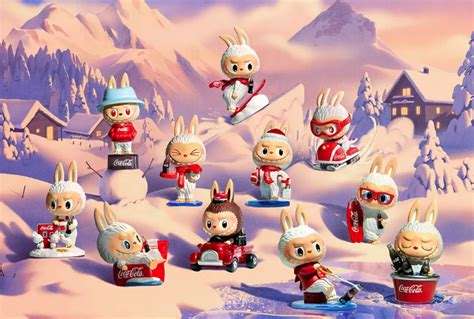
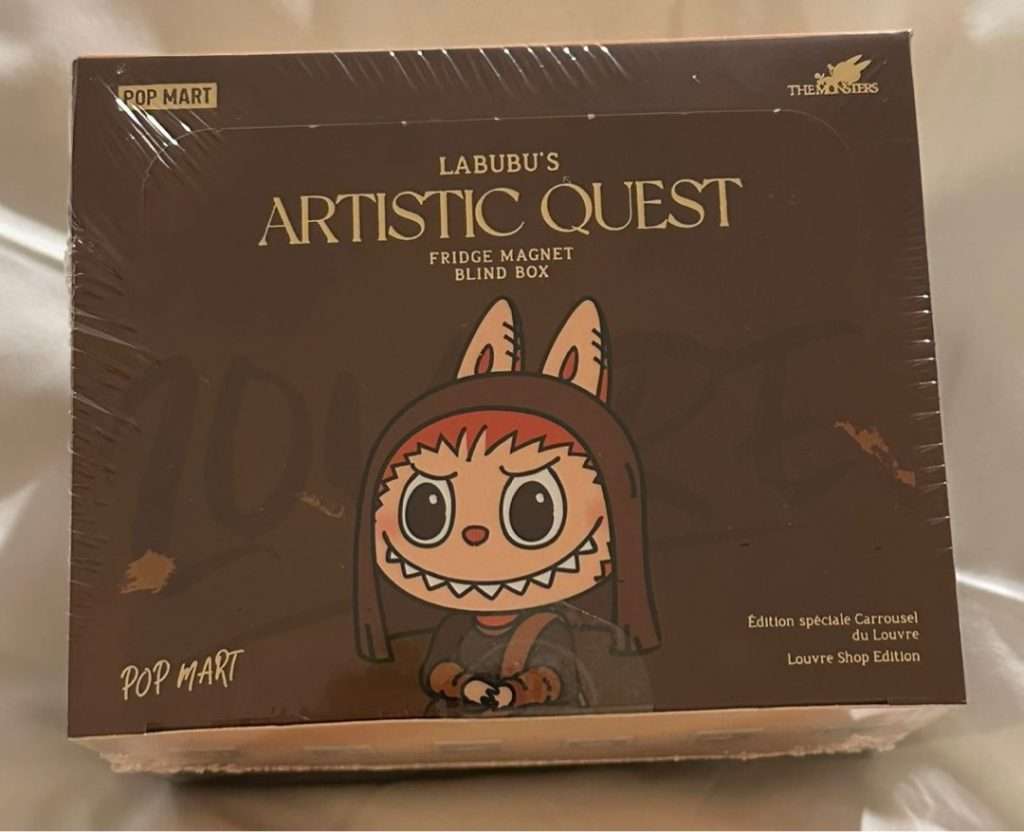
Moreover, the integration into fashion and lifestyle sectors—appearing as keychains, phone charms, fridge magnets, and mittens—has blurred the lines between toys and accessories, expanding the brand’s reach and enhancing the overall customer experience. The brand’s presence in prestigious venues like the Louvre Museum in Paris further elevates its cultural cachet, appealing to both collectors and art enthusiasts.
Potential Partnership Opportunities Across Industries
Labubu’s versatile appeal and strong brand identity open numerous partnership opportunities across various industries:
- Fashion and Luxury Goods: Collaborations with high-end designers and brands can elevate the brand as a fashion statement, capitalizing on its celebrity endorsements and social media buzz. Limited-edition accessories and apparel featuring the toy could attract both collectors and fashion-conscious consumers.
- Entertainment and Media: Given the rich narrative roots in mythology and character-driven stories, partnerships with animation studios, gaming companies, or streaming platforms could expand its presence into digital entertainment, creating immersive experiences or animated series.
- Technology and Digital Collectibles: The blind box model and collectible nature align well with emerging trends in NFTs and digital collectibles. Pop Mart could explore blockchain-based Labubu collectibles, enhancing exclusivity and tapping into the growing market for digital assets.
- Retail and E-commerce: Collaborations with global retailers and online marketplaces can expand the distribution, while integrating augmented reality (AR) features could enhance the unboxing and collecting experience.
- Tourism and Museums: Exclusive Labubu series sold at cultural institutions like the Louvre demonstrate potential for partnerships with museums and tourist destinations, blending art, culture, and commerce.
- Lifestyle and Home Decor: Expanding Labubu-themed home goods, from furniture to decorative items, could attract adult collectors looking to incorporate the brand into their living spaces.
What’s Next for Labubu?
Looking ahead, the toy line is poised to continue its trajectory as a cultural and commercial powerhouse. The brand’s ability to innovate within the blind box economy, leverage celebrity influence, and engage consumers emotionally will remain critical. Expansion into new product categories, digital realms, and global markets will likely drive sustained growth.
Pop Mart’s recent revenue figures underscore this momentum, with US$1.8 billion reported in 2024—more than double the previous year—and stock price targets raised by major financial institutions like Deutsche Bank and Morgan Stanley by 30-50% due to growing demand.
The brand’s next phase may involve deeper integration with digital technologies, including AR and NFTs, to create hybrid physical-digital collectibles. Additionally, expanding storytelling through media collaborations could deepen consumer engagement and broaden Labubu’s fanbase beyond traditional toy collectors.
Transforming for the Better
Labubu’s journey offers valuable lessons in transforming a product into a cultural phenomenon through innovative marketing, emotional engagement, and strategic partnerships. For the brand to transform for the better, it must balance scarcity-driven demand with sustainability and ethical considerations, addressing concerns about overconsumption and waste in the collectibles market.
Pop Mart could lead by adopting eco-friendly materials and packaging, promoting recycling initiatives, and creating circular economy models for collectible toys. Enhancing transparency about production and supply chain practices would also resonate with increasingly conscious consumers.
Furthermore, fostering inclusive communities around the figures, supporting fan creativity, and expanding educational content about the brand’s mythological inspirations could enrich the cultural value of the product beyond commercial success.
Frequently Asked Questions (FAQ) About Labubu
- What is Labubu and who created it?
It is a collectible plush toy character created by artist Kasing Lung, known for its distinctive “ugly-cute” design featuring sharp teeth and bunny ears. It was created by Hong Kong-born artist Kasing Lung, inspired by Nordic mythology and his graphic novel series The Monsters. - Why is Labubu sold in blind boxes?
The blind box model adds an element of surprise and scarcity with limited edition series, making collecting addictive and encouraging repeat purchases. - How did Labubu become so popular?
Celebrity endorsements, social media unboxing trends, and Pop Mart’s innovative marketing fueled the global rise. It is sold through Pop Mart’s physical stores, vending machines, and online platforms worldwide. - What makes Labubu’s design unique?
It blends cute and edgy features—large eyes, furry body, sharp teeth—creating a quirky, memorable character. Its figures are often used as bag charms, keychains, and phone accessories, making them popular lifestyle items. - What industries could Labubu partner with?
Potential partnerships include fashion, entertainment, digital collectibles (NFTs), tourism, and home decor.
How Can We Help?
Transformidy is available to assist in helping you understand assess how your company’s experience strategy is effective in generating engagement, satisfaction, and business growth.
Contact us or set up a 30-minute complimentary consultation for more information on our services, insights, or showcases. We look forward to hearing from you.
FAQ
How much did Pop Mart increase Labubu production, and what happened to resale prices?
Pop Mart's supply chain center president Yuan Junjie stated the company increased plush toy production capacity more than tenfold year over year, reaching about 30 million units in August 2025. As a direct result, resale prices for Labubu 3.0 collectibles fell approximately 80% from their peak, with declines across other Pop Mart IP lines ranging from 35% to 69% depending on the specific product.
Was the falling resale price a sign the brand was losing popularity?
The company's own financial results say otherwise. Pop Mart's full-year 2025 revenue grew 185% to 37.12 billion yuan, and Labubu-specific revenue, sold under The Monsters IP line, grew 365.7% year over year to 14.16 billion yuan, representing roughly 38% of total revenue. Primary retail demand accelerated even as resale prices fell, indicating the price decline reflected increased supply, not decreased demand.
Why would a company deliberately undercut its own product's resale value?
Pop Mart executives stated at a 2024 earnings briefing that the company intends 'to sell products, not financial products,' framing extreme resale markups as a threat to the brand's long-term accessibility and reputation rather than a marketing asset worth preserving. A resale market driven by artificial scarcity risks alienating everyday customers priced out of a toy, while sustained high retail-volume growth builds a more durable revenue base.
What is the practical lesson for other brands managing hype-driven demand?
That a booming resale market is not automatically something to protect. Pop Mart's data shows a company can intentionally sacrifice secondary-market scarcity, and the media attention that comes with dramatic markups, in favor of primary sales volume, and still see accelerating core revenue growth as a direct result.
Related intelligence
Article
McDonald's CEO Named the Exact Chain Reaction Behind a Bad Quarter
McDonald's CEO told investors directly: this was not a strategy problem. Restaurant teams were overwhelmed by too many menu deployments in a single quarter, service times rose, and satisfaction scores fell as a direct result. He named the mechanism, not just the symptom.
Article
Your Rivalry Is a Line Item in Someone's Pricing Model
NHL ticket prices rose 65% from 2015 to 2025. A Michigan Journal of Economics study found rivalry history and regional proximity are specific, usable inputs teams already feed into variable pricing models. The emotion of a rivalry has become a line item in a pricing algorithm.
Article
A Third of Walmart's Operating Income Now Comes From Ads and Memberships
Advertising and membership fees now account for a third of Walmart's operating income. Walmart Connect grew 41% in a quarter when retail sales grew about 5%, eight times faster. Retail media margins exceed 70%. Walmart is no longer just a retailer that also sells ads.