
Article
Your Rivalry Is a Line Item in Someone's Pricing Model
NHL ticket prices rose 65% from 2015 to 2025. A Michigan Journal of Economics study found rivalry history and regional proximity are specific, usable inputs teams already feed into variable pricing models. The emotion of a rivalry has become a line item in a pricing algorithm.
- Published
- February 27, 2026
- Updated
- June 18, 2026
- Reading time
- 7 min
2026 updated analysis
What changed since the original article
This page keeps the original Transformidy article as the canonical record and leads with the current interpretation, source notes, and Revenue Unknown framing.
Rivalry as a Priced Variable
A Michigan Journal of Economics study of NHL ticket pricing found that rivalries, built through regional proximity and past matchup history, increase fan attendance and willingness to pay, and that franchises actively use this pattern in their variable pricing decisions. The research identifies pricing as the biggest variable franchises manage in driving attendance, with teams using historical data on timing, day of the week, and specific matchups to predict what the market will bear for any given game, rather than pricing every game on the schedule identically.
That framing is worth sitting with directly. A rivalry is, from a fan's perspective, a story: shared history, regional identity, accumulated grievances and highlights across years of matchups. From a pricing system's perspective, per this research, that same story is a data input, quantifiable enough to systematically raise the price a team charges for a specific game before it happens, based on patterns established across the rivalry's history.
This is not a hidden or scandalous practice; dynamic and variable ticket pricing has been standard across major sports leagues for years. What the Michigan Journal of Economics research makes explicit is the specific mechanism: rivalry intensity, measured through regional proximity and matchup history, is one of the concrete factors feeding that pricing model, not just a vague marketing narrative teams lean on separately from how they actually set prices.
Increase in average NHL ticket prices over the decade
Rivalry history and regional proximity are documented, direct inputs into how those prices are set game by game.
65%, and Counting
Set against the pricing-model finding, the broader ticket price trend gives useful scale to how much this dynamic has compounded over the past decade. Average NHL ticket prices rose 65% from 2015 to 2025 on the secondary market, part of a pattern seen across major leagues in the same period: NFL prices nearly tripled at 173% inflation-adjusted growth, college football rose 119%, MLB rose 111%, and NBA rose 70%.
Rivalry-driven variable pricing is not the sole explanation for that decade-long increase, star power, playoff stakes, and general market demand all contribute as well. But the Michigan Journal of Economics research identifies rivalry specifically as one of the concrete, quantified levers franchises use within that broader pricing system, meaning a fan's growing ticket cost for a historic matchup reflects, in part, a documented, deliberate pricing decision built around the exact emotional stakes that make the fan want to attend in the first place.
The broader business lesson generalizes well beyond sports: any organization sitting on a data-rich relationship with its customers, where historical patterns of enthusiasm, loyalty, or emotional investment can be measured, has the raw material to build variable pricing around those same signals. Sports franchises have simply been unusually explicit and data-driven about doing so, converting rivalry intensity, a factor most industries would treat as purely qualitative brand narrative, into a quantified, priced input.
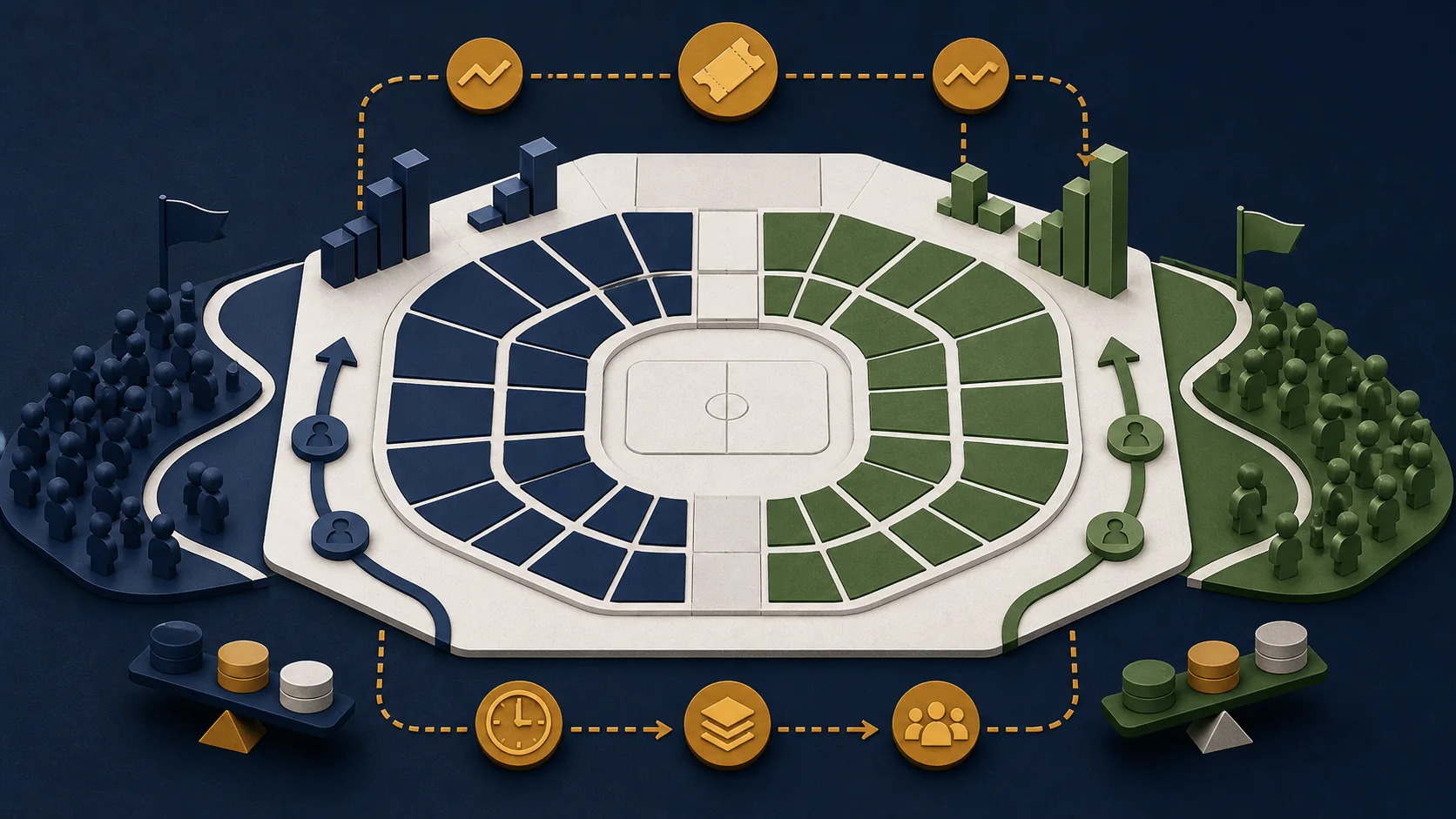
Rivalry as Narrative vs. Rivalry as Priced Input
One is how a fan experiences the game. The other is how a franchise prices access to it.
Rivalry as narrative: shared history, regional identity, and accumulated stakes that make a specific matchup emotionally significant to fans, the story told in marketing and broadcast coverage. Rivalry as priced input: the same regional proximity and matchup history converted into quantified variables inside a franchise's dynamic pricing system, directly raising the ticket cost for that specific game.
The Leadership Move
The structural choice for any sports franchise or comparable customer-facing business is whether to treat customer emotional investment, rivalry intensity, brand loyalty, historical engagement, as a purely qualitative marketing narrative, or as a quantifiable, priceable input into a data-driven revenue system.
- Ownership
Sports franchise pricing and revenue leadership own the decision to formalize rivalry intensity and regional proximity as explicit inputs into variable pricing models, converting what was historically an intuitive premium into a documented, systematic pricing lever.
- Tradeoff
Charging a data-driven, rivalry-specific premium captures real, quantified additional revenue from a franchise's most emotionally invested fans. The tradeoff is a real affordability and access cost for those same fans, whose loyalty and historical attendance patterns are the exact data the pricing system uses to charge them more for the games they care about most.
- Human consequence
A fan paying a rivalry-game premium is, often without fully realizing it, paying a price shaped directly by their own and their community's historical attendance and enthusiasm data, a specific, felt consequence of loyalty being converted into a pricing input.
Next Move
If you run a business with data-rich, emotionally invested customer relationships: Consider whether historical engagement or loyalty patterns could be formalized as legitimate, transparent inputs into a variable pricing or offer system, following the sports industry's example.
If you are a fan or customer noticing rivalry-driven or high-demand pricing: Recognize that the premium you are paying may be a data-driven output, not an arbitrary markup, shaped by historical patterns of attendance and enthusiasm similar to your own.
FAQ
Does rivalry history actually affect how sports teams price tickets?
Yes, directly. A Michigan Journal of Economics study of NHL ticket pricing found that rivalries built through regional proximity and past matchup history increase fan attendance and willingness to pay, and that franchises use this pattern as a direct input into their variable pricing decisions, alongside factors like day of week and time of year.
How much have sports ticket prices actually risen recently?
Average NHL ticket prices rose 65% from 2015 to 2025 on the secondary market. Other leagues saw comparable or larger increases in the same period: NFL prices nearly tripled (up 173% inflation-adjusted), college football rose 119%, MLB rose 111%, and NBA rose 70%.
Is pricing the biggest factor teams control in driving attendance?
According to the Michigan Journal of Economics research, yes. The study identifies pricing as the biggest variable franchises actively manage, using historical data on matchups, timing, and regional rivalry intensity to predict what the market will bear for any given game, rather than setting a single flat price across the season.
What does it mean that rivalry emotion has become a pricing input?
It means the emotional intensity fans experience around a historic or regional rivalry is not just a marketing narrative for the league; it is a quantified, data-driven variable feeding directly into how much a ticket for that specific game costs. The same emotional signal that makes fans want to attend is also the signal teams use to charge more for the opportunity.
Sources & References
Original article archive
Original article published February 27, 2026: "7 Powerful Ways Heated Rivalry Elevates CX and Inspires Action". Preserved here for provenance, historical context, and citation continuity.
Heated Rivalry is emerging as one of the clearest examples of how a single story can reshape what customers expect from brands and experiences. It is a queer hockey romance set in one of sport’s most traditionally macho spaces, evolving from niche adaptation to global talking point and now spilling into fashion weeks, late night television and brand strategy conversations. Heated Rivalry shows that fans no longer want to simply watch a story; they want to live it through products, rituals and communities that feel emotionally consistent with what they see on screen.
Key Takeaways
- Heated Rivalry has evolved from a niche queer hockey romance into a broader cultural platform that now touches fashion weeks, late night television and brand marketing, giving brands a longer runway to design meaningful customer experiences.
- The show’s authentic representation of queer intimacy in a traditionally hyper masculine sport raises expectations for how inclusive and emotionally nuanced brands must be if they want to participate in the fandom credibly.
- Hudson Williams’ runway debut for Dsquared2 in a hockey coded, Canadian leaning look and Connor Storrie’s hosting turn on Saturday Night Live both confirm that Heated Rivalry’s influence now spans multiple cultural stages, not just streaming.
- Netflix’s IP strategy, including immersive destinations and pop up experiences, offers a roadmap for how Heated Rivalry could be extended into physical and hybrid environments that keep fans engaged between seasons.
- The economic upside of fandom driven CX is substantial, as seen in the growth of pop culture apparel and the spending generated by events such as the Olympics, large tours and film based waves, which proves that emotionally resonant stories can drive significant merchandise and experience demand.
- Timing and lead times are crucial, because rights negotiations, design work, packaging and manufacturing often require many months, which means brands must use cultural signals like runway appearances and SNL bookings as early indicators of durable IP.
- Experiences and products built around Heated Rivalry need to reflect its core themes of hard work, vulnerability and rivalry with respect, or they risk being perceived as exploitative by the LGBTQ+ and fan communities that elevated the show.
Heated Rivalry - An introduction
Heated Rivalry is a queer hockey drama series that follows a long running, slow burn romance between two star players on rival professional teams. It tracks their relationship over several seasons of their careers as public rivals on the ice and secret lovers off it, set against the pressures of elite men’s hockey, media scrutiny and family expectations.
Across its first season, Heated Rivalry focuses on themes of masculinity, homophobia in sport, mental health, immigration and chosen family, showing how the lead characters navigate intense competition, injuries and the fear of being outed while trying to hold on to each other. The story has been widely discussed as a significant step forward for gay male representation in mainstream sports TV because it treats the romance as epic and central rather than as a side plot or stereotype.
1. Representation, Belonging and Trust
Heated Rivalry matters because it places a slow burn queer relationship at the centre of men’s professional hockey, a culture that has historically sidelined gay men and queer storylines. Shows like this help create safer spaces for LGBTQ+ fans, who finally see their realities represented in arenas that previously felt hostile or invisible to them. This kind of representation shift is not just cultural commentary; it is a signal that audiences are more ready than ever to embrace brands that show up in inclusive, emotionally nuanced ways. When a series like Heated Rivalry breaks through, it raises the bar for how authentically brands must operate if they want to be invited into the fandom.

2. Cultural Momentum Across Fashion and Late Night
The cultural footprint of Heated Rivalry is already extending far beyond the streaming home page. The series has attracted intense online discussion, fan art and social clips that turn viewers into unpaid promoters and critics at the same time.
That momentum is now being reinforced by talent and fashion moments, as Hudson Williams makes his runway debut for Dsquared2 during Milan Fashion Week in a hockey coded, Canada leaning look, and Connor Storrie signs with a major agency and steps into mainstream visibility as a Saturday Night Live host in promos that lean into his Heated Rivalry persona.
These moves confirm that Heated Rivalry now has momentum across multiple cultural stages, which lowers risk for brands and gives customer experience teams more confidence that thoughtfully designed activations will have a long enough runway to matter.
3. Netflix IP Strategy and Experiential CX
This is the context in which Netflix’s broader intellectual property strategy becomes relevant. Netflix increasingly treats its stories as platforms for immersive retail and events, not just digital content. With Netflix House and multi title pop up stores, the company is translating hits into physical environments where customers can walk into scenes, play games, eat themed food and buy curated merchandise that extends their favorite narratives.
Increasingly, Netflix is leaning into licensing and partnerships with major toy and consumer product companies to turn titles into toys, collectibles and live experiences that keep fans engaged between seasons. For Heated Rivalry, this playbook points toward a path where the show could eventually share real estate with other iconic Netflix IPs in experiential hubs, rather than remaining only a title in a carousel.
4. Economic Scale of Fandom Driven Experiences
The economic opportunity behind fandom driven experiences is significant. The global pop culture apparel market sits in the tens of billions of dollars annually, with strong projected growth as fandom and nostalgia continue to shape purchasing decisions. Recent phenomena such as the Barbie movie have pushed their parent brands into multibillion dollar retail and licensing waves, while music experiences like Taylor Swift’s Eras Tour have generated billions in direct spending across tickets, travel and merchandise.

In sport, the Olympics routinely attract audiences in the billions worldwide, with corresponding spikes in demand for national team apparel, collaborations and themed products. The 2026 Winter Games used Heated Rivalry to reframe what queer inclusive sports mean.
5. The White Canadian Fleece and Canada Dry Rituals
Within this landscape, the fictional white Canadian fleece from Heated Rivalry is a powerful case study in how a simple item can become a cultural object. In the show’s universe it functions as a symbol of warmth, belonging and understated national pride. In the real world it maps onto existing trends in premium fleece and performance outerwear, which already see surges in interest around winter sports and Olympic cycles and can lift category sales when national narratives peak.
A real world collaboration built around a white Canadian fleece, interpreted through a runway ready lens similar to Hudson Williams’ Dsquared2 look, would sit naturally inside that demand curve.

Canada Dry is an equally strong example of how Heated Rivalry can be used to build new customer experiences without betraying brand heritage. Shane Hollander, one of the main characters has a notable fondness for ginger ale, which gives Canada Dry a storytelling foothold that feels organic. Ginger ale already carries associations with care, calm and family rituals, especially in Canada.
Rather than chasing aggressive sponsorships, Canada Dry has not leaned into rituals around Heated Rivalry and sports more broadly yet. There are opportunities for the brand to do more with the show in season 2. That could mean watch night bundles that pair Canada Dry with snacks and content, or mocktail recipes labeled as pre game and post game reset drinks that match the emotional beats fans see on screen.
6. Timing, Lead Time and Authentic Design
What Heated Rivalry makes clear for customer experience leaders is that IP driven products and experiences cannot be treated as quick drops. It takes months to design and produce a fleece that lives up to runway level styling or to build a pop up that feels safe, inclusive and operationally sound. It takes even longer to negotiate rights across publishers, producers, talent and brands and to ensure that queer and fan communities are involved in the process, rather than presented with a finished line they had no say in.
Heated Rivalry has particular stakes here because its central promise is about respectful intimacy and representation in a space where queer men have often been mocked or excluded. Any clumsy monetization risks being read as exploitation, especially by the very communities that championed the show into mainstream consciousness.
The positive flip side is that Heated Rivalry also offers a strong template for getting it right. Experiences and products should be designed around the show’s core themes of hard work, vulnerability, rivalry that never tips into cruelty and a distinctly Canadian blend of self deprecation and pride.
The Dsquared2 interpretation of Hudson Williams on the runway shows one way to do this visually, by combining technical fabrics, layered silhouettes and subtle maple leaf cues instead of loud branding. A real world white Canadian fleece could follow similar principles, focusing on cut, texture and emotional symbolism over flashy logos.
A Canada Dry activation could do the same by centering quiet reset moments rather than high octane drinking culture and pairing any co branded communications with visible support for sport inclusion and mental health organizations.
7. Designing CX in Arcs, Not Spikes
For brands considering how Heated Rivalry might fit into their own customer experience roadmaps, it is helpful to think in arcs rather than spikes. Early on, smaller digital activations and story led content can build familiarity and ritual: recipes, playlists, behind the scenes glimpses and subtle nods to character habits that reward fans without confusing newcomers.
As the show solidifies its status through renewals, award nominations and mainstream moments such as an SNL hosting slot, the next arc can introduce limited products such as capsule fleece drops or special edition packs that test demand and refine operations.
A later arc, if the IP proves durable and the community remains engaged, can extend into more permanent experiences and loyalty integration. Crave/Bell Media installations or long running collaborations within fashion, entertainment, travel and food. At every stage, the key question is whether customers feel more seen, more respected and more excited to bring the story into their lives.

Transform for Better
Heated Rivalry has already changed how many people understand hockey, masculinity and queer romance and is now rippling out through fashion shows, late night stages and brand strategy rooms. Transform for Better by treating this IP as a blueprint, not just a trend.
Map where your brand can join the story in ways that deepen representation and ritual, plan for design and manufacturing lead times that respect your customers’ intelligence and use each arc of the show’s cultural journey to build experiences that last longer than a season. When you build CX around trust, emotional specificity and inclusive stories, you earn the right to stay in your customers’ lives long after the initial craze cools.
FAQ
- Why is Heated Rivalry such a strong case study for customer experience?
Because it combines a passionate sports setting with a queer romance at the center, it forces brands to navigate identity, representation and fandom all at once, which mirrors the complexity of modern CX. - How do Hudson Williams and Connor Storrie change the IP equation for brands?
Their presence on high fashion runways and on Saturday Night Live expands the reach of Heated Rivalry into new cultural arenas, signaling that the story and its characters will remain visible long enough to justify thoughtful, long lead CX investments. - What can brands learn from Netflix’s handling of its IPs?
Netflix shows that treating stories as platforms for immersive spaces, curated merchandise and live events can keep fans engaged between seasons, offering a template for how Heated Rivalry could eventually move into physical CX environments. - Why does the white Canadian fleece matter so much in this context?
It is a simple wardrobe item that carries layered meaning about warmth, belonging and Canadian identity, and it sits at the intersection of real world outerwear trends and global interest in winter sports, making it a natural candidate for iconic product design. - How can Canada Dry activate around Heated Rivalry without feeling opportunistic?
By focusing on ginger ale as a calm, caring ritual in pre and post game moments, aligning with a character’s habits and broader sport rituals instead of forcing overt, aggressive branding into the story. - What makes timing and lead times so challenging for IP based CX?
Licensing, design, approvals and manufacturing all require significant time, so brands must start planning before they have perfect data, using early cultural signals and phased approaches to reduce risk and avoid missing the peak of interest. - What are the biggest risks when brands engage with Heated Rivalry?
The main risks are coming across as exploitative of queer narratives, diluting the emotional authenticity of the story, or delivering low quality products and experiences that do not match the care fans expect. - How should brands think about product and experience design for this IP?
They should work from the themes outward, prioritizing subtle, emotionally aligned design choices in apparel, beverages and spaces that express hard work, vulnerability and respectful rivalry rather than focusing on logo visibility. - Can Heated Rivalry inform loyalty and community strategies too?
Yes, loyalty programs can reward participation in rituals around the show, such as watch nights or themed events, and communities can be curated as safe spaces where fans explore identity, sport and storytelling together. - What does it mean to design Heated Rivalry CX in arcs instead of spikes?
It means starting with small digital and content nods, then testing limited products, and only later committing to large scale experiences, so that brand investment grows in step with the show’s cultural staying power and the trust built with its communities.
HOW CAN TRANSFORMIDY HELP
If you are planning to learn more about Heated Rivalry and how its IP can lead to innovative customer experiences, Transformidy is available to assist in helping you understand how your brand can leverage your IPs for new experiences and revenue generation. Don't leave any stones unturned.
Contact us or set up a 30-minute complimentary consultation for more information on our services, insights, or showcases. We look forward to hearing from you.
FAQ
Does rivalry history actually affect how sports teams price tickets?
Yes, directly. A Michigan Journal of Economics study of NHL ticket pricing found that rivalries built through regional proximity and past matchup history increase fan attendance and willingness to pay, and that franchises use this pattern as a direct input into their variable pricing decisions, alongside factors like day of week and time of year.
How much have sports ticket prices actually risen recently?
Average NHL ticket prices rose 65% from 2015 to 2025 on the secondary market. Other leagues saw comparable or larger increases in the same period: NFL prices nearly tripled (up 173% inflation-adjusted), college football rose 119%, MLB rose 111%, and NBA rose 70%.
Is pricing the biggest factor teams control in driving attendance?
According to the Michigan Journal of Economics research, yes. The study identifies pricing as the biggest variable franchises actively manage, using historical data on matchups, timing, and regional rivalry intensity to predict what the market will bear for any given game, rather than setting a single flat price across the season.
What does it mean that rivalry emotion has become a pricing input?
It means the emotional intensity fans experience around a historic or regional rivalry is not just a marketing narrative for the league; it is a quantified, data-driven variable feeding directly into how much a ticket for that specific game costs. The same emotional signal that makes fans want to attend is also the signal teams use to charge more for the opportunity.
Related intelligence
Article
McDonald's CEO Named the Exact Chain Reaction Behind a Bad Quarter
McDonald's CEO told investors directly: this was not a strategy problem. Restaurant teams were overwhelmed by too many menu deployments in a single quarter, service times rose, and satisfaction scores fell as a direct result. He named the mechanism, not just the symptom.
Article
A Third of Walmart's Operating Income Now Comes From Ads and Memberships
Advertising and membership fees now account for a third of Walmart's operating income. Walmart Connect grew 41% in a quarter when retail sales grew about 5%, eight times faster. Retail media margins exceed 70%. Walmart is no longer just a retailer that also sells ads.
Article
AI-Referred Shoppers Convert at Twice the Rate of Everyone Else
A new buyer arriving at a Shopify store through AI-driven traffic converts at twice the rate of one arriving through any other channel. AI-originated orders tripled year over year. That is not a traffic story. It is evidence AI referrals are pre-qualifying purchase intent before the customer even lands on the page.