
Article
Brands Are Improving the Experience Nobody Pays For
Forrester's 2026 Total Experience rankings found 48% of noncustomer scores improved in the US, against only 28% of customer scores. Brands are getting measurably better at the employee side of experience and not translating it to the customer side.
- Published
- August 23, 2024
- Updated
- June 18, 2026
- Reading time
- 8 min

2026 updated analysis
What changed since the original article
This page keeps the original Transformidy article as the canonical record and leads with the current interpretation, source notes, and Revenue Unknown framing.
The 20-Point Gap
Forrester's 2026 Total Experience rankings evaluated 406 brands across 11 industries and 13 countries, drawing on more than 350,000 consumer perceptions, using a combined CX Index, Brand Experience Index, and EX Index framework. Within the US results specifically, the report found that "score increases were driven primarily by noncustomer perceptions, 48% of noncustomer scores improved versus only 28% of customer scores."
That 20-point gap is the headline finding worth sitting with. Noncustomer perceptions in Forrester's framework cover employee experience and brand experience, distinct measures from the customer experience index itself. A brand can genuinely improve how its own employees feel about working there, and how the broader public perceives its reputation, without any of that translating into a better experience for the people actually buying its product or service.
The regional data reinforces how uneven this pattern is. US brands saw 53% of scores improve overall, 4% decline, and 43% stay unchanged. Canada showed a similar 53% improvement rate. Europe and Asia Pacific, by contrast, showed 83% of scores unchanged in both regions, with far smaller shares moving in either direction. The US pattern of broad, noncustomer-weighted improvement is a specific, regional phenomenon in this data, not a universal one.
Share of noncustomer scores improving against customer scores improving, year over year
Drawn from 406 brands, 11 industries, and 13 countries, based on more than 350,000 consumer perceptions.
The Financial Multiplier Depends on the Side That's Lagging
Forrester's report is not arguing that employee and brand experience investment is wasted; the opposite is true. Where total experience performance is strong across all three dimensions, customer, employee, and brand, the financial return is substantial: automotive brands saw 2.6x revenue from retention and enrichment, retail brands saw 3.8x, and investment firms saw 5.1x assets per customer. Those multipliers are real and worth pursuing.
The catch is in the word "total." The multiplier is documented for brands performing strongly across the combined index, not for brands that improved only the noncustomer half. A business that reads Forrester's revenue figures and assumes its own improved employee engagement scores are already capturing that multiplier is likely miscounting, given that the US data shows customer-side improvement lagging noncustomer improvement by 20 points. The multiplier depends specifically on the side of the equation that most US brands, per this data, are improving more slowly.
This is a useful diagnostic for any organization currently celebrating an experience score improvement without specifying which index moved. If the gain is concentrated in employee sentiment or brand reputation surveys, it is real, worth having, and not yet evidence that the customer-facing revenue multiplier is being captured. Only a corresponding, verified movement in the customer experience index itself closes that gap.
Reporting "Experience Improved" vs. Specifying Which Side
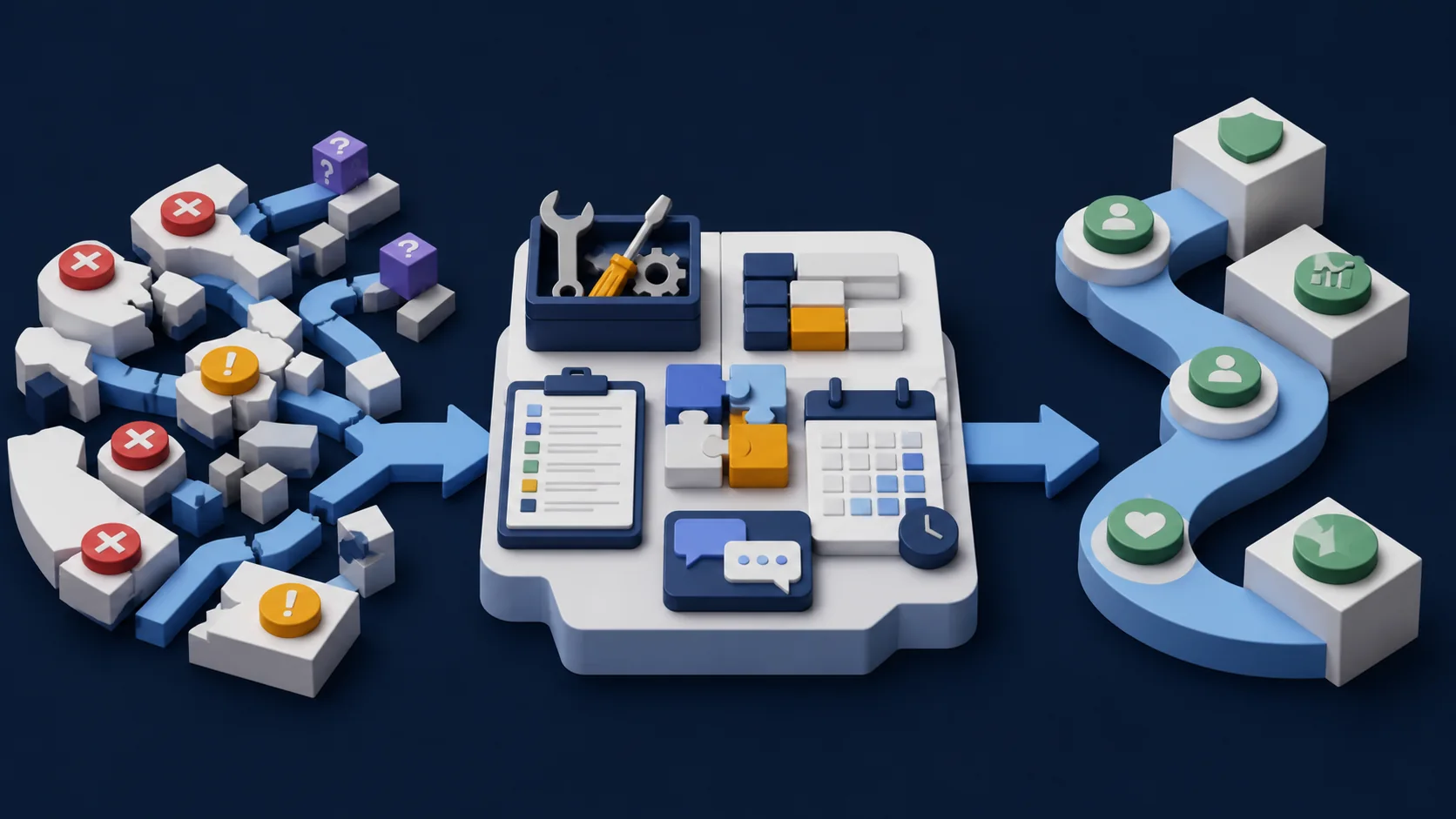
One is a broad, comfortable claim. The other tells you whether the revenue multiplier is actually within reach.
Broad reporting: "our experience scores improved this year," true but ambiguous about which of employee, brand, or customer metrics actually moved. Specified reporting: separate tracking of customer, employee, and brand indices, revealing whether the 20-point US gap between noncustomer and customer improvement applies internally, and whether the documented revenue multiplier is actually reachable yet.
The Leadership Move
The structural choice for any leadership team reporting experience gains is whether to let a broad, favorable "experience improved" narrative stand, or to specify which of employee, brand, and customer experience actually moved before claiming credit for the associated revenue multiplier.
- Ownership
CX and total-experience leadership own the responsibility to report customer, employee, and brand experience metrics separately, not as a single blended score, so that leadership and investors can see whether the specific dimension tied to revenue multipliers is actually improving.
- Tradeoff
Reporting the three dimensions separately is less flattering in the near term than a single blended improvement number, since it exposes exactly where, per Forrester's US data, most organizations are currently lagging. The tradeoff against that discomfort is continuing to invest resources into the dimension already improving faster while the customer-facing side, the one tied to the largest documented financial multiplier, stays under-resourced.
- Human consequence
Employees experiencing genuine workplace improvement are having a real, positive experience; customers whose experience is not improving at the same rate are having a materially different one, and conflating the two in reporting obscures that gap from the people positioned to close it.
Next Move
If your organization reports a blended "experience score": Break it into customer, employee, and brand components before your next leadership review, and check whether the pattern in Forrester's US data, noncustomer improvement outpacing customer improvement, is also true internally.
If you are citing a total-experience revenue multiplier in a business case: Confirm your organization's customer-facing index has actually moved, not just employee or brand perception, before attributing revenue impact to experience investment.
FAQ
What did Forrester's 2026 Total Experience rankings find about where scores actually improved?
Forrester evaluated 406 brands across 11 industries and 13 countries, drawing on more than 350,000 consumer perceptions. In the US, score increases were driven primarily by noncustomer perceptions: 48% of noncustomer scores improved, versus only 28% of customer scores improving in the same period.
What does "noncustomer perceptions" mean in this context?
Noncustomer perceptions cover employee experience and brand experience measures distinct from the customer experience index specifically, part of Forrester's combined CX Index, Brand Experience Index, and EX Index framework. A brand can improve how it is perceived by its own employees or by the broader public without a corresponding improvement in how actual customers experience the product or service.
Does strong employee experience actually connect to customer outcomes?
Forrester's data shows a real financial link where total experience performance is strong: automotive brands with strong total experience saw 2.6x revenue from retention and enrichment, retail brands saw 3.8x, and investment firms saw 5.1x assets per customer. The gap in this specific finding is not that employee experience is disconnected from value, but that most brands are improving it faster than they are improving the customer-facing side that the financial multiplier actually depends on.
What is the practical takeaway for a business investing in experience improvement?
Check whether recent experience investment has actually moved customer-facing metrics, not just internal or brand-perception metrics, since Forrester's US data shows those two categories improving at very different rates. A business reporting broad experience gains should specify which category improved before treating the gain as evidence of customer-facing progress.
Sources & References
Original article archive
Original article published August 23, 2024: "Business Success: The Customer and Employee Experience Way". Preserved here for provenance, historical context, and citation continuity.
In today's competitive business environment, companies recognize that creating exceptional customer experiences (CX) is essential for success. However, the link between customer experience and employee experience (EX) is often overlooked. These two aspects are deeply interconnected, and understanding their relationship can lead to improved operational management and overall business success.
In this insight, Transformidy explores the connection between CX and EX, examines relevant statistics, showcases examples where these elements work well together, and discusses how companies can measure their effectiveness. Additionally, we will highlight the major pitfalls of separating CX and EX and provide insights for the C-suite on how to approach this critical relationship.
The Interconnection Between CX and EX
Customer experience (CX) refers to all customer interactions with a company, from the initial awareness stage to post-purchase support. Employee experience (EX), on the other hand, encompasses the entirety of an employee's journey with a company, including recruitment, onboarding, daily work environment, career development, and offboarding. The relationship between CX and EX is symbiotic: a positive employee experience often leads to a better customer experience, while a poor employee experience can negatively impact the quality of service delivered to customers.
Research shows that companies with highly engaged employees can outperform their competitors in earnings per share and enjoy higher profitability. This connection is because employees who feel valued, supported, and engaged are more likely to go above and beyond to meet customer needs, leading to higher customer satisfaction/loyalty and business success.
Examples of CX and EX Working Together To Build Business Success
Several companies have successfully integrated CX and EX, resulting in impressive business outcomes. One notable example is Zappos, an online retailer known for its exceptional customer service. Zappos has built a company culture centered around employee happiness, offering extensive training, growth opportunities, and a supportive work environment. This focus on EX has translated into a consistently high level of CX, with Zappos being lauded for its customer service, which includes free shipping, easy returns, and a 24/7 call center.
Another example is Southwest Airlines, which has long been recognized for its strong employee culture. Southwest empowers its employees to make decisions that enhance the customer experience, whether it's offering a free drink to a weary traveler or providing personalized service. This employee-centric approach has led to high levels of customer satisfaction and loyalty, contributing to Southwest's success in a highly competitive industry.
Salesforce, a global leader in customer relationship management (CRM), also demonstrates the power of aligning CX and EX. The company has consistently ranked high in employee satisfaction, thanks to its emphasis on a positive work environment, professional development, and inclusivity. This strong EX foundation has enabled Salesforce to deliver outstanding CX, with the company frequently being recognized for its customer-centric approach and innovative solutions.
Measuring CX and EX Effectiveness
Measuring the effectiveness of CX and EX is crucial for companies to understand how well these two elements are aligned and where improvements are needed. For CX, common metrics include Net Promoter Score (NPS), Customer Satisfaction (CSAT), and Customer Effort Score (CES). These metrics provide insights into how customers perceive their interactions with a company and whether they are likely to remain loyal.
For EX, metrics such as Employee Net Promoter Score (eNPS), employee engagement surveys, and turnover rates are commonly used. These metrics help gauge employee satisfaction, engagement, and overall well-being within the company. By tracking both CX and EX metrics, companies can identify correlations between employee engagement and customer satisfaction, allowing them to make data-driven decisions to enhance both experiences.
One company that effectively measures CX and EX is Apple. Apple uses NPS to measure customer loyalty and satisfaction while also conducting regular employee engagement surveys. The company's commitment to both CX and EX has contributed to its reputation as a leader in innovation and customer service. By consistently monitoring these metrics, Apple can ensure that its employees are equipped and motivated to deliver the best possible experience to customers.
Major Pitfalls of Separating CX and EX
One major pitfall is the lack of communication between departments responsible for CX and EX. When teams operate in silos, they may fail to share valuable insights that could improve both customer and employee experiences. For example, customer service teams might identify common pain points for customers that could be alleviated by better employee training or resources. However, if these insights are not communicated to HR or management, the opportunity to improve EX—and by extension, CX—is lost.

Another pitfall is the potential for conflicting priorities. In some companies, the drive to improve CX might lead to increased demands on employees, such as higher workloads or stricter performance targets. Without considering the impact on EX, these efforts can lead to employee burnout, disengagement, and ultimately, a decline in CX. A balanced approach that considers the needs of both customers and employees is essential to avoid this trap.
Blind spots in the design of CX and EX often arise because companies tend to view these elements in isolation rather than as interconnected aspects of the overall business strategy. This siloed approach can lead to misaligned goals, where customer experience initiatives are developed without considering their impact on employees, or vice versa. For example, a company might implement a new customer service protocol that enhances CX but increases the workload for employees, leading to burnout and decreased morale.

These blind spots can be reduced by fostering cross-functional collaboration, where teams responsible for CX and EX work together to align their strategies. Regular feedback loops that involve both customers and employees can also help identify areas where the needs of one group are negatively impacting the other. Additionally, leadership should emphasize the interconnectedness of CX and EX in their vision and strategic planning, ensuring that both are given equal consideration in decision-making processes. By addressing these blind spots, companies can create more holistic and effective CX and EX strategies that drive long-term success.
What C-Suite Should Consider
For the C-suite, understanding the interrelation between CX and EX is crucial for driving long-term business success. Executives must recognize that operational management cannot be solely focused on customer outcomes or employee well-being in isolation. Instead, a holistic approach that considers both elements is necessary to create a sustainable business model.
One key consideration is the alignment of company culture with both CX and EX goals. A company culture that prioritizes employee well-being, continuous learning, and open communication is more likely to foster a positive customer experience. The C-suite should ensure that the company's mission, values, and practices support this alignment and that leaders at all levels are equipped to reinforce these principles.
Another important factor is the integration of CX and EX into the company's overall strategy. Rather than treating CX and EX as separate initiatives, they should be viewed as complementary components of a unified strategy. This approach can be facilitated by cross-functional teams that include representatives from HR, customer service, marketing, and operations. By working together, these teams can develop and implement initiatives that enhance both employee and customer experiences.
Finally, the C-suite should focus on data-driven decision-making when it comes to CX and EX. By regularly reviewing metrics such as NPS, eNPS, employee engagement, and customer feedback, executives can identify trends, uncover opportunities for improvement, and make informed decisions that benefit both employees and customers. Additionally, investing in technology that enables real-time monitoring and analysis of CX and EX data can provide valuable insights and a competitive edge.
Transform For The Better
The relationship between customer experience (CX) and employee experience (EX) is undeniable, and companies that understand and leverage this connection are better positioned for success. By aligning CX and EX goals, measuring their effectiveness, and avoiding the pitfalls of separation, companies can create a positive feedback loop that benefits both customers and employees. For the C-suite, this means taking a holistic approach to operational management that prioritizes both CX and EX as integral components of the company's strategy. In doing so, companies can build a strong foundation for long-term growth, customer loyalty, and employee satisfaction.
How Can We Help?
Transformidy is available to assist in helping you understand how your customer experience and employee experience strategy intersect and provide guidance on how to align business goals with CX and EX.
Contact us or set up a 30-minute complimentary consultation for more information on our services, insights, or showcases. We look forward to hearing from you.
FAQ
What did Forrester's 2026 Total Experience rankings find about where scores actually improved?
Forrester evaluated 406 brands across 11 industries and 13 countries, drawing on more than 350,000 consumer perceptions. In the US, score increases were driven primarily by noncustomer perceptions: 48% of noncustomer scores improved, versus only 28% of customer scores improving in the same period.
What does 'noncustomer perceptions' mean in this context?
Noncustomer perceptions cover employee experience and brand experience measures distinct from the customer experience index specifically, part of Forrester's combined CX Index, Brand Experience Index, and EX Index framework. A brand can improve how it is perceived by its own employees or by the broader public without a corresponding improvement in how actual customers experience the product or service.
Does strong employee experience actually connect to customer outcomes?
Forrester's data shows a real financial link where total experience performance is strong: automotive brands with strong total experience saw 2.6x revenue from retention and enrichment, retail brands saw 3.8x, and investment firms saw 5.1x assets per customer. The gap in this specific finding is not that employee experience is disconnected from value, but that most brands are improving it faster than they are improving the customer-facing side that the financial multiplier actually depends on.
What is the practical takeaway for a business investing in experience improvement?
Check whether recent experience investment has actually moved customer-facing metrics, not just internal or brand-perception metrics, since Forrester's US data shows those two categories improving at very different rates. A business reporting broad experience gains should specify which category improved before treating the gain as evidence of customer-facing progress.
Related intelligence
Article
SharePoint's Real 2025-2026 Story Was Nation-State Attacks, Not CX Strategy
Nation-state hackers exploited on-premises SharePoint servers in 2025, confirmed by Shadowserver at over 300 victims worldwide. In 2026, a new vulnerability rated 9.8 out of 10 severity emerged in the same product line. SharePoint did not quietly rewire anyone's CX strategy. It became a sustained target.
Article
Apple Is Reportedly Building a MacBook Designed to Lose the Spec Sheet Comparison
Apple's new MacBook Neo runs an iPhone chip, not a Mac chip, and starts at $699 to $899, roughly $100 to $300 below the MacBook Air. It has no Thunderbolt. Apple built its first laptop specifically to lose a spec sheet comparison, on purpose, to win a price comparison instead.
Article
Consumer Confidence Hit a Decade Low. Sales Grew 7.1% Anyway.
Consumer confidence hit a decade-low of 84.5 in January 2026. Same-store sales grew 7.1% year over year in the same period. Two numbers this far apart are not describing the same customer, and most retailers are only tracking one of them.