
Article
Free Shipping: The Word That Costs the Most at Checkout
The average free shipping threshold has climbed 23% since 2019, to $64. 81% of shoppers say they'll spend more to hit it—yet unexpected shipping costs remain the number one reason global carts get abandoned. 'Free' shipping is the most expensive word in the checkout flow.
- Published
- February 24, 2025
- Updated
- June 18, 2026
- Reading time
- 8 min
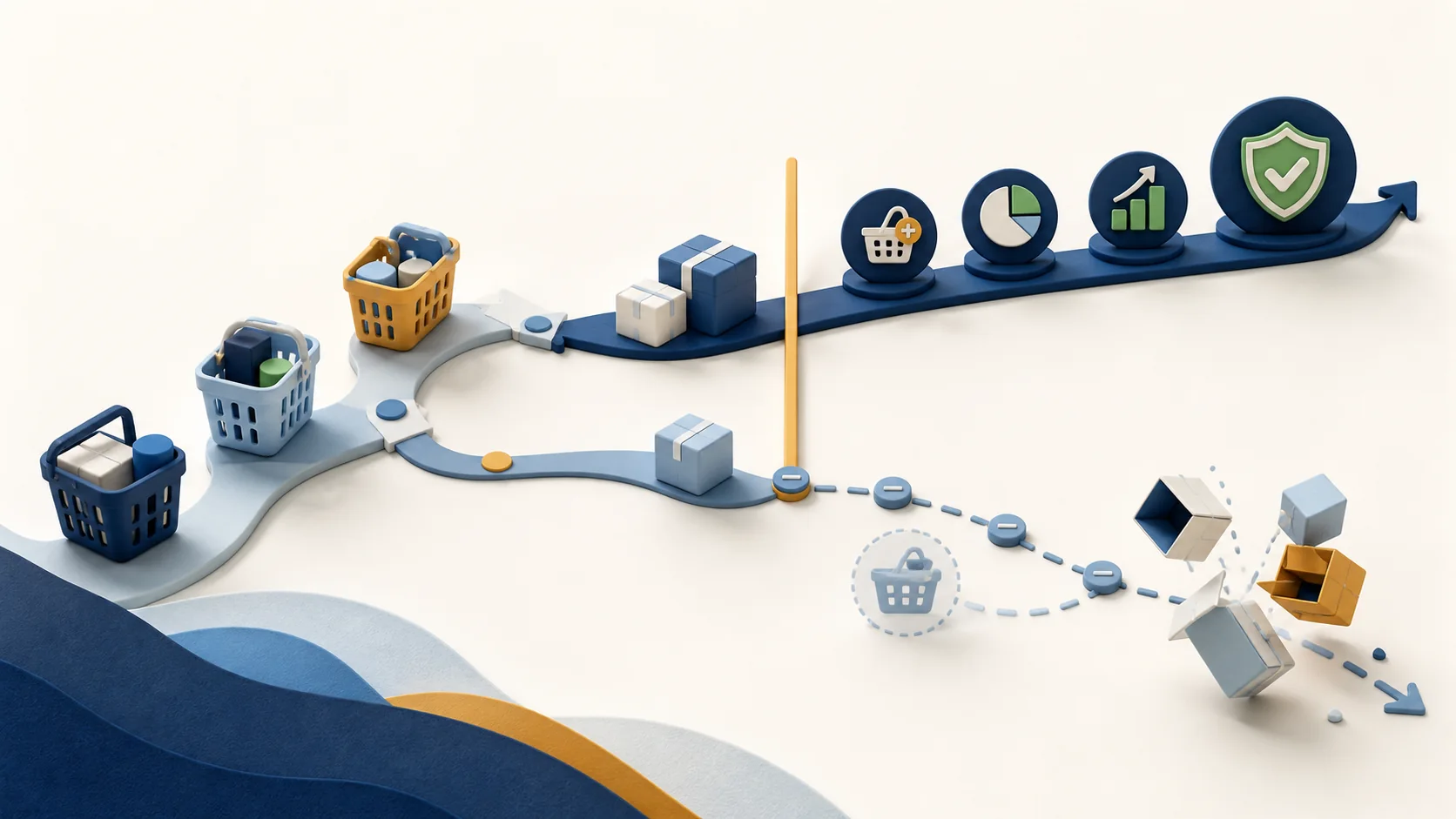
2026 updated analysis
What changed since the original article
This page keeps the original Transformidy article as the canonical record and leads with the current interpretation, source notes, and Revenue Unknown framing.
The Rising Threshold
The average free shipping threshold has risen to $64, up 23.1% from 2019. That increase tracks rising fulfillment and last-mile delivery costs—retailers are not raising thresholds arbitrarily, they are passing a real cost increase downstream in the form of a higher minimum purchase.
The demand for free shipping has not softened to match. 80% of American consumers expect free shipping once they hit a certain order threshold, and 88% of shoppers choose free shipping over fast shipping when offered the choice. Shoppers are not asking for shipping to be instant. They are asking for it to be free, and they have been trained by a decade of retail marketing to expect exactly that.
Increase in the average free shipping threshold since 2019, now $64
81% of shoppers say they're willing to spend more to reach a free shipping threshold—when they know about it early enough to decide.
Willing to Spend, Unwilling to Be Surprised
The most important number in this entire picture is the one retailers most often misread: 81% of Americans are willing to spend more to meet a free shipping threshold. That is not a reluctant customer. That is a customer actively looking for a reason to add one more item to the cart.
What turns that willing customer into an abandoned cart is not the threshold amount—it is when they learn about it. A shopper who sees "spend $12 more for free shipping" on the cart page, with items still in reach, treats it as an invitation and often takes it. A shopper who reaches the final payment screen and discovers a shipping charge they did not budget for treats it as a bait-and-switch, regardless of whether the underlying threshold was reasonable. Same fee. Same threshold. Opposite emotional read, entirely because of sequencing.
This is why "free shipping" as a marketing phrase has become a liability rather than an asset for retailers who do not surface the threshold early: the phrase promises something unconditional, and the fine print delivers something conditional, and the gap between those two is discovered at the worst possible moment in the customer journey.
Threshold Disclosed Early vs. Threshold Discovered at Checkout
Same $64 threshold. Same customer. Opposite outcome.
Early disclosure: shopper sees the gap to free shipping while still browsing and treats it as an invitation to add one more item. Late discovery: shopper sees a shipping fee for the first time at final checkout and treats it as an ambush, regardless of the amount.
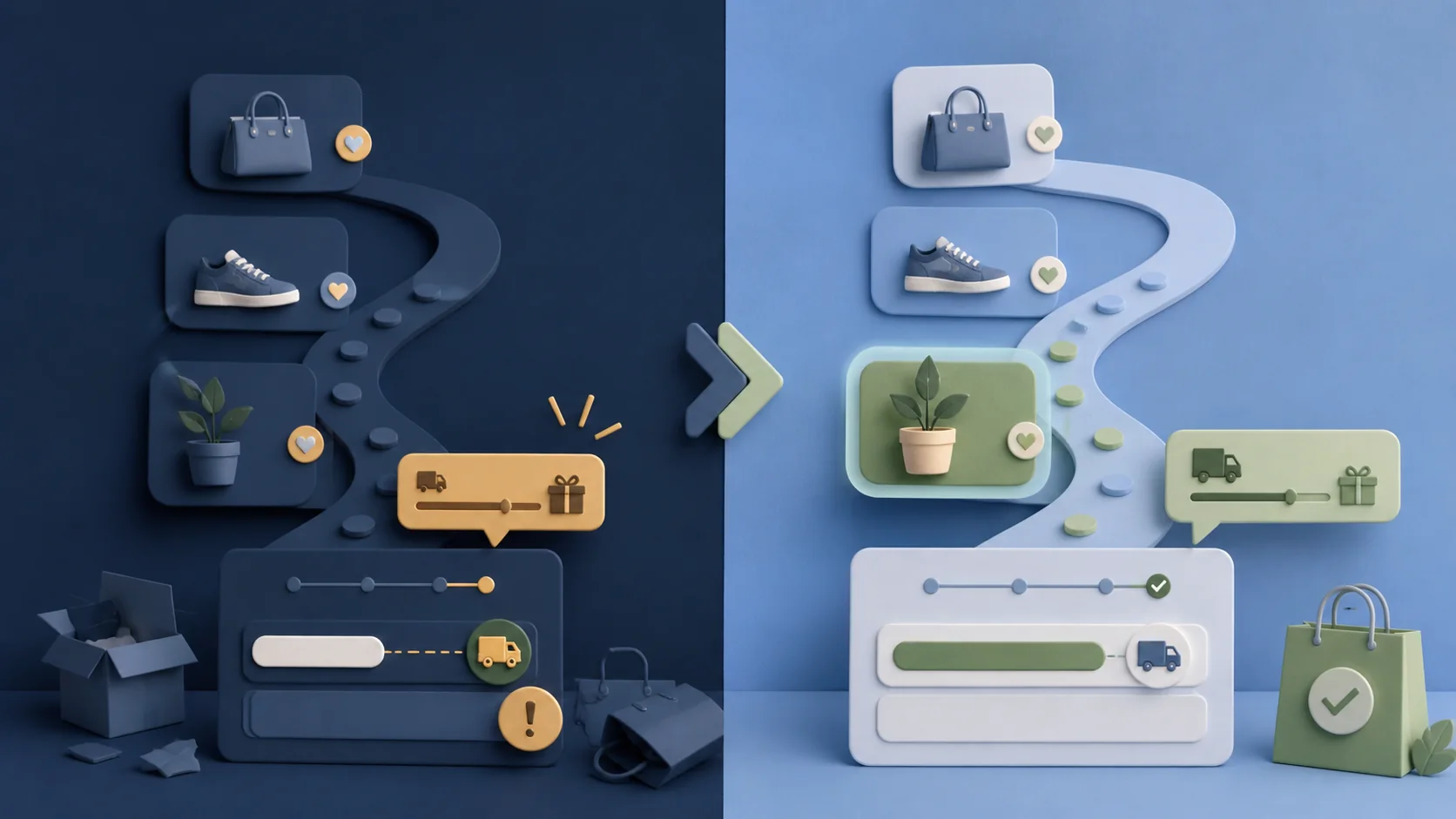
"Free" is not a price. It is a promise. The moment a customer discovers the fine print determines whether they feel invited to spend more or ambushed into abandoning the cart.
The Leadership Move
The structural choice is whether to treat the free shipping threshold as a checkout-page disclosure or a cart-and-browsing-stage feature. The threshold amount rarely needs to change. Where and when it is shown does.
- Ownership
E-commerce/UX product owns where and when the threshold is surfaced; merchandising and finance own the threshold amount itself. When only finance sets the number and no one owns its visibility earlier in the journey, the threshold becomes a checkout-stage surprise instead of a cart-stage incentive.
- Tradeoff
Surfacing the gap to free shipping prominently on the cart page (e.g., "add $12 more for free shipping") is a small design change with real engineering cost across product pages, cart, and mobile. The alternative—leaving disclosure until checkout—keeps the interface simpler but leaves the single most-cited cause of cart abandonment unaddressed.
- Human consequence
A shopper who discovers the threshold early experiences a retailer that is transparent and even generous—"almost there, just a little more." A shopper who discovers it at final checkout experiences the identical retailer as deceptive, even though the underlying policy never changed. Customer service absorbs the second version as complaints about "hidden fees" that were never actually hidden—only late.
Next Move
If your free shipping threshold is only disclosed at checkout: Move the disclosure to the cart page at minimum, ideally the product page, showing the exact dollar gap remaining. Given that 81% of shoppers already say they will spend more to reach a threshold, this is closer to a merchandising opportunity than a compliance fix.
If your threshold has crept upward with fulfillment costs: Audit whether the increase was ever communicated, or whether customers are discovering a $64 threshold that used to be lower without knowing it changed. A threshold increase that arrives as a silent surprise reads exactly like the cart-abandonment trigger the data describes, even if the business rationale for raising it was sound.
FAQ
Why do shoppers abandon carts over shipping costs if free shipping is so common?
Because free shipping is common as a promise, not as a default. Most retailers require a minimum spend to unlock it, and unexpected shipping fees remain the number one cited reason for cart abandonment globally, at a 70.22% overall abandonment rate. The gap between the marketing promise ("we offer free shipping") and the checkout reality ("you owe $9 unless you add $12 more") is where the abandonment happens.
How much has the free shipping threshold increased?
The average free shipping threshold rose to $64, up 23.1% from 2019. Thresholds have climbed steadily as fulfillment and last-mile delivery costs have risen, but the marketing language around "free shipping" has not changed to reflect that it now requires a larger minimum purchase than it used to.
Are shoppers willing to spend more to reach a free shipping threshold?
Yes, most are: 81% of shoppers say they are willing to spend more to meet a free shipping threshold, and 88% choose free shipping over fast shipping when given the option. The willingness is real. What breaks it is surprise—finding out the threshold at checkout instead of before adding items to cart.
What should retailers change about how they present shipping thresholds?
Show the threshold and the gap to it before checkout, ideally on the product or cart page, not as a surprise at the final step. 80% of consumers already expect free shipping at some threshold; the commercial risk is not the existence of a threshold, it is presenting it late enough that a shopper feels ambushed rather than informed.
Sources & References
Original article archive
Original article published February 24, 2025: "When Free is Not Enough: Customer Experience Gone Wrong". Preserved here for provenance, historical context, and citation continuity.
In a world where customer experience can make or break a business, even the allure of "free" can fall short of gaining a new customer. This Transformidy insight offers a real-world scenario where a coffeehouse's attempt to engage customers through a complimentary drink offer backfired due to unclear communication. We will explore the power of thi offerings, the importance of clear messaging, and strategies to transform this feature into powerful customer engagement tool. By understanding the nuances of using the items effectively, businesses can create memorable experiences that drive loyalty and growth.
Key Takeaways
- Free items can be powerful CX tools when used effectively
- Training and technology must align to create seamless customer experiences
- Clear communication is crucial for maximizing the impact
- Metrics and feedback are essential for optimizing CX strategies
Scenario: The Bitter Taste of Poor Communication
Imagine yourself walking into a new coffeehouse, excited to try their brew. You are told to download the mobile application for points, but not that your first drink is free. You place your order, and it is only after payment is processed that you learn about the complimentary drink.
This scenario highlights a critical gap in customer experience that many businesses overlook. It demonstrates how even well-intentioned offers costing money can lead to frustration when not communicated effectively. The missed opportunities for engagement and the potential for negative first impressions underscore the importance of thoughtful implementation of offers in customer experience strategies.

The Power of Free: A Double-Edged Sword
The concept of "free" holds a unique power in marketing and customer experience. When planned and executed correctly, these offerings can be a formidable tool for businesses, capable of attracting new customers, fostering loyalty, and extending future sales. However, the effectiveness of complimentary items hinges on strategic implementation and clear communication. There are psychological and economic factors that make the offer compelling, as well as the potential pitfalls that businesses must navigate to ensure this tactic enhances rather than detracts from the customer experience.
Why Offer Free Items?
Offering samples or first-time complimentary items can be a potent customer experience engagement tool. According to a study by Sampling Effectiveness Advisors, 73% of consumers are likely to buy a product after trying a sample. These items canserve multiple purposes in a customer experience strategy:
- Risk Reduction: Free items allow customers to try products without financial commitment.
- Reciprocity: Customers often feel obligated to reciprocate when given something for free.
- Brand Exposure: Free items increase brand awareness and product familiarity.

The Economics of Free
While giving away products might seem counterintuitive, it can drive significant revenue growth. The economics of these offerings are complex, balancing short-term costs against long-term benefits. Businesses must consider various factors when implementing this strategy, including customer acquisition costs, lifetime value projections, and potential for upselling at different time scale. When executed thoughtfully, this strategy could create a win-win situation, providing immediate delight to customers while ultimately benefiting the company's bottom line with extended future sales.
Consider these factors:
- Customer Acquisition Cost (CAC): Items can efficiently lower CAC by attracting new customers.
- Lifetime Value (LTV): A positive first experience can lead to long-term customer relationships.
- Upselling Opportunities: Free drinks can encourage food purchases or upgrades to premium options on the spot or into the future.
A study by the National Restaurant Association found that 60% of consumers are more likely to return to a restaurant that occasionally offers free items.
Trust and Sales: Beyond the Freebie
Free items alone don't automatically build trust or guarantee more sales. The relationship between the offerings and customer trust is nuanced, requiring a holistic approach to customer experience. While complimentary items can create goodwill, businesses must ensure that the quality of the item, the overall service experience, and subsequent interactions all align to build lasting trust. This section explores strategies for leveraging free offerings as part of a broader trust-building and sales-enhancing customer experience strategy.
To truly capitalize on this strategy:
- Quality Matters: Ensure the item represents your best offerings.
- Follow-Up: Engage customers post experience with personalized offers.
- Consistency: Maintain high standards in all interactions, not just on this one occasion.
According to a survey by PwC, 73% of consumers point to experience as an important factor in their purchasing decisions, alongside price and product quality.
Measuring Performance Success
Effective measurement is crucial for optimizing any free item strategy. By tracking the right metrics, businesses can gain insights into the impact of their free offerings on customer behavior, sales, and overall business performance. This data-driven approach allows companies to refine their strategies, ensuring that free items contribute positively to customer experience and business goals. From redemption rates to long-term customer value, understanding these metrics enables businesses to make informed decisions about their free item initiatives.
Consider these metrics:
- Redemption Rate: Percentage of eligible customers who claim the free item.
- Conversion Rate: Percentage of freebie recipients who become paying customers.
- Average Order Value (AOV): Impact of free items on overall purchase amounts.
- Customer Retention Rate: Long-term effect on customer loyalty.
- Net Promoter Score (NPS): Influence on customer satisfaction and likelihood to recommend.
Engagement with Intent: Communication is Key
Clear communication about complimentary items is crucial for maximizing their impact on customer experience. How a company conveys information about the offering can significantly influence customer perceptions and behaviors. Effective communication strategies ensure that customers are aware of this promotion at the right time, understand their value, and feel positive about the brand as a result. This section explores best practices for communicating about free items across various channels, emphasizing the importance of timing, clarity, and consistency in messaging.
Here's how to do it right:
- Multi-Channel Messaging: Promote the offer through ads (digital/physical), mobile application interactions/ notifications (digital), in-store signage (physical), and verbal communication (physical).
- Timing is Key: Inform customers of this promotion before they place their order through the mobile application or in person.
- Highlight Benefits: Explain how the free item adds value (e.g., "Try our signature blend on us!").
Training Considerations
The success of any free-item strategy heavily depends on effective implementation, which starts with comprehensive training. Both staff and technology play crucial roles in delivering a seamless experience around this CX tool. Proper training ensures that employees understand the importance of this tool in the overall customer experience strategy and can communicate offers and upsell effectively. Similarly, technology must be designed and implemented to support and enhance the free item experience. This section outlines key training considerations for both human and technological aspects of free item strategies.
For Staff:
- Script key messages about the promotion and show care in executing this offer.
- Train on upselling techniques to complement the offer such as food or beverage that would be a good match
- Emphasize the importance of mentioning the offer early in the interaction (such as during initial introduction)
For the App:
- Implement clear, prominent notifications about the complimentary item on the opening screen.
- Design an intuitive user flow that guides customers to redeem their freebie and offers other options to pair with it.
- Ensure seamless integration between the app and in-store systems.

Feedback: The Key to Continuous Improvement
Feedback is an essential component of any successful customer experience strategy, particularly when it comes to free offerings. By systematically collecting and analyzing customer feedback, businesses can gain valuable insights into the effectiveness of this initiative, identify areas for improvement, and adapt their strategies to better meet customer needs and expectations. This iterative process of gathering feedback and making data-driven improvements is crucial for maintaining the relevance and impact of free offerings in an ever-evolving marketplace.
Gathering and acting on feedback is crucial:
- Immediate Feedback: Send a short survey right after the first order.
- Follow-Up: Reach out a few days later for more detailed feedback.
- Continuous Engagement: Use feedback to personalize future interactions and offers.
According to Watermark Consulting, companies that lead in customer experience outperformed laggards on the S&P 500 by nearly 80%. Since there is a cost associated with a free item, brands should determine if the experience is a delight or a distraction.
Transform for the Better
Free items can be a powerful tool in your CX arsenal, but only when implemented with precision and care. The true transformation of customer experience through these offerings requires a holistic approach that encompasses clear communication, comprehensive training, strategic implementation, and continuous feedback. By focusing on these elements, businesses can turn simple this tool into catalysts for long-term customer relationships and sustainable growth.
Remember, in the world of customer experience, it's not just about what you offer—it's about how you offer it. So, are you ready to transform your free item strategy and create experiences that truly resonate with your customers?
FAQ
Q: How often should we offer free items?
A: The frequency depends on your business model and customer base. Generally, offering this promotion for first-time customers and occasionally for loyal customers can be effective without devaluing your products. The goal is to set up a customer experience journey that is positive and could result in a repeat visit.
Q: Can free items negatively impact our brand perception?
A: If not executed properly, yes. Ensure these items are high-quality and that the offer is presented in a way that aligns with your brand values. Costs should be monitored to ensure how they contribute to the overall business over time.
Q: How can we encourage customers to provide feedback after receiving a free item?
A: Make the feedback process simple and rewarding. Consider offering a small discount on their next purchase for completing a survey and encouraging customers to post on their social media accounts (especially if the experience was positive).
Q: Should we personalize free item offers?
A: Yes, personalization can significantly increase the effectiveness of your free item strategy. Use customer and transaction data to offer items that align with individual preferences. For example, giving someone an item that trigger allergic reaction would not be welcomed.
Q: How do we balance the cost of free items with potential revenue gains?
A: Conduct regular cost-benefit analyses. Track metrics like customer acquisition cost, conversion rates, and lifetime value to ensure your strategy remains profitable.
How Transformidy Can Help?
At Transformidy, we specialize in helping brands navigate the complex world of maximizing customer experience for improved engagement, satisfaction, and business growth. Our team of experts can assist you in assessing, tailoring, and implementing the right customer experience strategy for your company.
Contact us or set up a 30-minute complimentary consultation for more information on our services, insights, or showcases. We look forward to hearing from you.
FAQ
Why do shoppers abandon carts over shipping costs if free shipping is so common?
Because free shipping is common as a promise, not as a default. Most retailers require a minimum spend to unlock it, and unexpected shipping fees remain the number one cited reason for cart abandonment globally, at a 70.22% overall abandonment rate. The gap between the marketing promise ('we offer free shipping') and the checkout reality ('you owe $9 unless you add $12 more') is where the abandonment happens.
How much has the free shipping threshold increased?
The average free shipping threshold rose to $64, up 23.1% from 2019. Thresholds have climbed steadily as fulfillment and last-mile delivery costs have risen, but the marketing language around 'free shipping' has not changed to reflect that it now requires a larger minimum purchase than it used to.
Are shoppers willing to spend more to reach a free shipping threshold?
Yes, most are: 81% of shoppers say they are willing to spend more to meet a free shipping threshold, and 88% choose free shipping over fast shipping when given the option. The willingness is real. What breaks it is surprise—finding out the threshold at checkout instead of before adding items to cart.
What should retailers change about how they present shipping thresholds?
Show the threshold and the gap to it before checkout, ideally on the product or cart page, not as a surprise at the final step. 80% of consumers already expect free shipping at some threshold; the commercial risk is not the existence of a threshold, it is presenting it late enough that a shopper feels ambushed rather than informed.
Related intelligence
Article
A Third of Walmart's Operating Income Now Comes From Ads and Memberships
Advertising and membership fees now account for a third of Walmart's operating income. Walmart Connect grew 41% in a quarter when retail sales grew about 5%, eight times faster. Retail media margins exceed 70%. Walmart is no longer just a retailer that also sells ads.
Article
B2B Customer Experience: Moving Beyond Transactional
B2B customer success evolved beyond account management. Organizations that invest in customer outcomes built strategic partnerships. Those treating success as transaction support lost customers to specialized competitors.
Article
AI in Hospitality: Personalization and Guest Experience Risk
Hotels deployed AI for personalization and staff augmentation. But automation that removes human touch from high-stakes moments (room issues, service recovery) creates guest frustration. Successful properties used AI to enable staff, not replace judgment.