
Article
B2B Customer Experience: Moving Beyond Transactional
B2B customer success evolved beyond account management. Organizations that invest in customer outcomes built strategic partnerships. Those treating success as transaction support lost customers to specialized competitors.
- Published
- June 11, 2025
- Updated
- June 18, 2026
- Reading time
- 8 min
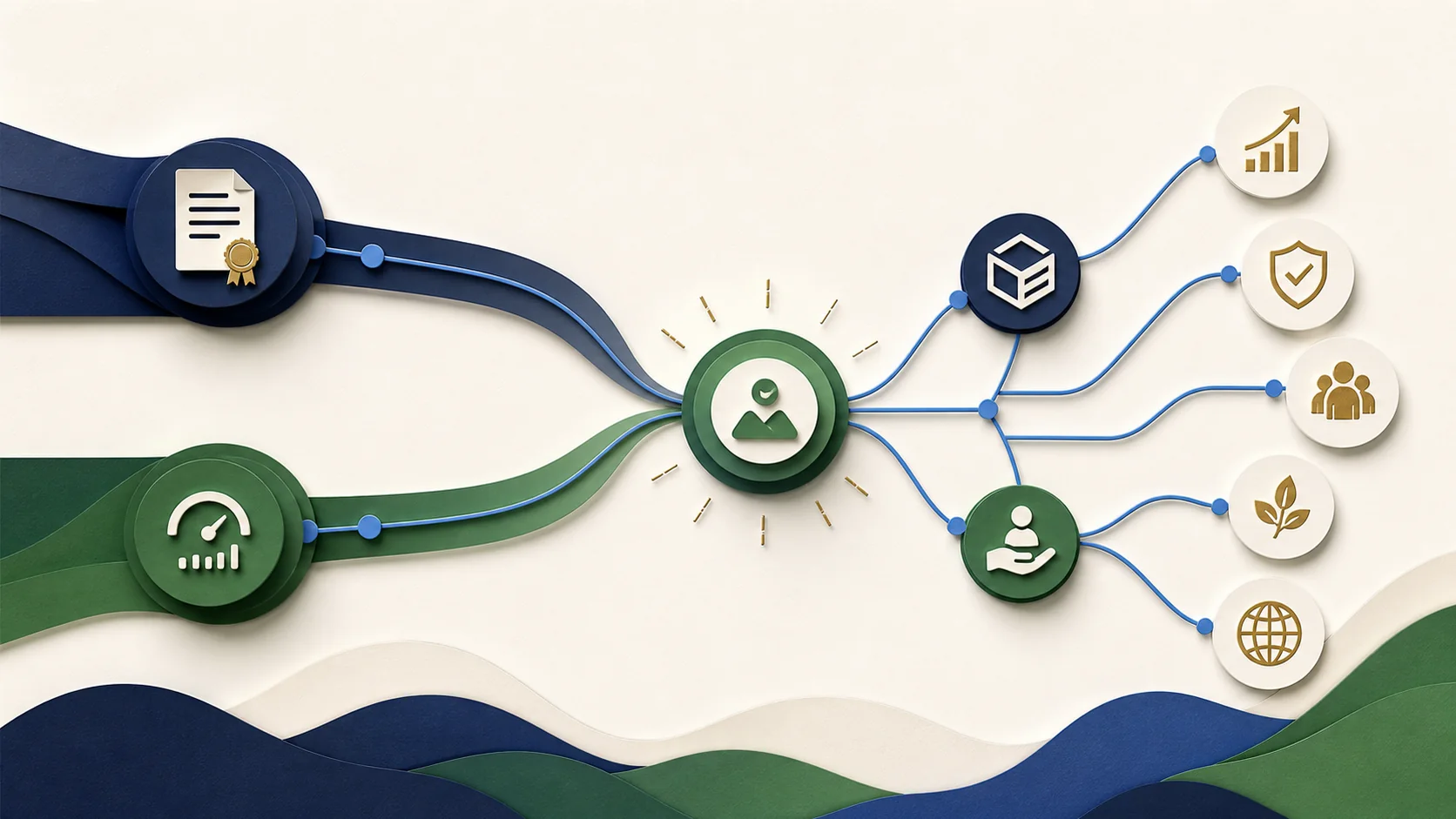
2026 updated analysis
What changed since the original article
This page keeps the original Transformidy article as the canonical record and leads with the current interpretation, source notes, and Revenue Unknown framing.
The Partnership Divergence
B2B customer success teams split into two operating models between 2024 and 2026. The divergence is structural, not accidental, and it matters to revenue.
Path A (Strategic Partnership): Customer success teams embedded in customer strategy from onboarding forward. They understand customer business outcomes, not just product adoption. They sit in customer reviews alongside product and professional services. When customer needs change, they advocate for roadmap alignment. Relationship depth is measured by customer outcome improvement, not just renewal. Result: high retention, high expansion, high defection resistance.
Path B (Transactional Success): Customer success teams focused on adoption metrics, ticket response, and contract management. They manage SLAs and escalations. When customer needs change, they hand off to sales (who often have not touched the account since signature). Relationship measurement stops at renewal rate and net promoter score. When a better-fit competitor appears, customers switch because no relationship depth exists to anchor them. Result: silent churn, shrinking expansion, high vulnerability to specialization.
Both teams report customer success. One creates revenue moats. The other manages customer retention like inventory.
Why the Visible Metric Misleads
Retention rates are clean. Year-one renewal looks identical whether the relationship is strategic or transactional. But in year two and beyond, the models diverge.
Customers stay with vendors they trust and who understand their business context. When retention is built on convenience or switching cost, not partnership, customers leave quietly. They do not complain for two years before switching; they wait for a better option to emerge. The moment it does—a competitor launches a specialized feature, a new vendor enters the market, a shift in business priorities makes your product less central—they move. And because no strategic relationship exists, the exit is frictionless.
The hidden cost is not the churn itself; it is the foregone expansion and cross-sell revenue. Customers who trust you do not just renew—they buy more as their business scales. Strategic partners grow with customers. Transactional vendors are left behind when customers evolve.
Strategic Partnership vs. Transactional Account Management
Two different approaches. Different customer lifetime value outcomes.
Strategic: customer success team owns customer business outcomes and roadmap influence. Transactional: customer success team owns adoption metrics and support SLAs. Strategic compounds. Transactional plateaus.

Customer success is not a support cost. It is a revenue function. When treated as cost, it shrinks to support. When invested as revenue, it compounds to partnership.
The Leadership Move
The structural question is not whether to have customer success, but whether to invest it as a revenue function or operate it as a service cost. This choice belongs to leadership, not to customer success teams themselves. Teams execute whatever model they are funded and chartered to pursue.
- Ownership
Strategic customer success cannot be owned by customer success alone. Chief Customer Officer or VP of Customer Success owns execution. Chief Revenue Officer owns expansion target alignment. Chief Product Officer owns roadmap responsiveness to customer needs. When this ownership is fragmented, customer success defaults to tactical support mode.
- Tradeoff
Strategic investment in customer success requires higher headcount and deeper hiring (hiring for business acumen, not support skills), longer ramp time for new team members, and willingness to say no to expansion opportunities that do not fit customer business context. The immediate cost is higher. The two-year revenue compounding more than offsets it.
- Human consequence
When customer success is treated as transaction support, team members are trained to respond to problems, not to understand customer business strategy. Career progression means moving into sales or product, not deepening customer outcome expertise. Customer success becomes a talent pipeline, not a career destination. Customers feel this: they interact with revolving support staff, not partners who understand their business.
Next Move
If you are building customer success for the first time: Name the ownership model before hiring. Define whether customer success owns expansion revenue or only retention. Hire for business acumen, not support skills. Charge customer success teams with understanding customer business outcomes, not just product adoption. Measure success by customer outcome improvement and expansion revenue, not by support ticket metrics.
If you have customer success deployed but focused on support metrics: Audit what your teams actually own. Are they accountable for customer business outcomes, or for SLA response? Restructure if needed. Invest in hiring and training for business-context understanding. Gradually shift measurement from support metrics to outcome and expansion metrics. Give this change two quarters before evaluating ROI; the compounding happens downstream.
FAQ
What is the difference between customer success and account management?
Account management focuses on revenue: upsell, retention, contract terms. Customer success focuses on customer outcomes: are they achieving their business goals with your solution? Revenue follows when customers succeed. Account management alone leaves customers vulnerable to competitor replacement when their needs change.
How do we measure if customer success is strategic or transactional?
Strategic: customer success team influences product roadmap, sits in customer strategy reviews, understands customer's customer. Transactional: customer success team responds to problems, manages SLAs, focuses on support metrics. Measure both engagement depth and customer outcome improvement, not just retention rate.
Can customer success exist without dedicated staffing?
Yes, if the entire organization is customer-outcome-focused. But dedicated customer success teams signal organizational commitment to this function. Without dedicated ownership, customer success gets absorbed into reactive support or overshadowed by sales cycles.
What happens when customer success is outsourced or understaffed?
Transactional relationship sets in. Customers cannot escalate beyond standard support. When their needs change or innovation stalls, they have no relationship with your organization to resist competitor alternatives. Loss happens silently: renewal looks fine until it does not.
Sources & References
This article's evidence is Transformidy analysis based on the article's argument, not an external statistic.
Original article archive
Original article published June 11, 2025: "B2B CX - What Is Its Super Power?". Preserved here for provenance, historical context, and citation continuity.
B2B customer experience (B2B CX) has emerged as a strategic imperative for organizations seeking sustainable growth, competitive differentiation, and deeper client relationships in today’s complex business landscape. This Transformidy Insight series go deeper on how B2B CX is vital to a company's future success.
Key Takeaways on B2B CX
- B2B CX is a strategic imperative that shapes long-term relationships through every client interaction, emphasizing trust, value, and partnership rather than one-off transactions.
- It differs fundamentally from B2C CX due to its complexity, involving multiple decision-makers, longer sales cycles, and a focus on business outcomes over emotional appeal.
- Successful B2B CX strategies are customer-centric and data-driven, leveraging technology to personalize experiences, anticipate client needs, and foster seamless omnichannel communication.
- Alignment with overall business objectives is critical to ensure CX initiatives drive measurable results such as revenue growth, retention, and operational efficiency.
- Measuring success requires a broad set of metrics beyond NPS, including CSAT, CES, retention rates, first contact resolution, and direct revenue impact.
- Leading companies like Salesforce and Adobe demonstrate that embedding CX into corporate culture and using real-time analytics can create competitive advantage in B2B markets.
- Investing in B2B CX delivers tangible business benefits, including increased customer lifetime value, reduced churn, and enhanced opportunities for upselling and cross-selling.
- Continuous feedback and proactive engagement are essential to adapt to evolving client needs and maintain strong, collaborative relationships.
- Emerging trends such as AI-driven personalization and predictive analytics will further transform B2B CX, enabling companies to deliver faster, more relevant, and more efficient service.
- Ultimately, B2B CX is a marathon, not a sprint—companies that consistently prioritize client success and align CX with business goals will build lasting partnerships and sustainable growth.
B2B vs B2C CX - What Is The Difference?
At its core, B2B CX is defined as the sum of perceptions and feelings that business clients form about an organization over time, shaped by every interaction and touchpoint across the customer journey—from initial engagement and sales conversations to onboarding, support, and renewal. Unlike B2C, where transactions are often simpler and driven by individual emotion, B2B CX is characterized by longer sales cycles, multiple stakeholders, higher-value contracts, and a premium on trust, reliability, and partnership.
The distinction between B2B and B2C CX is foundational. While both aim to deliver positive experiences, B2B CX must account for the complexity of organizational buying, where decisions are made by committees, influenced by technical requirements, and measured against business outcomes. In B2C, the focus is frequently on delighting individual consumers with convenience, personalization, and emotional resonance. In B2B, the stakes are higher: a misstep can jeopardize not just a single sale but a multi-year relationship, recurring revenue, and even a company’s reputation within an industry. Good intentions are not enough to allow businesses to make realizable revenue impact.

Key Features of a Successful B2B Strategy
Key features of a successful B2B CX strategy begin with a deep understanding of the client’s business, challenges, and goals. This means developing detailed customer personas that go beyond surface-level demographics to capture the unique pain points and aspirations of each business client. The strategy must be omnichannel, ensuring seamless communication whether clients reach out via email, phone, live chat, or social media. Technology plays a critical role, with data analytics and automation enabling personalization at scale, proactive support, and predictive insights into client needs. Feedback mechanisms—such as regular surveys, structured check-ins, and real-time sentiment analysis—are essential for closing the loop and continuously improving the experience.
Organizational Alignment
Alignment with overall business objectives is what sets world-class B2B CX programs apart. CX cannot be an isolated initiative; it must be embedded into the organization’s core strategy and linked to measurable business outcomes such as revenue growth, customer lifetime value (CLV), retention rates, and operational efficiency.

As the European Customer Experience Organization (ECXO) notes, “A successful CX transformation program must be deeply integrated with the business strategy of an organization. Many companies fail at CX transformation because they treat it as an isolated initiative rather than embedding it into their core strategic goals”.This alignment requires executive sponsorship, cross-functional collaboration, and a clear CX vision that supports business priorities—whether that’s expanding into new markets, reducing churn, or driving innovation.
The Business Case for B2B CX
The business case for investing in B2B CX is compelling. According to industry research, companies with superior CX achieve higher customer lifetime value, lower churn, and increased cross-sell and upsell opportunities. HubSpot’s 2024 State of Customer Service Report found that 80% of B2B buyers consider the experience a company provides to be as important as its products or services. Moreover, as markets become more commoditized and product differentiation narrows, CX is increasingly the key battleground for winning and retaining business.
In the words of a leading CX strategist, “B2B CX is not a cost center—it’s a growth engine. When you align your CX strategy with your business objectives, you don’t just satisfy clients; you create advocates who fuel your brand’s momentum in the market.”
Metrics to Considerate for Successful B2B CX Progress
Success metrics for B2B CX go far beyond the Net Promoter Score (NPS). While NPS remains a useful barometer of client loyalty, it is too blunt an instrument to capture the nuances of complex B2B relationships. Leading organizations supplement NPS with a suite of metrics, including:
- Customer Satisfaction (CSAT): Direct feedback on specific interactions or stages in the journey.
- Customer Effort Score (CES): Measures how easy it is for clients to achieve their goals, such as resolving an issue or onboarding a new service.
- Retention and Churn Rates: Track the percentage of clients who renew versus those who leave.
- First Contact Resolution: Assesses how effectively client issues are resolved on the first attempt.
- Revenue Impact: Links CX improvements to tangible financial outcomes, such as increased upsell/cross-sell or reduced support costs.
- Journey-Specific Metrics: Analyze performance at key touchpoints, from onboarding to renewal, to identify friction and opportunities for improvement.

Technology and AI
Advanced organizations leverage AI-powered text analytics and impact scores to mine client feedback for actionable insights, uncovering the root causes of satisfaction or dissatisfaction and linking them directly to business results. As one industry expert observes, “The real power of CX metrics lies in their ability to connect the dots between what clients are feeling and what the business is achieving.”
Several B2B CX pioneers have set the standard for excellence in this space. Salesforce, for example, has built its reputation on a relentless focus on customer success, embedding CX into every aspect of its operations and culture. Adobe’s customer self-service platforms and proactive support model are widely regarded as best-in-class. Medallia and Qualtrics have pioneered the use of real-time feedback and analytics to drive continuous improvement in B2B environments. These organizations demonstrate that superior B2B CX is not just about technology or process, but about a mindset—one that puts the client’s success at the center of every decision.
Looking ahead, the future of B2B CX will be shaped by rising client expectations for personalization, transparency, and speed; the integration of AI and automation to deliver proactive, predictive service; and a relentless focus on measurable business impact. As organizations navigate this evolving landscape, those that place B2B CX at the heart of their strategy will be best positioned to thrive.
To quote an original insight: “In B2B, customer experience is not a single moment—it’s a marathon of trust, value, and partnership. The companies that win are those that run alongside their clients, every step of the way.”
Transform For The Better
B2B CX is the art and science of creating meaningful, measurable value for business clients at every touchpoint. It is distinguished from B2C by its complexity, strategic importance, and the depth of relationships involved. The most successful B2B CX strategies are those that are client-centric, technologically enabled, and tightly aligned with business goals—measured not just by NPS, but by the enduring impact they have on client success and organizational growth
FAQ on B2B CX
1. What is B2B CX?
B2B customer experience (B2B CX) refers to the overall perceptions and feelings that businessclients develop about a company through every interaction across the entire customer journey. It encompasses all touchpoints from initial contact and sales to support and renewal, focusing onbuilding trust and long-term partnerships.
2. How does B2B CX differ from B2C CX?
Unlike B2C CX, which often centers on individual consumers and emotional appeal, B2B CX involves multiple stakeholders, longer sales cycles, and decisions based on business outcomes. B2B relationships are more complex, requiring a focus on reliability, partnership, and value deliveryover time.
3. What are the key features of a successful B2B CX strategy?
A strong B2B CX strategy involves deep customer understanding, omnichannel communication, personalized and proactive engagement enabled by technology, and continuous feedback loops. It prioritizes aligning client needs with business goals and delivering consistent value throughout therelationship.
4. Why is alignment with overall business objectives important in B2B CX?
Embedding CX into the company’s core strategy ensures that customer experience efforts directlysupport business goals such as revenue growth, retention, and operational efficiency. Without thisalignment, CX initiatives risk becoming isolated and ineffective.
5. What metrics are used to measure B2B CX success beyond NPS?
Beyond Net Promoter Score, organizations track Customer Satisfaction (CSAT), Customer Effort Score (CES), retention and churn rates, first contact resolution, revenue impact, and journey-specific performance metrics. These provide a more nuanced and actionable view of clientexperience.
6. How does technology enhance B2B CX?
Technology, including data analytics, AI, and automation, enables personalized interactions at scale, predictive support, and real-time feedback analysis. This empowers businesses to anticipateclient needs, resolve issues proactively, and continuously improve the experience.
7. Who are some pioneers in B2B CX?
Companies like Salesforce, Adobe, Medallia, and Qualtrics are recognized leaders in B2B CX. Theyhave set benchmarks by embedding customer success into their culture, leveraging technology for real-time insights, and delivering proactive, client-centric service models.
8. What is the business impact of investing in B2B CX?
Investing in B2B CX drives higher customer lifetime value, reduces churn, increases cross-sell and upsell opportunities, and strengthens brand reputation. Research shows that 80% of B2B buyers value the experience as much as the product or service itself.
9. How can companies gather meaningful feedback in B2B CX?
Effective feedback collection involves regular surveys, structured check-ins, and sentimentanalysis tools that capture client insights at multiple journey stages. Closing the feedback loop ensures continuous improvement and demonstrates responsiveness to client needs.
10. What trends are shaping the future of B2B CX?
The future of B2B CX will be influenced by rising client expectations for personalization and speed, greater use of AI and automation for predictive service, and an intensified focus on linking CX improvements to measurable business outcomes.
How Can We Help?
Transformidy is available to assist in helping you understand assess how your company’s experience strategy is effective in generating engagement, satisfaction, and business growth.
Contact us or set up a 30-minute complimentary consultation for more information on our services, insights, or showcases. We look forward to hearing from you.
FAQ
What is the difference between customer success and account management?
Account management focuses on revenue: upsell, retention, contract terms. Customer success focuses on customer outcomes: are they achieving their business goals with your solution? Revenue follows when customers succeed. Account management alone leaves customers vulnerable to competitor replacement when their needs change.
How do we measure if customer success is strategic or transactional?
Strategic: customer success team influences product roadmap, sits in customer strategy reviews, understands customer's customer. Transactional: customer success team responds to problems, manages SLAs, focuses on support metrics. Measure both engagement depth and customer outcome improvement, not just retention rate.
Can customer success exist without dedicated staffing?
Yes, if the entire organization is customer-outcome-focused. But dedicated customer success teams signal organizational commitment to this function. Without dedicated ownership, customer success gets absorbed into reactive support or overshadowed by sales cycles.
What happens when customer success is outsourced or understaffed?
Transactional relationship sets in. Customers cannot escalate beyond standard support. When their needs change or innovation stalls, they have no relationship with your organization to resist competitor alternatives. Loss happens silently: renewal looks fine until it does not.
Related intelligence
Article
A Third of Walmart's Operating Income Now Comes From Ads and Memberships
Advertising and membership fees now account for a third of Walmart's operating income. Walmart Connect grew 41% in a quarter when retail sales grew about 5%, eight times faster. Retail media margins exceed 70%. Walmart is no longer just a retailer that also sells ads.
Article
AI in Hospitality: Personalization and Guest Experience Risk
Hotels deployed AI for personalization and staff augmentation. But automation that removes human touch from high-stakes moments (room issues, service recovery) creates guest frustration. Successful properties used AI to enable staff, not replace judgment.
Article
Department Store Strategy: Identity vs. Omnichannel
Department stores pursued omnichannel integration to compete with specialists and e-commerce. But integration without identity eroded customer loyalty. Successful stores rebuilt around curation and experience, not channel consolidation.