
Article
The BFCM Record That Matters Is Not the $14.6 Billion One
Shopify merchants hit a record $14.6 billion in Black Friday-Cyber Monday sales in 2025. The number underneath it that actually predicts next year is Shop Pay adoption, up 39% year over year to 32% of all orders.
- Published
- November 29, 2024
- Updated
- June 18, 2026
- Reading time
- 7 min
2026 updated analysis
What changed since the original article
This page keeps the original Transformidy article as the canonical record and leads with the current interpretation, source notes, and Revenue Unknown framing.
The Headline and the Number Under It
Shopify merchants achieved a record $14.6 billion in global sales over Black Friday-Cyber Monday 2025, up 27% from 2024 (24% on a constant currency basis). More than 81 million customers worldwide bought from Shopify-powered brands, average cart value reached $114.70, and sales peaked at $5.1 million per minute at 12:01 p.m. EST on Black Friday. More than 94,900 merchants had their highest-selling day ever on the platform.
Those are the numbers that made headlines, and they are real. But a sales record measures one thing: how much money changed hands over one weekend. It does not distinguish between a customer who has shopped a store for three years and a customer who clicked a discount ad for the first time and will never return. Both dollars count the same in a $14.6 billion total.
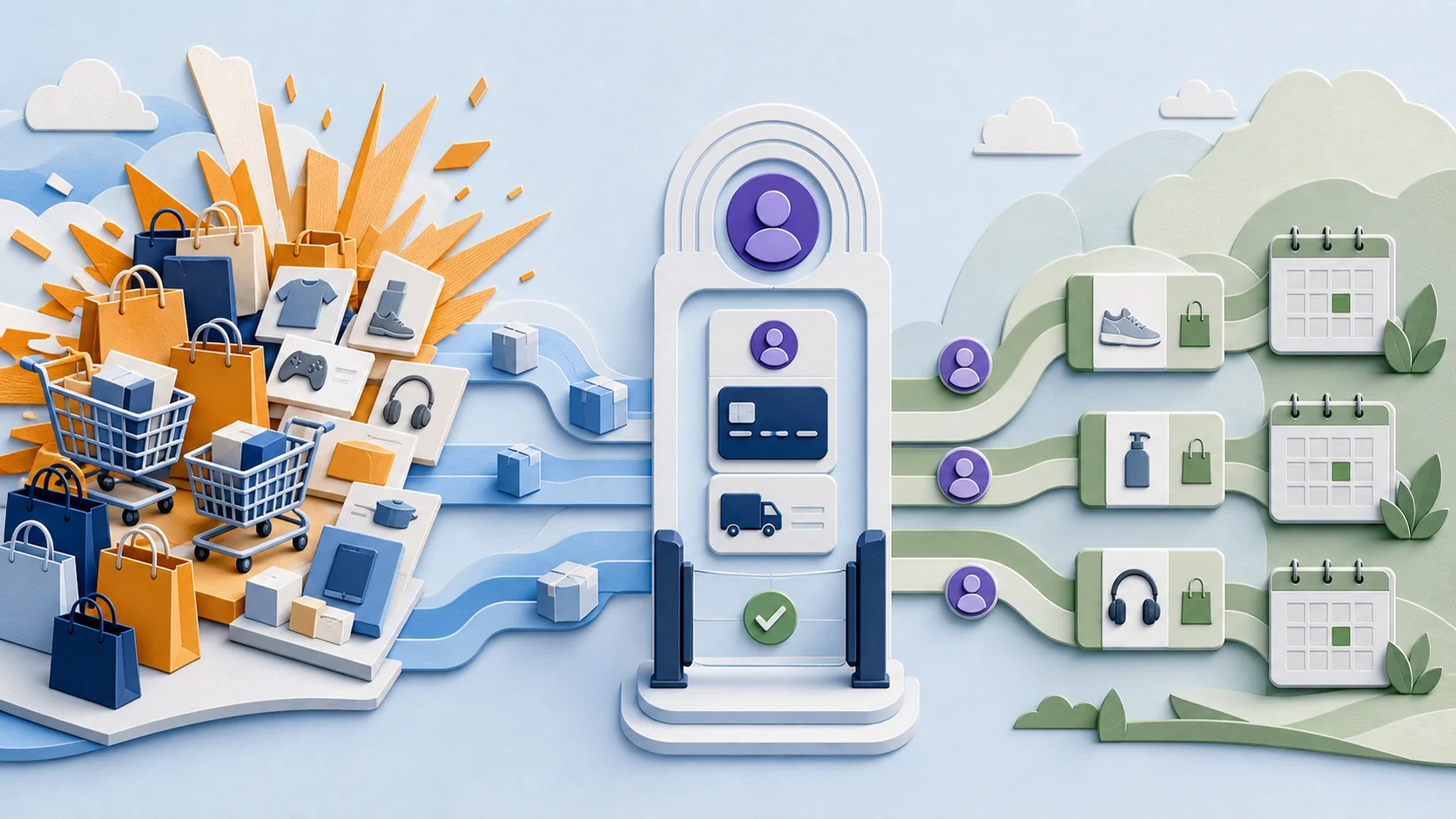
The number in the same release that draws a sharper distinction is Shop Pay adoption. Shop Pay, Shopify's accelerated checkout, was used in 32% of orders during the weekend, a 39% year-over-year increase, a growth rate twelve points ahead of the sales growth it accompanied. Shop Pay only speeds up checkout for a customer who has already saved their payment and shipping details with it at some point. Its adoption rate rising faster than sales themselves is a signal that a meaningful share of the weekend's volume came from shoppers who were recognized at checkout, not encountering the merchant cold.
Growth in Shop Pay adoption, reaching 32% of all orders, versus 27% total sales growth
The gap between these two growth rates is the recognition signal most BFCM coverage skipped.
Why a Sales Record Does Not Prove Loyalty
Shopify's own release does not report a repeat-purchase or returning-customer rate directly. That absence is worth naming rather than filling in with assumption. The 81 million customer figure, the $114.70 average cart, and the $5.1 million-per-minute peak are all real and all impressive, but none of them can distinguish a loyal customer from a one-time discount shopper. A retailer reading only the headline total has no way to know what share of its own $14.6 billion contribution came from people who will buy again.
Shop Pay adoption is the closest available proxy precisely because of how the mechanism works: a customer cannot use Shop Pay's accelerated checkout without having saved credentials with it previously, at that store or another Shopify-powered one. A 39% year-over-year increase in that usage rate, outpacing the 27% growth in total sales, means the weekend leaned more heavily on recognized checkout behavior than the year before. That is evidence of a shift toward recognition, not confirmation of loyalty in the fuller sense, and the difference matters. Recognition is a checkout-level artifact. Loyalty is a customer choosing to return specifically to a merchant, which recognized checkout makes easier but does not guarantee.
The distinction should shape what a retailer measures next. A store that hit a personal sales record on Shop Pay-heavy checkout traffic has different work ahead than a store that hit the same record entirely on cold, discount-driven, first-time traffic. Both would report the same headline number to a board. Only one of them has customers likely to come back without another discount.
Total Sales vs. Recognized-Checkout Growth
Both numbers went up. Only one tells you who is coming back.
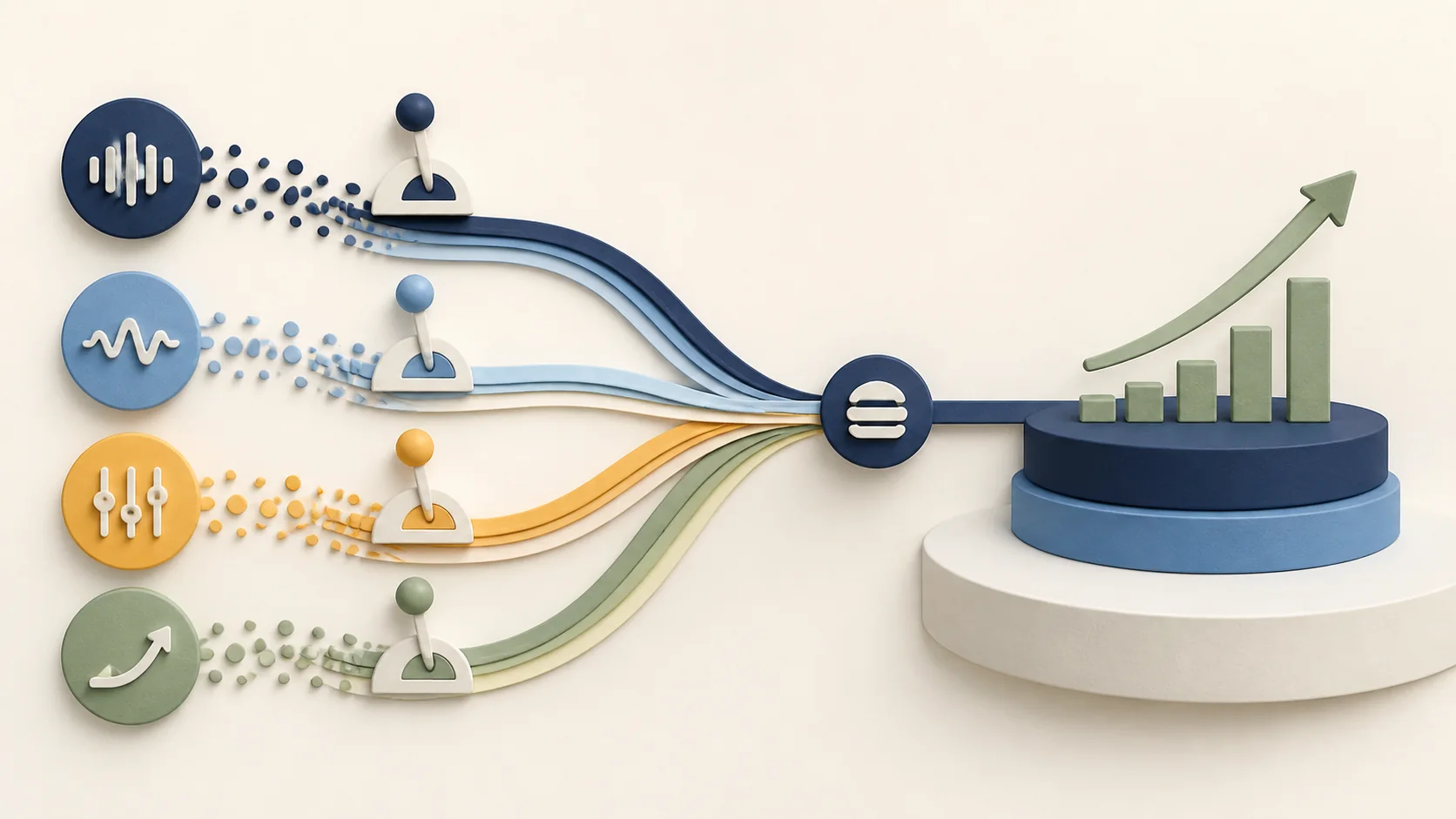
Total sales growth (27%) counts every dollar equally, new or returning shopper. Recognized-checkout growth (39%) only rises when a customer who has bought before chooses to check out through infrastructure that remembers them, making it a meaningfully different measurement of the same weekend.
The Leadership Move
The structural choice after a record sales weekend is whether to report the total as the success metric, or to look one layer down at what share of that total was built on recognized, repeatable checkout behavior.
- Ownership
Retail and e-commerce leadership owns the decision to track and report a recognition or repeat-purchase proxy alongside total sales, rather than letting the headline number stand in as the only measure of a successful weekend.
- Tradeoff
Tracking recognized-checkout share or repeat-purchase rate takes additional measurement discipline beyond what a sales dashboard already reports by default. The tradeoff is that a retailer without this view cannot tell whether next year's BFCM planning should focus on discount-driven acquisition or on strengthening the checkout experience for returning customers, because both would currently look identical in a total-sales report.
- Human consequence
A shopper checking out through a recognized, saved flow experiences less friction and fewer abandoned carts than one entering payment details cold under weekend traffic load. A retailer that cannot see this distinction is also unable to see which of its customers are having that easier, recognized experience and which are not.
Next Move
If you report BFCM results internally: Add recognized-checkout share (Shop Pay or your platform's equivalent) as a standing line item next to total sales and year-over-year growth, not as an optional footnote.
If your platform does not surface a recognized-checkout metric: Track ninety-day repeat-purchase rate for BFCM buyers directly. It answers the same underlying question, whether this weekend's dollars are likely to return, using data most commerce platforms already collect.
FAQ
How much did Shopify merchants make during Black Friday-Cyber Monday 2025?
Shopify merchants achieved a record $14.6 billion in global sales, up 27% from 2024 (24% on a constant currency basis). More than 81 million customers worldwide bought from Shopify-powered brands, and over 94,900 merchants had their highest-selling day ever.
What is Shop Pay adoption and why does it matter more than the sales total?
Shop Pay is Shopify's accelerated checkout, which remembers a customer's payment and shipping details across every Shop Pay-enabled store. During BFCM 2025, Shop Pay was used in 32% of orders, a 39% year-over-year increase, faster growth than the 27% sales growth it rode alongside. Because Shop Pay usage depends on a customer having checked out with it before, its growth rate is a proxy for how many shoppers are returning to a frictionless, recognized checkout rather than starting cold each time.
Does a record sales weekend prove customers are becoming more loyal?
Not by itself. A sales record can be produced entirely by new, first-time shoppers responding to discounts, which says nothing about whether they return. Shopify's release does not report repeat-purchase or returning-customer figures directly. Shop Pay's adoption growth is the closest available proxy, because it reflects checkout-level recognition building up over time, not just a single weekend's volume.
What should a retailer actually track after a BFCM weekend?
Total sales and average cart value describe the event. Recognized-checkout adoption, repeat-customer rate in the following ninety days, and whether Shop Pay or an equivalent saved-checkout tool set a new personal high for the store describe whether the event built anything that lasts past the weekend.
Sources & References
Original article archive
Original article published November 29, 2024: "Black Friday and Cyber Monday: Unlock Customer Loyalty". Preserved here for provenance, historical context, and citation continuity.
The holiday shopping season, anchored by Black Friday and Cyber Monday, has become a pivotal period for retailers and consumers alike. This annual shopping extravaganza has evolved from a single-day event to a weeks-long phenomenon, reshaping the retail landscape and consumer behavior. This insight explores the history, impact, and future of these shopping events, exploring their significance across industries and how can brands build, rebuild, or enhance lasting customer relationships.
The Evolution of Black Friday and Cyber Monday
Black Friday's origins date back to the 1960s, when it became associated with the start of the holiday shopping season. The term initially had negative connotations due to the chaos it caused, but retailers later reframed it as the day their profits moved "into the black". Over time, it expanded beyond the United States, becoming a global phenomenon.
Cyber Monday, a more recent addition to the retail calendar, was created in 2005 by the National Retail Federation's Shop.org. It emerged as online shopping gained popularity, with consumers taking advantage of fast internet connections at work to snag deals after the Thanksgiving weekend. As e-commerce continue to grow in prominence, the lines between Black Friday and Cyber Monday have blurred. What was once a clear distinction between in-store and online shopping days has merged into an extended period of omni-channel retail activity.
In 2023, Black Friday online sales in the United States exceeded US$9.8 billion, while Cyber Monday generated a record-breaking US$11.3 billion in online sales. Globally, Black Friday sales topped US$70 billion for the first time. The sales magnitude encourages stores to expand beyond a single day, with many brands extending discounts into “Black November.”

Impact on Customer Experience and Revenue Generation
Black Friday and Cyber Monday are not just about discounts; they are critical touchpoints for customer experience (CX). While deep discounts attract buyers, the true CX challenge lies in ensuring smooth transactions, timely delivery, and exceptional service. A poor experience—such as slow websites or delayed shipments—can tarnish brand reputation.
The revenue potential is staggering. Retailers often generate 20-30% of their annual sales during this period. In industries like technology, new product launches are often timed to coincide with Black Friday, further boosting revenue. Travel brands leverage Cyber Monday to offer flash deals, spurring bookings for vacations or experiences.
Yet, revenue alone isn’t enough. Brands that prioritize CX during these high-pressure sales events can secure repeat customers. For example, Amazon’s user-friendly interfaces and quick shipping reinforce its dominance during Cyber Monday.
Importance Across Industries
- Retail: Retailers see the largest spike in sales during this period. Categories like apparel, electronics, and home goods often dominate.
- Automotive: Dealerships use Black Friday to clear inventory with financing incentives or limited-time offers, attracting value-conscious buyers.
- Travel: Airlines, hotels, and travel agencies offer steep discounts for advance bookings, leveraging Cyber Monday to boost their off-peak seasons.
- Technology: From laptops to smart devices, tech brands use this period to introduce or clear out inventory, often bundling deals to increase value.
Each industry faces unique challenges but shares the opportunity to forge deeper connections with customers.
Building Long-Lasting Customer Relationships
Black Friday and Cyber Monday might mark the end of a purchase journey, but they are only the beginning of a long-term relationship with customers. Post-sale efforts can transform one-time buyers into loyal advocates, bring once-lost customers back, and extend loyalty with current customers, if approached strategically. The key lies in making customers feel valued, supported, and understood beyond this event-based transaction.
Here is how brands can achieve that:
Seamless Order Fulfillment
The Black Friday/Cyber Monday customer journey doesn’t end at checkout; it continues with delivery. Speed, accuracy, and communication are critical. Customers expect real-time updates on their orders, and brands that provide proactive notifications can build trust. A study by Metapack found that 96% of customers associate a positive delivery experience with increased brand loyalty. Delays or mishandling, on the other hand, can erode trust rapidly. If the current delivery options are offline or unavailable, alternative options should be arranged to maintain a seamless, uninterrupted experience.
To enhance order fulfillment:
- Offer live tracking and transparent delivery timelines.
- Partner with reliable logistics providers to minimize errors.
- Include a personal touch, like thank-you notes or eco-friendly packaging, to leave a lasting impression.
Effortless Returns and Exchanges
Returns are an inevitable part of holiday shopping, but a smooth process can turn a negative into a positive. Research shows that 92% of shoppers will buy again from a retailer if the return process is easy. Implementing a hassle-free and transparent returns policy signals to customers that their satisfaction is the priority.

Practical strategies include:
- Enabling self-service return options via apps or websites.
- Clearly communicating return policies upfront.
- Offering extended holiday return windows, as done by brands like Nordstrom and Amazon.
- Returns and exchanges can create possibilities to create additional impressions and sale opportunities. Brands should not reduce these activities as purely non-revenue generating and act with coldness.
Personalized Post-Sale Communication
The post-sale period is an opportunity to strengthen emotional connections with customers. Sending a generic “thank you” email is a start, but tailored relevant and timely follow-ups resonate more.
For example:
- A customer who purchased a laptop or a car might appreciate setup guides or accessory recommendations.
- Travel customers might benefit from exclusive discounts on airport transfers or travel insurance.
Additionally, follow-up emails asking for feedback over time (e.g., it is better for a refrigerator brand to send a feedback six months after purchase than at purchase) can show customers that their opinions matter while providing valuable insights for your brand. All feedback (good or bad) should be engaged appropriately.
Introducing and Enhancing Loyalty Programs
Black Friday and Cyber Monday are ideal moments to introduce or elevate loyalty programs. Offering extra points or exclusive benefits for purchases made during these events encourages repeat engagement. Both Lego Insider and Sephora’s Beauty Insider programs are excellent examples, rewarding customers immediately with points and perks while fostering long-term loyalty.
Key tactics for loyalty programs include:
- Providing an immediate incentive for signing up, such as a discount on their next purchase.
- Building awareness on the loyalty program and ways to maximize the program for a customer's needs.
- Tailoring loyalty perks to reflect the preferences of top-selling categories.
- Gamifying loyalty to encourage continued interaction with your brand.
Upselling and Cross-Selling with Care
Post-sale communication isn’t just about saying thanks; it’s an opportunity to suggest complementary products or services that align with the customer’s initial purchase. Done correctly, it adds value rather than appearing pushy. For instance, someone who buys a smart TV could be offered discounts on sound systems or streaming subscriptions.

Brands can use AI-driven recommendations to suggest products tailored to the customer’s preferences, ensuring the offers feel personalized and relevant.
Fostering Community and Social Proof
Creating a sense of community can deepen customer loyalty. Encourage buyers to share their experiences on social media using branded hashtags or through reviews on your website. This not only amplifies your brand’s reach but also builds trust with potential customers.
For example:
- Run a post-sale campaign inviting customers to showcase how they use your product, offering incentives like discounts or giveaways.
- Highlight positive customer reviews and user-generated content across your social channels.
Ongoing Engagement Beyond the Holidays
A common mistake brands make is disengaging once the holiday rush subsides. Instead, keep the momentum going with periodic touchpoints:
- Exclusive early access to future sales or product launches.
- Invitations to events, webinars, or insider communities.
- Personalized birthday or anniversary offers to remind customers that you value them year-round.
Brands like Apple excel at ongoing engagement, using customer data to offer personalized suggestions and exclusive experiences long after the initial purchase.
Key Metrics to Consider
Effective post-sale engagement should be data-driven. Metrics such as Net Promoter Score (NPS), customer retention rates, and repeat purchase frequency can help brands assess the success of their efforts and identify areas for improvement.
By consistently engaging customers and addressing their evolving needs, brands can transform a one-time Black Friday or Cyber Monday shopper into a lifelong customer and advocate.
Other metrics for brands to consider:
- Conversion Rate: Measure the percentage of visitors who make a purchase.
- Average Order Value (AOV): Track the average amount spent per transaction.
- Customer Acquisition Cost (CAC): Calculate the cost of acquiring each new customer.
- Return Rate: Monitor the percentage of purchases that are returned.
- Mobile Traffic and Conversion: Analyze the performance of mobile channels, as 79% of Cyber Week e-commerce traffic came from mobile phones in 2023.
Bonus: Post-Purchase Additional Sales: After the Black Friday and Cyber Monday sales are completed and after post-sale engagement, what is the rate of additional sales a customer generated?
Transform for Better
Black Friday and Cyber Monday are unparalleled opportunities, but they should not exist in a silo. Brands must leverage these events as a launchpad for building long-term customer relationships and improving customer experience continuously:
- Invest in CX tools to monitor and enhance digital and in-store experiences and track customer interactions with the brands.
- Extend omnichannel strategies to create a seamless journey, whether customers shop online, in-store, or both.
- Align customer needs with brand's products and services to maximize the relationship's potential.
- Build a culture and train employees to manage surges during and post this hyper period while maintaining a positive, empathetic, and supportive environment for all parties involved.
For brands, the journey doesn’t end with the sale. By focusing on building relationships and refining customer experiences, Black Friday and Cyber Monday can transform into sustainable growth engines that keep customers coming back year after year.
How Can We Help?
Transformidy is available to assist in helping you understand post-sales customer experience, assess your readiness to capture and maximize current customer experience strategy, and build more revenue generation opportunities.
Contact us or set up a 30-minute complimentary consultation for more information on our services, insights, or showcases. We look forward to hearing from you.
FAQ
How much did Shopify merchants make during Black Friday-Cyber Monday 2025?
Shopify merchants achieved a record $14.6 billion in global sales, up 27% from 2024 (24% on a constant currency basis). More than 81 million customers worldwide bought from Shopify-powered brands, and over 94,900 merchants had their highest-selling day ever.
What is Shop Pay adoption and why does it matter more than the sales total?
Shop Pay is Shopify's accelerated checkout, which remembers a customer's payment and shipping details across every Shop Pay-enabled store. During BFCM 2025, Shop Pay was used in 32% of orders, a 39% year-over-year increase, faster growth than the 27% sales growth it rode alongside. Because Shop Pay usage depends on a customer having checked out with it before, its growth rate is a proxy for how many shoppers are returning to a frictionless, recognized checkout rather than starting cold each time.
Does a record sales weekend prove customers are becoming more loyal?
Not by itself. A sales record can be produced entirely by new, first-time shoppers responding to discounts, which says nothing about whether they return. Shopify's release does not report repeat-purchase or returning-customer figures directly. Shop Pay's adoption growth is the closest available proxy, because it reflects checkout-level recognition building up over time, not just a single weekend's volume.
What should a retailer actually track after a BFCM weekend?
Total sales and average cart value describe the event. Recognized-checkout adoption, repeat-customer rate in the following ninety days, and whether Shop Pay or an equivalent saved-checkout tool set a new personal high for the store describe whether the event built anything that lasts past the weekend.
Related intelligence
Article
BMO Killed a Brand That Reached Two-Thirds of Canadian Households
AIR MILES reached roughly two-thirds of Canadian households over 34 years. BMO bought it for $160 million in 2023 and retired the name three years later. Every point converted automatically. The brand did not.
Article
Millennials Are Going to Dine Out 14 Times a Month in 2026
Millennials plan to dine out 14 times a month in 2026, well above the 10-times average across all Americans. 55% say they will spend even more on restaurants next year. The generation restaurants most need to design a dine-in experience for has already told OpenTable who they are.
Article
Nintendo's Own Games Are Not What Grew 76% Last Year
Third-party software sales on Switch and Switch 2 hit $2.3 billion in 2025, up 76% from the year before. Warner Bros., not Nintendo, was the top publisher. The console everyone associates with Mario is now, by dollar volume, being carried by games Nintendo did not make.