
Article
Apple's Next Revenue Unknowns After Tim Cook
John Ternus begins as Apple's CEO on September 1, 2026. Tim Cook leaves him a company built on experience continuity, services, retail, privacy, silicon, and trust. The next question is which Revenue Unknowns Apple can recognize early enough to shape.
- Published
- September 1, 2026
- Updated
- September 1, 2026
- Reading time
- 18 min
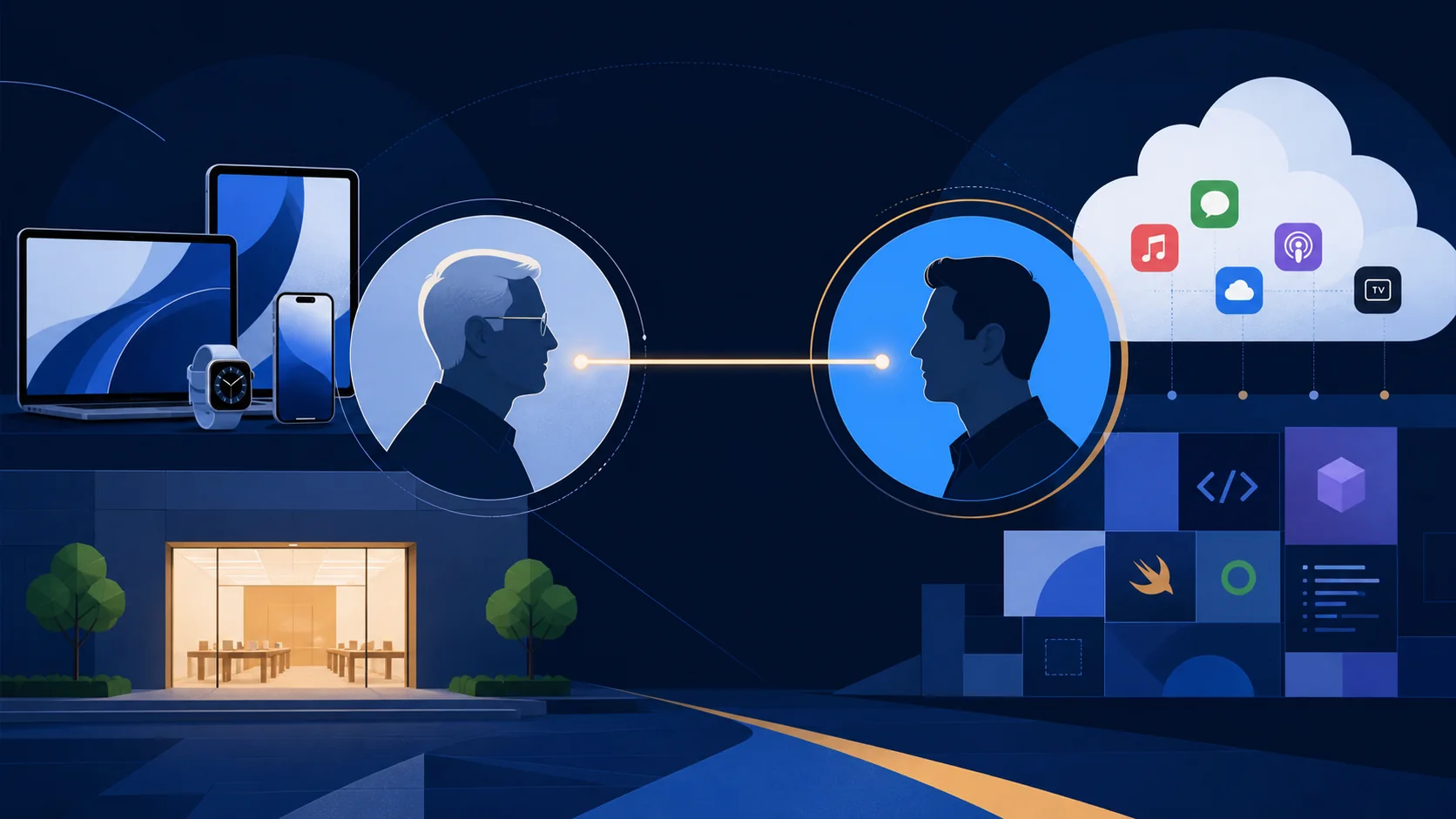
Apple's CEO transition is easy to read as a leadership story.
It is one. But it is also an experience intelligence story.
On September 1, 2026, John Ternus became Apple's chief executive officer, while Tim Cook became executive chair. Apple announced the transition in April, describing it as the result of long-term succession planning and noting that Cook would work closely with Ternus through the summer. Apple's current leadership page now lists Ternus as CEO and Cook as executive chair.
That makes this a useful moment to ask a different question from the usual succession coverage. Not whether Apple can keep selling devices. Not whether the next leader can preserve the brand. Not whether the company has another hit product waiting.
The better question is this:
Which Revenue Unknowns did Apple learn to recognize under Tim Cook, and which ones must John Ternus recognize before the next twenty years of personal technology are already decided?
That question matters because Apple is not simply a hardware company, a services company, a retail company, or an AI company. Apple is an experience system with hardware, software, services, stores, developers, payments, privacy, accessibility, support, supply chain capability, and cultural expectation moving together. When one part changes, the value does not move only inside that part. It moves across the relationship.
That is why Apple remains one of the clearest companies through which to understand Revenue Unknowns. The company has repeatedly found value that was not obvious when each product, service, or customer interaction was viewed in isolation.
What Apple Actually Changed Under Tim Cook
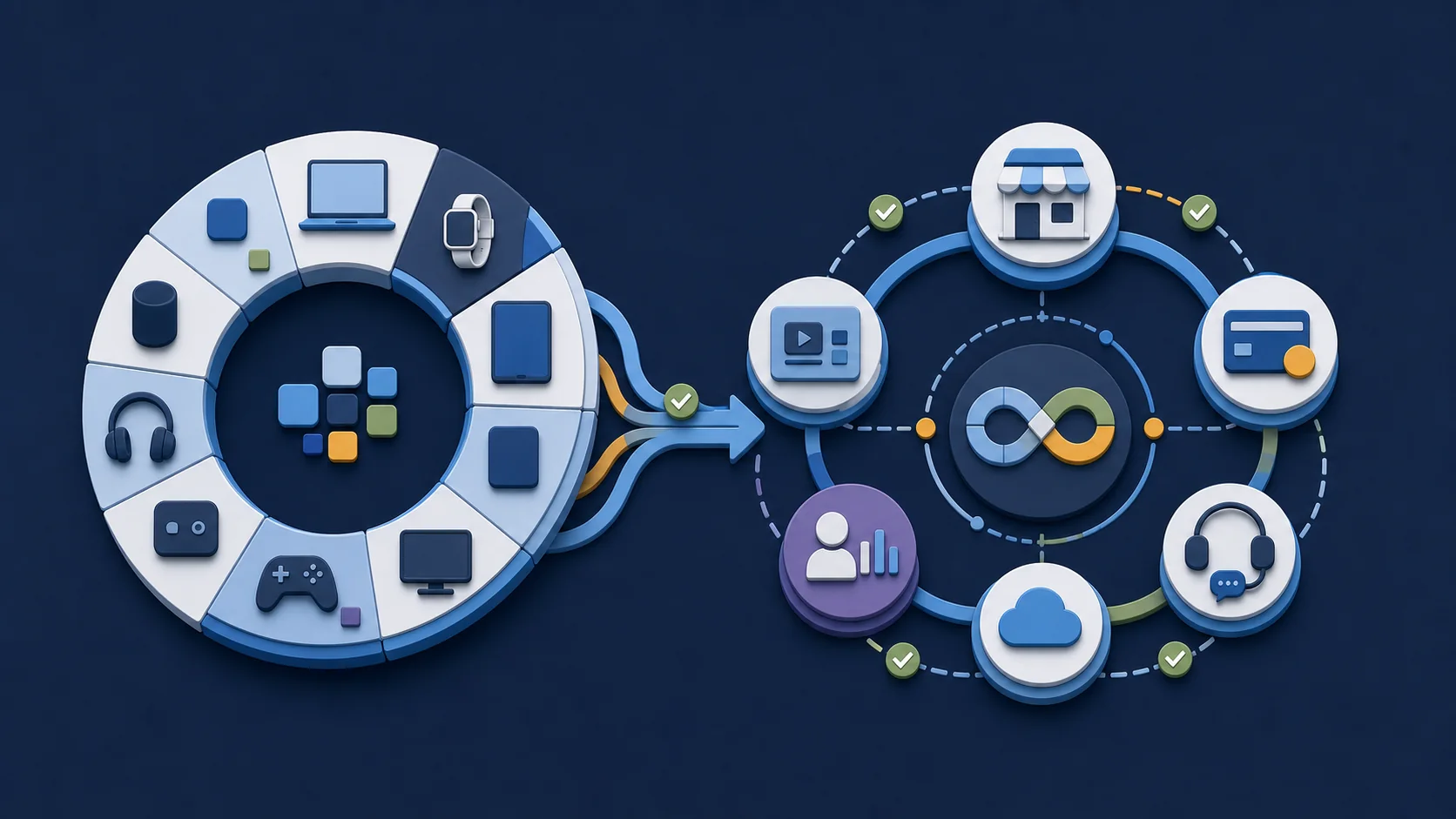
The basic facts are substantial. Apple's succession announcement says Cook became CEO in 2011 and oversaw the introduction of Apple Watch, AirPods, Apple Vision Pro, iCloud, Apple Pay, Apple TV, Apple Music, and the transition to Apple-designed silicon. It also says Apple's market capitalization rose from approximately $350 billion to $4 trillion during his tenure, annual revenue grew from $108 billion in fiscal 2011 to more than $416 billion in fiscal 2025, the active installed base reached more than 2.5 billion devices, and Apple Services became a business exceeding $100 billion.
Apple's 2025 Form 10-K gives the underlying business shape. In fiscal 2025, Apple reported total net sales of $416.2 billion. iPhone remained the largest category at $209.6 billion. Services reached $109.2 billion, up 14 percent from 2024, and included advertising, AppleCare, cloud services, digital content and subscriptions, and payment services.
Then, in July 2026, Apple reported fiscal third-quarter revenue of $109.4 billion, up 16 percent year over year, with June-quarter records for iPhone, Mac, and Services revenue. Cook's quote in that release connected the quarter to WWDC26, including the all-new Siri AI and new child safety features. That is not just financial performance. It is a signal about where Apple thinks experience, trust, AI, and services may now intersect.
The easy explanation is that Cook scaled Apple. The more useful explanation is that Cook expanded the number of places where Apple could convert experience continuity into value.
Under Steve Jobs, Apple proved that integrated product experience could change categories. Under Cook, Apple proved that the relationship after purchase could become a larger economic system.
The iPhone did not remain only a device sale. It became an installed-base relationship.
The store did not remain only a retail channel. It became a trust, service, support, learning, repair, upgrade, and discovery surface.
Apple Watch did not remain only an accessory. It became a health, safety, fitness, notification, identity, and subscription-adjacent surface.
Apple Pay did not remain only a payment method. It became a way to extend confidence and convenience into commerce.
The App Store did not remain only distribution. It became a governance, developer-economics, safety, discovery, and regulatory relationship.
Apple silicon did not remain only a component decision. It became a capability state change: better control over performance, power efficiency, product timing, battery life, device differentiation, and eventually AI.
This is where the Revenue Unknown lives. The value was not always visible in the original transaction. It appeared when Apple recognized that experiences could compound.
The Tim Cook Pattern: Continuity Became the Business Model
The Cook era can be understood through three state movements.
First, Relationship State strengthened. Apple made more moments feel continuous: purchase, setup, sync, support, payment, media, fitness, privacy, family sharing, upgrade, repair, and resale. A customer did not have to restart the relationship every time they moved from one device or service to another. That continuity helped reduce friction and increase future choice.
Second, Capability State expanded. Apple developed the organizational ability to design silicon, run global retail, manage a massive services business, protect privacy as a brand promise, support developers, operate subscription products, and negotiate with regulators. Not every capability moved smoothly. The App Store has faced sustained regulatory pressure, and Apple has had to adjust its terms in the European Union. But capability expansion is still the central Cook-era fact.
Third, Value State multiplied. Value moved from single device purchase into services revenue, payment convenience, support attach, subscription usage, health and safety relevance, developer commerce, and installed-base retention. Apple's 2025 Services net sales show how significant that movement became.
This is why calling Apple a "hardware company with services" misses the point. Hardware remains central, but the value is created through experience continuity.
The hardware is the anchor.
The account is the memory.
The store is the trust surface.
The services are the recurring relationship.
The developer ecosystem is the expansion layer.
The operating systems are the coordination layer.
The brand is the confidence layer.
Cook's achievement was not only financial. It was architectural. He made Apple harder to evaluate as a collection of products and easier to understand as a living experience system.
The New CEO's Capability Question
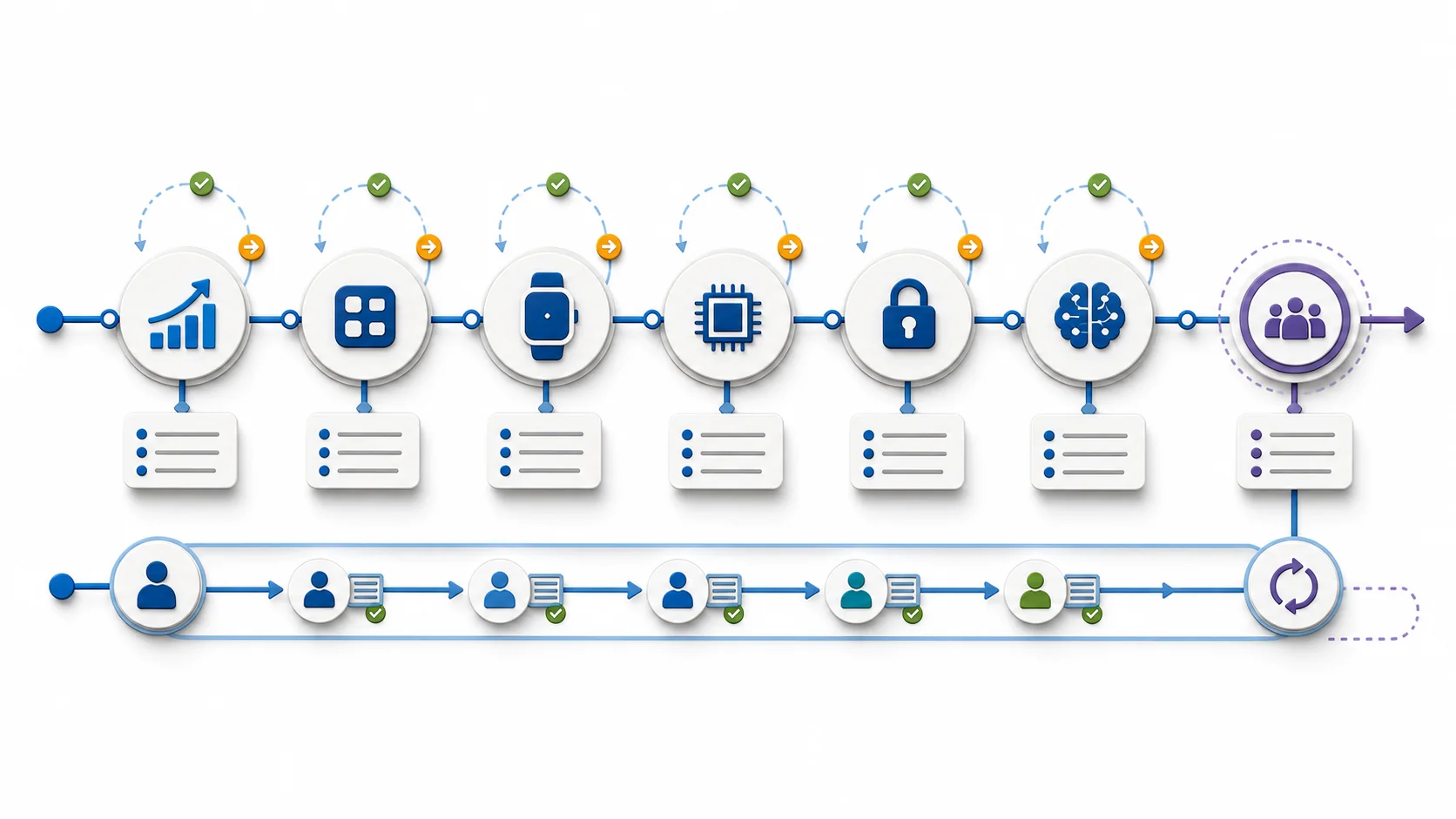
John Ternus enters the role with deep hardware credibility. Apple's transition announcement says he joined the product design team in 2001, became vice president of Hardware Engineering in 2013, joined the executive team in 2021, and has overseen hardware engineering across product categories including iPad, AirPods, iPhone, Mac, and Apple Watch. Apple specifically credits his work in reliability, durability, materials, repairability, and the Mac's recent strength.
That background matters because Apple's next era is not likely to be won by software imagination alone. It will require physical-world capability.
AI needs devices that can sense, process, preserve privacy, last all day, and stay trusted in intimate contexts. Health needs wearables, sensors, reliability, regulatory seriousness, and human trust. Spatial computing needs comfort, battery life, developer economics, use-case clarity, and social acceptability. Home intelligence needs orchestration, privacy, reliability, and support. Developer commerce needs a model that users trust, developers can understand, and regulators can accept.
This is a CEO job that touches engineering, services, regulation, retail, design, operations, and trust at the same time.
That is why Ternus's core challenge is not whether he can lead product development. Apple's announcement gives him substantial product credibility. The question is whether Apple can continue turning product capability into experience continuity when the market is shifting from device-centric behavior to agentic, AI-assisted, health-aware, subscription-heavy, regulation-constrained, and ecosystem-dependent behavior.
In Transformidy terms, the leadership transition changes Apple's Capability State. The company's ability to recognize, decide, coordinate, communicate, deliver, recover, adapt, validate, and learn will now be judged under a new executive operating rhythm.
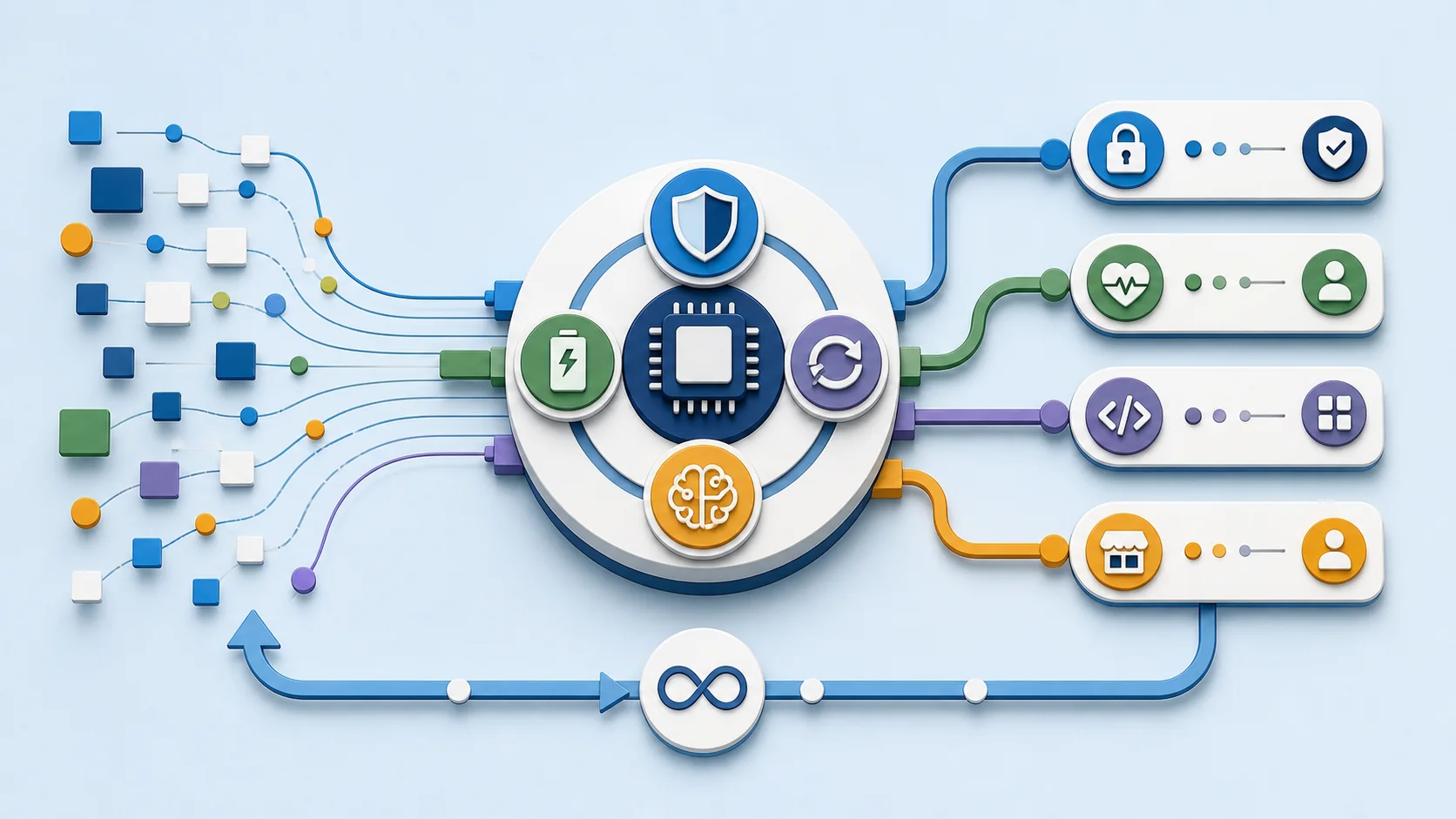
The Revenue Unknown is not "Will Ternus be a good CEO?" That is too broad.
The better Revenue Unknown is:
Which experience conditions can Apple recognize early enough under Ternus to turn technical capability into new continuity, before competitors, regulators, developers, or customer habits define those conditions for Apple?
The Revenue Unknowns Apple Should Be Watching
Apple's next twenty years will not be decided by one product launch. They will be decided by whether Apple can recognize several unresolved commercial questions before they become obvious.
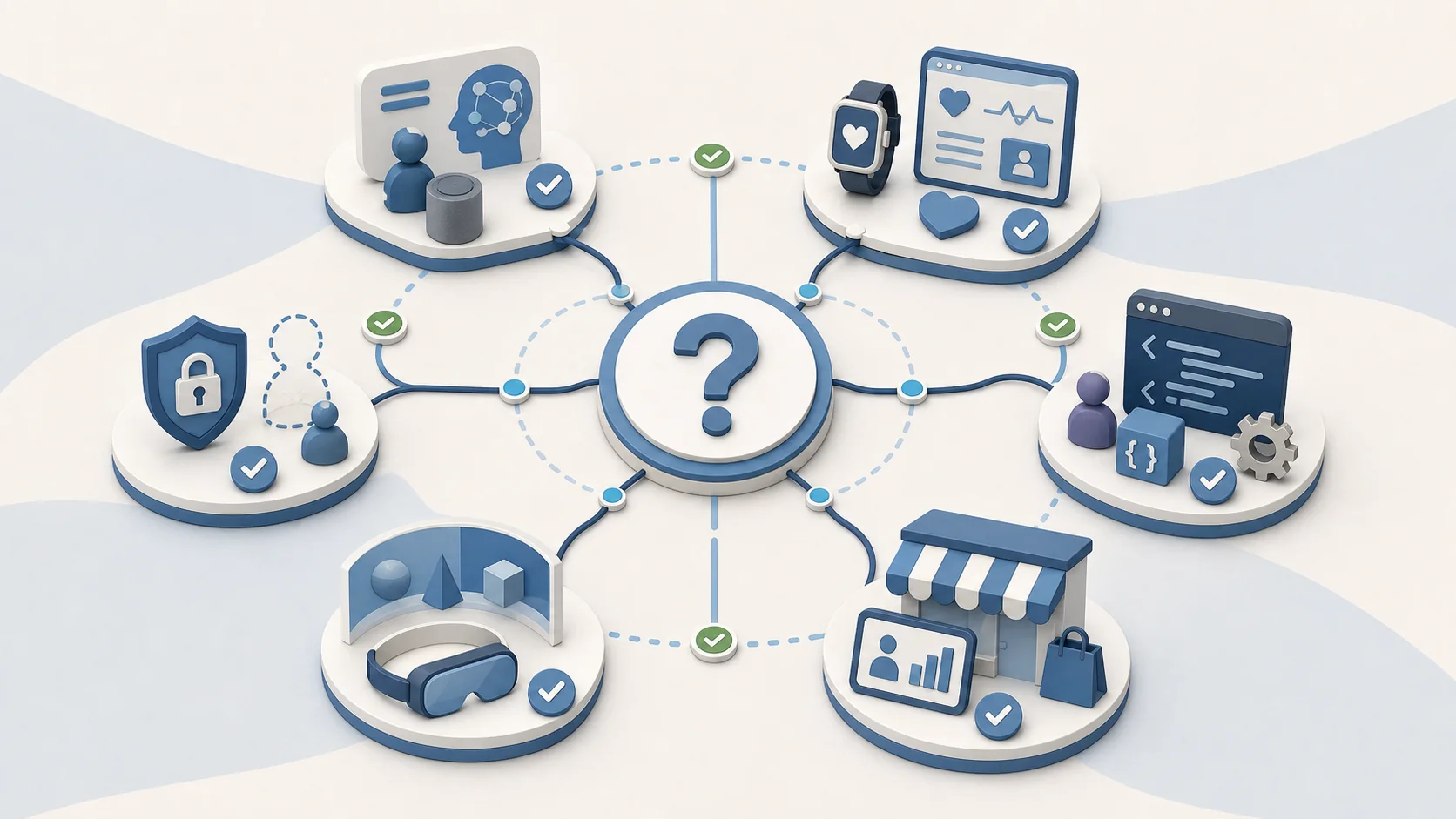
1. Can Apple Make Personal AI Feel Trustworthy Enough To Become Daily Infrastructure?
Apple has been careful with AI because its brand promise is different from companies that treat scale, data access, and speed as the main event. Apple's opportunity is not merely to have an assistant. It is to make AI feel personal, private, reliable, useful, and present across contexts.
The state movement to watch is relationship confidence. If AI responses are inconsistent, intrusive, delayed, or poorly integrated, trust weakens even if the feature list expands. If AI helps people move across device, calendar, message, photo, health, travel, payment, and work contexts without feeling exposed, value grows.
The Revenue Unknown:
Which daily decisions, tasks, and transitions will customers allow Apple Intelligence to mediate because Apple is trusted, and which will they withhold because the experience does not yet feel dependable?
The decision window is open now. Apple's September 9 event and recent WWDC messaging make AI part of the current expectation set. The question is not only whether Apple ships impressive AI. It is whether Apple can make AI behave like continuity instead of novelty.
2. Can Health Move From Feature Set To Relationship System?
Apple Watch created a health and safety surface that many companies would have treated as a feature category. Apple treated it as an ongoing relationship. The next step is harder.
People do not experience health as a product category. They experience it before, during, and after symptoms, exercise, sleep, aging, medical appointments, emergency events, recovery, caregiving, and lifestyle change. Apple has the device surface, account continuity, notification layer, and user trust to play a larger role. But health is not a casual experience system. It carries regulatory, emotional, clinical, and ethical boundaries.
The Revenue Unknown:
Which health, safety, and recovery moments can Apple support without overstepping from consumer technology into clinical responsibility it should not claim?
This is a Value State question as much as a product question. The value may be created through confidence, early awareness, emergency response, caregiver coordination, and better routines. It may also be lost if Apple creates ambiguity about what its devices can and cannot do.
3. Can Apple Rebuild Developer Confidence While Preserving User Trust?
The App Store remains one of Apple's most important experience systems, but it is also one of the most contested. Apple's August 2026 EU announcement says the company is moving EU developers to a unified set of business terms, replacing the Core Technology Fee with a Core Technology Commission for some digital transactions outside the App Store, and changing commission structures across App Store, alternative payments, and alternative distribution.
That is a regulatory and commercial change. It is also a relationship change.
Developers need a path they can understand. Users need payment and app discovery that feel safe. Regulators need evidence that Apple is not using trust as a shield for control. Apple needs to protect ecosystem value without making the rules feel like the product.
The Revenue Unknown:
How much developer value can Apple preserve or expand if it treats developer clarity as an experience continuity problem rather than only a compliance problem?
The unresolved question is not whether Apple can change terms. It already is changing terms in the EU. The unresolved question is whether developers experience those changes as fair, predictable, and worth building around.
4. Can Retail Become The Place Where AI, Health, Repair, And Trust Become Understandable?
Apple operates more than 500 retail stores, according to its succession announcement. The stores matter because complicated technology still needs human interpretation. AI, health, privacy, repairability, financing, trade-in, setup, family safety, and subscriptions can all become confusing if the customer is left alone.
Retail can reduce that confusion, but only if the store experience evolves from transaction support to decision support.
The Revenue Unknown:
Which high-consideration customer decisions can Apple Stores help customers make better, and how much future value is protected when confusion is resolved before abandonment, delay, or regret?
This is especially important if AI and health become more central. The customer may not need another demo. They may need help understanding what the system can do, where it stops, how privacy works, how family controls work, whether a device is worth upgrading, and what happens after purchase.
5. Can Apple Make Spatial Computing Useful Before The Category Becomes A Symbol?
Apple Vision Pro is an achievement, but spatial computing still faces a continuity problem. It can impress without becoming necessary. A device can be extraordinary and still fail to become a repeated experience.
The before state is anticipation. The during state is amazement or friction. The after state is either a next use case or a dead end.
The Revenue Unknown:
Which recurring experience will make spatial computing worth returning to weekly, not just admiring once?
That answer may come from work, design, entertainment, education, healthcare, training, collaboration, sports, retail, or accessibility. The point is not to force one answer. The point is to recognize which evidence shows real continuity instead of launch excitement.
6. Can Apple Keep Privacy As A Lived Experience, Not A Slogan?
Privacy has become one of Apple's strongest relationship attributes. But privacy only strengthens relationship state when people can feel its effect in real decisions.
AI raises the stakes. Payments raise the stakes. Health raises the stakes. Children and family features raise the stakes. Regulatory scrutiny raises the stakes. Apple's public statements often position privacy and security as differentiators, but the future question is whether customers can understand how privacy works when systems become more intelligent and less visible.
The Revenue Unknown:
Which privacy explanations, defaults, and controls increase willingness to use deeper Apple services, and which create hesitation because the user does not understand what is happening?
Privacy can protect value. Poorly explained privacy can hide value. Overly complex privacy can delay value. This is where experience intelligence matters: the evidence may appear as support questions, abandoned setup, disabled features, low adoption, parental concern, enterprise restrictions, or developer friction.
The Experiences Apple Should Refine, Innovate, And Create
Apple should refine experiences where continuity already exists but friction is starting to show.
Developer commerce is one. The EU changes may reduce some complexity, but Apple still has to make the developer relationship feel coherent in a world where app distribution, payments, commissions, safety, and regulatory expectations are changing. If developers feel they are building inside a relationship they cannot predict, the state weakens even if the platform remains profitable.
Device upgrade decisions are another. The installed base is enormous, and that can create a paradox. The better Apple devices become, the harder it can be to explain why an upgrade matters now. Apple needs to help customers understand value over the life of the device, not only at the launch moment.
Support and repairability also deserve attention. Ternus's background in durability and repairability gives Apple a credible foundation. The continuity question is whether Apple can make repair, trade-in, resale, care, and upgrade feel like one intelligent lifecycle instead of several disconnected decisions.
Apple should innovate experiences where changing conditions are creating new decision windows.
Personal AI is the obvious one. The opportunity is to make the assistant aware of context without making the user feel watched; capable without feeling unpredictable; powerful without forcing the user to manage another interface; and helpful across before, during, and after moments.
Health is another. The opportunity is not simply more metrics. It is better continuity between signal, concern, action, care, recovery, and learning, while keeping clinical boundaries clear.
Retail advisory is a third. Stores can become more valuable if they help customers interpret the combination of device, AI, health, family safety, accessibility, financing, repair, and services. This does not require turning stores into consulting centers. It requires treating customer confusion as evidence of unresolved value.
Apple should create experiences where the market has not yet decided what normal should look like.
Spatial work may be one. So may family AI governance. So may personal data portability with trust. So may cross-device agent memory. So may accessibility-led computing. So may health recovery support that is clearly consumer-facing and not medical advice. So may developer commerce models that are safer and more trusted than open distribution without feeling restrictive.
The most important thing for Ternus is not to chase every possibility. It is to identify which possibilities show real state movement.
Which relationships are strengthening?
Which capabilities are now possible?
Which value is still hidden?
Which trust conditions are weakening?
Which customers are delaying a decision because the experience is unclear?
Which developers are building elsewhere because the relationship feels unstable?
Which partners could extend Apple experience continuity if Apple recognized the shared experience earlier?
The Decision Window Is Already Open
CEO transitions create a public narrative. But they also create a decision window inside the company.
Apple can choose to present Ternus primarily as continuity: the hardware leader who will protect Apple's product discipline.
It can choose to present him as expansion: the leader who turns hardware, AI, health, services, retail, and developer trust into the next era.
It can choose to present him as proof of Apple's bench strength: a long-planned succession that keeps the company stable.
All three are plausible. The Revenue Unknown is which narrative creates the strongest Relationship State with customers, employees, developers, investors, partners, and regulators.
For customers, the question is confidence. Will Apple keep making technology feel human, private, durable, and useful?
For developers, the question is fairness and predictability. Will the platform remain worth building for when distribution and payment rules change?
For employees, the question is direction. Will a hardware-led CEO create clarity across software, services, AI, retail, operations, and policy?
For investors, the question is the next compounding engine. Will Services, installed base, AI, health, and new devices protect growth without undermining trust?
For regulators, the question is evidence. Will Apple show that safety and trust can coexist with competition and choice?
For partners, the question is access. Will Apple remain closed where closure protects the experience, and open where continuity requires collaboration?
The wrong way to answer those questions is with a single prediction. The better way is to watch evidence.
Watch adoption of AI features across daily tasks, not just demos.
Watch developer response to EU terms after October 1, not just the announcement.
Watch store behavior around AI, health, repair, and upgrade support.
Watch whether Vision Pro and spatial experiences create repeated use.
Watch whether privacy explanations increase feature adoption or leave people uncertain.
Watch whether customers understand the value of upgrading before the next launch cycle has to create urgency all over again.
Why This Matters Beyond Apple
Most companies study Apple as a product company. That is useful, but incomplete.
The larger lesson is that Apple repeatedly converts unresolved experience conditions into commercial systems. It sees that the customer does not simply buy a phone. The customer lives with an account, a device, a store, a payment method, a support expectation, a privacy promise, a developer ecosystem, and a set of future choices.
That is the Transformidy lens. Revenue Unknowns appear when evidence suggests value, risk, demand, relationship change, or capability gaps that the organization has not yet named.
Apple under Tim Cook named many of them early enough to act.
The installed base became a services foundation.
The wrist became a health and safety surface.
Retail became trust infrastructure.
Privacy became a relationship attribute.
Apple silicon became strategic capability.
Payments became commerce continuity.
The next era will require the same discipline under different conditions.
AI will produce more evidence than leaders can interpret.
Regulation will change platform economics.
Health will make trust more consequential.
Spatial computing will test patience.
Developers will ask whether the relationship still feels worth the tradeoff.
Customers will decide whether the ecosystem still helps them move through life, or merely keeps them inside a company boundary.
That is the real succession test.
Not whether Apple can stay Apple.
Whether Apple can recognize the next Revenue Unknowns early enough to create the next experiences people choose before the market teaches everyone else the same lesson.
What To Watch Next
Watch Apple's September 9 event for more than product announcements. Look for how Apple explains continuity: what connects devices, AI, services, safety, family, developers, and stores into one lived experience.
Watch WWDC follow-through. If Apple Intelligence becomes a feature checklist, the opportunity narrows. If it becomes a trusted layer across daily decisions, the opportunity expands.
Watch the EU developer terms after October 1. The question is not only whether the fee model changes. It is whether developer confidence strengthens or weakens once the new terms become operational.
Watch retail. If stores help customers understand AI, privacy, health, repair, and upgrade value, they may become more important, not less, in an AI era.
Watch health and safety. The most valuable Apple experiences may be the ones customers only fully appreciate after they matter.
Watch And Source Context
For primary source context, read Apple's April 2026 leadership-transition announcement, Apple's July 2026 third-quarter results, Apple's 2025 Form 10-K, Apple's August 2026 EU app-distribution update, Apple's leadership page, and Apple's events page.
Video context is best viewed through Apple's official event archive. The June 2026 WWDC event is especially relevant because Apple connected the quarter to new Siri AI and platform-level software changes. The September 9, 2026 event should be watched as the first major customer-facing narrative moment of the Ternus CEO era.
External Source Links
How concentrated is your revenue across your top customers? If your largest customer left, how would it impact annual revenue?
FAQ
Who is Apple's new CEO?
John Ternus became Apple's CEO effective September 1, 2026. Apple announced the transition in April 2026, with Tim Cook becoming executive chair.
What did Tim Cook change at Apple?
Tim Cook scaled Apple into a larger experience ecosystem. During his tenure as CEO, Apple expanded services, wearables, retail reach, privacy positioning, Apple-designed silicon, and the installed-base relationship.
What is the biggest Revenue Unknown for Apple now?
The biggest Revenue Unknown is whether Apple can turn AI, health, retail, developer trust, privacy, and spatial computing into new experience continuity before competitors or regulators define those markets for it.
Why does Transformidy analyze Apple as an experience intelligence case?
Apple shows how value can move across devices, services, stores, developers, payments, privacy, and support. That makes it a strong case for studying how changing experiences create Revenue Unknowns.
What should leaders outside Apple learn from this transition?
Leaders should look for unresolved value inside experience continuity. The important question is not only what customers bought, but what they need to do next, what still feels uncertain, and which decision window is still open.
Related intelligence
Article
The Trust Recession
Trust weakens when customers, employees, partners, or the public stop accepting promises without proof of organizational coherence.
Article
The Playbook Before the Rollout
Two governments built automated systems that made consequential decisions about their citizens. One never wrote down, before deployment, what pre-launch testing an AI system had to pass. The other built a public assurance playbook years earlier, and has kept updating that playbook as the technology
Article
The Algorithm That Toppled a Cabinet
A warning can exist, in an organization's own files, written by exactly the person whose job is to catch this kind of problem, and still change nothing at all. Writing a memo and routing it to someone with the authority to act on it are two separate acts, and a government can be entirely honest that