
Article
LEGO Beat the Toy Industry by 2x. Then It Acquired 29 Experience Venues.
LEGO grew consumer sales 16% in 2025, more than double the 7% toy industry rate. It then spent its 2026 to acquire 29 physical Discovery Centres from Merlin, a retreat from digital-only growth toward owning more in-person experience.
- Published
- August 31, 2024
- Updated
- June 18, 2026
- Reading time
- 7 min
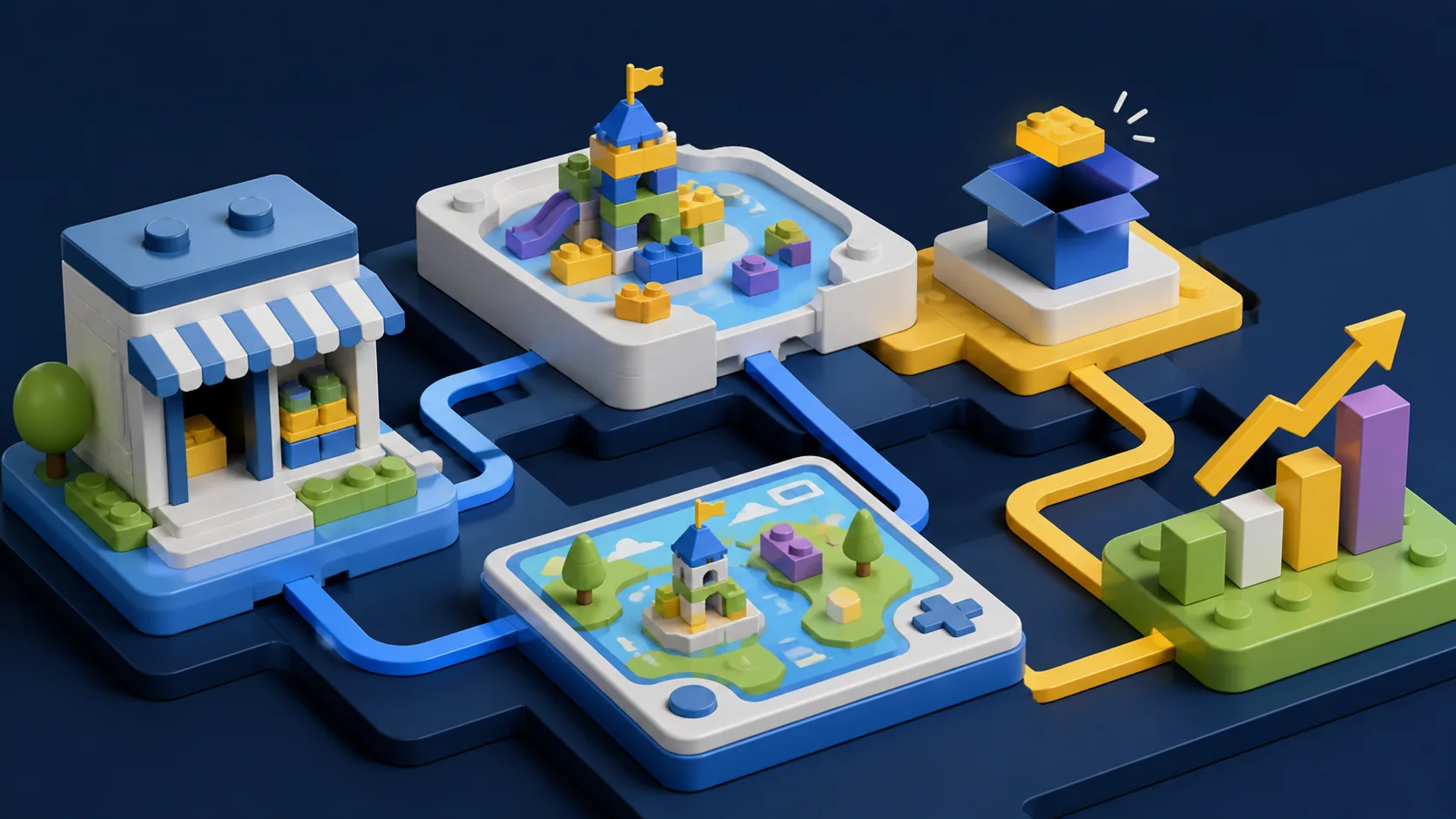
2026 updated analysis
What changed since the original article
This page keeps the original Transformidy article as the canonical record and leads with the current interpretation, source notes, and Revenue Unknown framing.
A Record Year and a Buy-Not-Partner Decision
LEGO Group's full-year 2025 revenue reached DKK 83.5 billion, up 12% versus 2024, with consumer sales growing 16% against the toy industry's 7% growth rate, meaning LEGO grew more than twice as fast as the market it competes in. The company gained market share across every major region it operates in. LEGO Branded Retail stores and LEGO.com, per the company's own release, "welcomed a record number of visitors and achieved the highest satisfaction scores to date."
Against that backdrop, LEGO's next major move was not a digital expansion or a licensing deal. In February 2026, LEGO completed the acquisition of 29 LEGO Discovery Centres and LEGOLAND Discovery Centres from Merlin Entertainments, spanning nine countries and drawing roughly five million visitors a year. CEO Niels B Christiansen framed the rationale directly: "To offer fans of all ages even more memorable hands-on brand experiences, the LEGO Group announced plans to acquire LEGO Discovery Centres and LEGOLAND Discovery Centres from Merlin Entertainments."
The distinction between acquiring and merely partnering with these venues matters. LEGO had a licensing relationship with Merlin around these properties before the acquisition; buying them outright is a decision to take on the capital cost and operational responsibility of direct ownership, rather than continuing to collect licensing value at arm's length. That is a meaningfully bigger commitment than a typical brand partnership renewal.
LEGO consumer sales growth against toy industry growth in 2025
Followed in February 2026 by a direct acquisition of 29 physical Discovery Centres from Merlin Entertainments.
Digital Grew Too, and LEGO Still Acquired Venues
It would be a simpler story if LEGO's digital channels had stagnated, making a physical-venue acquisition read as a defensive pivot back to what already worked. That is not what happened. LEGO Fortnite has drawn a substantial, growing player base since its late-2023 launch, reaching a 24-hour peak of more than 2.19 million concurrent players, a digital brand footprint that continued expanding in parallel with the Discovery Centres acquisition, not in place of it.
That parallel investment is the more interesting signal. A company choosing to acquire physical experience venues at the same moment its digital engagement is setting records is not choosing physical over digital; it is treating direct ownership of in-person experience as a distinct strategic asset that a strong digital channel does not substitute for. The record satisfaction scores LEGO reported at its existing branded retail, a channel it already directly controls, likely reinforced that conclusion: the company's own data shows direct-owned physical retail outperforming on the metric it tracks most closely.
For other brands weighing where to invest brand-experience dollars, LEGO's parallel bet is worth more attention than a simpler either-or framing would suggest. The company with arguably the strongest current case for going digital-first, given its Fortnite numbers, chose instead to expand its physical footprint through direct acquisition. That is evidence, not proof, that in-person brand experience retains a strategic value digital reach alone does not replace, at least for a brand built as fundamentally tactile as LEGO's.
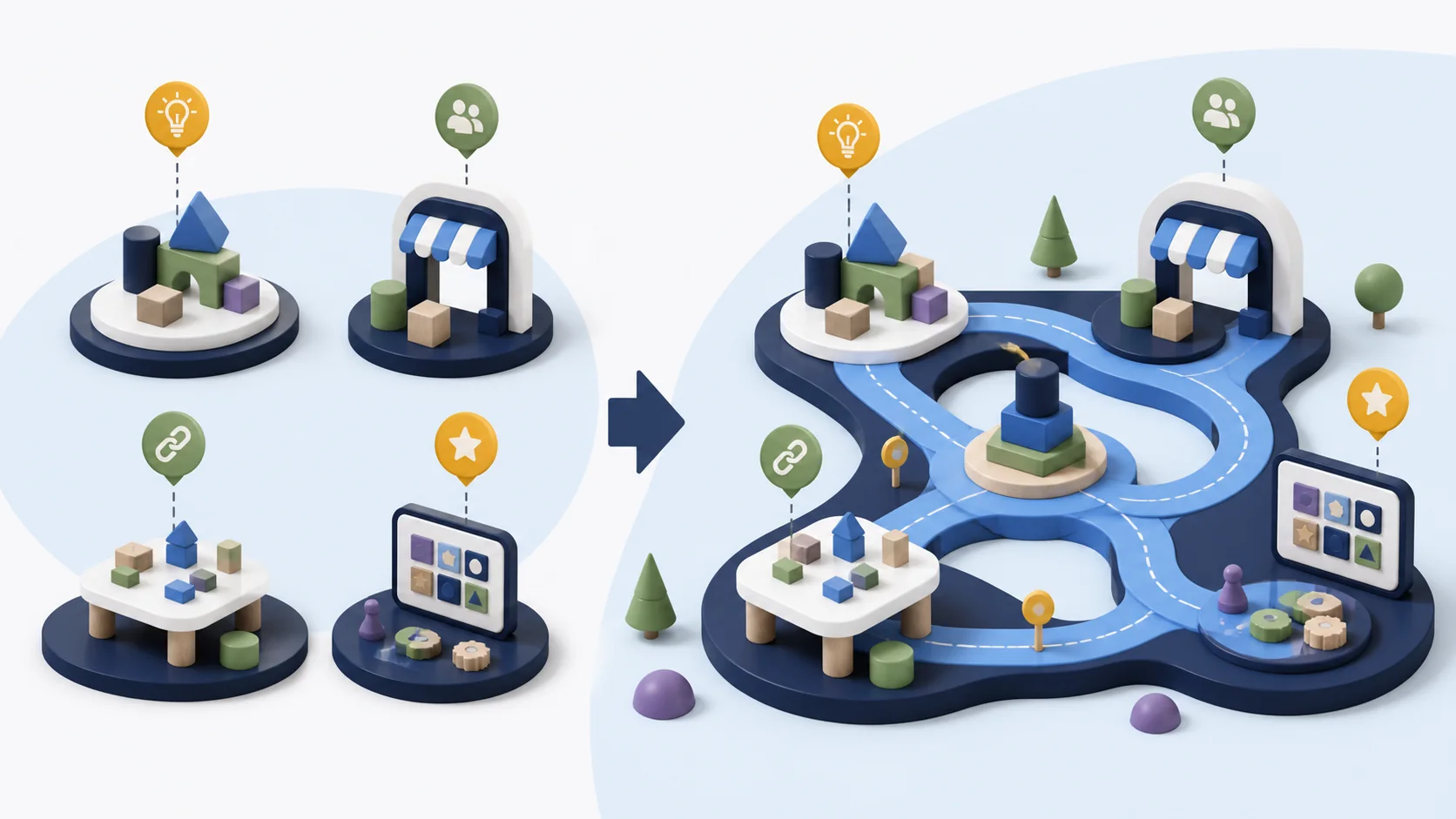
Licensing Brand Experience vs. Owning It
One collects a fee. The other controls what the visitor actually feels.
Licensing: LEGO's brand appears on Merlin-operated Discovery Centres, with LEGO collecting licensing value but limited control over the on-site experience quality. Owning: LEGO directly operates all 29 centres, applying the same operational standards that produced record satisfaction scores at its branded retail stores, a bet that direct control converts into a better, more consistent visitor experience.
"To offer fans of all ages even more memorable hands-on brand experiences, the LEGO Group announced plans to acquire LEGO Discovery Centres and LEGOLAND Discovery Centres from Merlin Entertainments."
The Leadership Move
The structural choice for any brand with both a strong digital channel and a strong direct-retail channel is whether to treat them as substitutes, investing more heavily in whichever shows faster near-term growth, or as complementary assets that both deserve direct investment.
- Ownership
Brand and retail strategy leadership at LEGO made the decision to acquire rather than continue licensing the Discovery Centres, a choice that required accepting significant capital and operational commitment specifically to gain direct control over the in-person experience.
- Tradeoff
Acquiring 29 physical venues outright costs materially more in capital and ongoing operational responsibility than continuing a licensing arrangement would have. The tradeoff LEGO accepted is direct control over experience quality and consistency, betting that control converts into value a passive licensing fee could not capture.
- Human consequence
The roughly five million annual visitors to the acquired Discovery Centres are now experiencing venues under LEGO's direct operational standards rather than a licensed operator's, a change visitors are likely to notice in consistency and quality even if they never learn who owns the property.
Next Move
If your brand is weighing digital versus physical experience investment: Treat LEGO's parallel investment in both, at the same moment, as evidence against a strict either-or framing, particularly if your brand also depends on tactile or in-person engagement.
If you license your brand experience to a third-party operator: Compare satisfaction data between your licensed venues and any directly owned properties, the way LEGO's own retail data likely informed its acquisition decision, before assuming licensing captures equivalent brand value to direct control.
FAQ
How did LEGO's 2025 sales growth compare to the broader toy industry?
LEGO Group's consumer sales grew 16% in 2025, more than double the toy industry's 7% growth rate. Full-year revenue reached DKK 83.5 billion, up 12% versus 2024, with the company gaining market share across every major region.
What did LEGO do with that momentum going into 2026?
LEGO completed the acquisition of 29 LEGO Discovery Centres and LEGOLAND Discovery Centres from Merlin Entertainments in February 2026, covering nine countries and attracting approximately five million visitors a year. CEO Niels B Christiansen framed the move as offering fans "even more memorable hands-on brand experiences."
Did LEGO also grow its digital presence in the same period?
Yes. LEGO Fortnite has drawn a substantial, growing player base since its late-2023 launch, reaching a 24-hour peak of more than 2.19 million concurrent players. The Discovery Centres acquisition happened alongside that digital growth, not instead of it, indicating LEGO is investing in both physical and digital brand experience simultaneously rather than choosing one over the other.
What does buying physical venues signal about where LEGO sees brand value?
A company already posting record digital engagement and record retail satisfaction scores choosing to acquire, not just partner with, physical experience venues suggests LEGO sees direct ownership of in-person brand touchpoints as strategically distinct from digital reach, even in a moment when digital metrics are its fastest-growing story.
Sources & References
Original article archive
Original article published August 31, 2024: "LEGO Transforms Spaces-Great Experience Award Aug 2024". Preserved here for provenance, historical context, and citation continuity.
KultureCity, a nonprofit organization founded in 2014 in Alabama, United States, is certifying LEGO stores and LEGO House as Sensory InclusiveTM. This certification ensures that these locations provide a welcoming environment and an enhanced level of customer experience for those with sensory needs. Staff receive additional training on how to support visitors with sensory disabilities, and sensory bags are available at no cost.
With this innovative partnership, the brands won Transformidy’s Great Experience Award for August 2024. This insight delves into the unique program and explores why it is a great customer experience design.
What Is KultureCity Sensory Inclusive Certification?
One in four individuals in the United States is diagnosed with a sensory processing need (including sound and visual), KultureCity created a Sensory InclusiveTM program to organizations navigate around these needs in physical, online, and virtual environments.
Over 1800+ locations across the United States and worldwide have worked with KultureCity to become certified with continuous training, sensory bags, and mobile application integration.

LEGO House Certification
LEGO House, the ultimate fan experience in Billund, Denmark, is the first experience center in the Nordics to receive the certification early in 2024. It also participates in the Sunflower Lanyard scheme for people with hidden disabilities. Additionally, a unique space unveiled a new accessible experience in its History Collection. The collection includes an interactive timeline with animations supported by audio, braille, International Sign, and tangible wooden models to increase accessibility.
All LEGO stores in the U.S. and Canada will be certified starting in April 2024, with plans to expand certification to more countries later in the year. Appropriate signage and social stories will be available to help visitors prepare for their visit.
Colette Burke, Chief Commercial Officer at the LEGO Group, commented:
“All LEGO® entities are united by our mission to inspire and develop the builders of tomorrow and a belief that the benefits of play are equally critical to all children. This fuels our exploration of how to make the LEGO experience more inclusive and welcoming for everyone."
“We know the LEGO System in Play is enjoyed by neurodivergent fans of all ages and we want to support, inspire, and celebrate their creativity. We hope that the changes to our stores, publications and family attractions will have a positive impact and help embrace the diverse needs and strengths of our fans globally. There will always be more to do, and we’re committed to working with fans and experts to implement initiatives that can help make a difference in building a more inclusive world.”
The building block brand has always been a pioneer when it comes to catering to the needs of neurodivergent fans of the brand. The certification will ensure those with additional sensory requirements can still have fun whether they are at a physical store, online, or virtually.
Enhanced Customer Experience
Expanding inclusiveness has been a driving force for the iconic brand. One in five individuals is diagnosed as neurodivergent. Using building blocks as a part of a therapy treatment has seen growth in popularity. Unfortunately, noise, lights, and other sensory nodes in a physical environment could pose problems for some store visitors. This initiative goes a long way to ensure a safe space for those looking for fun experiences.
When it comes to customer experience, brands need to understand who their audience is, how the audience would like to interact/engage, and what environments best meet their needs. Beyond creating a safe physical, online, or virtual environment, successful brands think about the totality of the go-to-market strategy to ensure staff/agents are trained to deliver a supportive experience, videos or signage are built to enhance awareness of any new programming, and feedback is collected for improvements. Building trust takes time!
Great Experience AwardTM
Transformidy’s Great Experience AwardTM is presented monthly and showcases excellence in experience strategy design or execution. Companies are welcome to submit entrants with support like demos, pictures, videos, press releases, or descriptions (no bigger than 5Mb in size per item), for this monthly award with experience ideas, innovations, or initiatives curated for customers, employees, or stakeholders.
Transformidy will evaluate all entrants and will make the final decision on the winner based on factors including but not limited to how the experience(s) transform or improve the way the company engages, acquires, supports, or maintains its customers, employees, or stakeholders. The experience(s) for consideration can be physical, online, or virtual.
How Can We Help?
Transformidy is available to assist in helping you understand trust and assess how your company’s experience strategy is effective in generating engagement, satisfaction, and business growth.
Contact us or set up a 30-minute complimentary consultation for more information on our services, insights, or showcases. We look forward to hearing from you.
FAQ
How did LEGO's 2025 sales growth compare to the broader toy industry?
LEGO Group's consumer sales grew 16% in 2025, more than double the toy industry's 7% growth rate. Full-year revenue reached DKK 83.5 billion, up 12% versus 2024, with the company gaining market share across every major region.
What did LEGO do with that momentum going into 2026?
LEGO completed the acquisition of 29 LEGO Discovery Centres and LEGOLAND Discovery Centres from Merlin Entertainments in February 2026, covering nine countries and attracting approximately five million visitors a year. CEO Niels B Christiansen framed the move as offering fans 'even more memorable hands-on brand experiences.'
Did LEGO also grow its digital presence in the same period?
Yes. LEGO Fortnite has drawn a substantial, growing player base since its late-2023 launch, reaching a 24-hour peak of more than 2.19 million concurrent players. The Discovery Centres acquisition happened alongside that digital growth, not instead of it, indicating LEGO is investing in both physical and digital brand experience simultaneously rather than choosing one over the other.
What does buying physical venues signal about where LEGO sees brand value?
A company already posting record digital engagement and record retail satisfaction scores choosing to acquire, not just partner with, physical experience venues suggests LEGO sees direct ownership of in-person brand touchpoints as strategically distinct from digital reach, even in a moment when digital metrics are its fastest-growing story.
Related intelligence
Article
Nintendo's Own Games Are Not What Grew 76% Last Year
Third-party software sales on Switch and Switch 2 hit $2.3 billion in 2025, up 76% from the year before. Warner Bros., not Nintendo, was the top publisher. The console everyone associates with Mario is now, by dollar volume, being carried by games Nintendo did not make.
Article
The BFCM Record That Matters Is Not the $14.6 Billion One
Shopify merchants hit a record $14.6 billion in Black Friday-Cyber Monday sales in 2025. The number underneath it that actually predicts next year is Shop Pay adoption, up 39% year over year to 32% of all orders.
Article
McDonald's CEO Named the Exact Chain Reaction Behind a Bad Quarter
McDonald's CEO told investors directly: this was not a strategy problem. Restaurant teams were overwhelmed by too many menu deployments in a single quarter, service times rose, and satisfaction scores fell as a direct result. He named the mechanism, not just the symptom.