
Article
Form Submission Is Often Where Intent Disappears
A form submission is a moment of expressed intent — and often the exact point where an organization loses track of it. Here's why forms become dead ends, and what continuity looks like instead.
- Published
- August 25, 2026
- Updated
- August 25, 2026
- Reading time
- 8 min
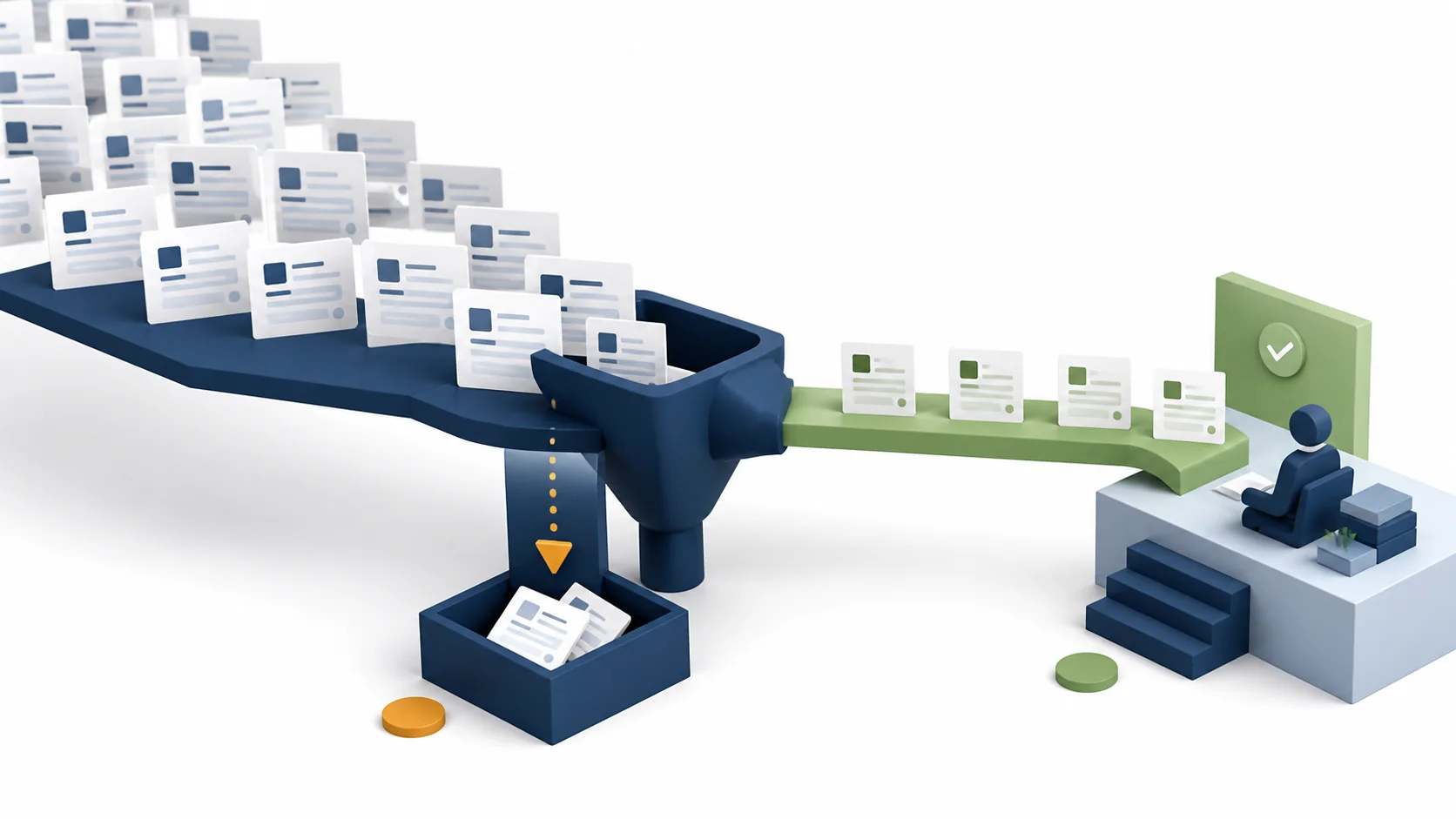
The most common dead end you've probably created yourself
If you've ever filled out a "Contact Us" form and then waited — checking your inbox, wondering if it worked, eventually giving up — you've experienced this dead end from the customer's side. It might be the single most common dead-end experience in commercial life, because nearly every organization uses forms, and very few organizations treat the moment after submission as seriously as the moment of collection.
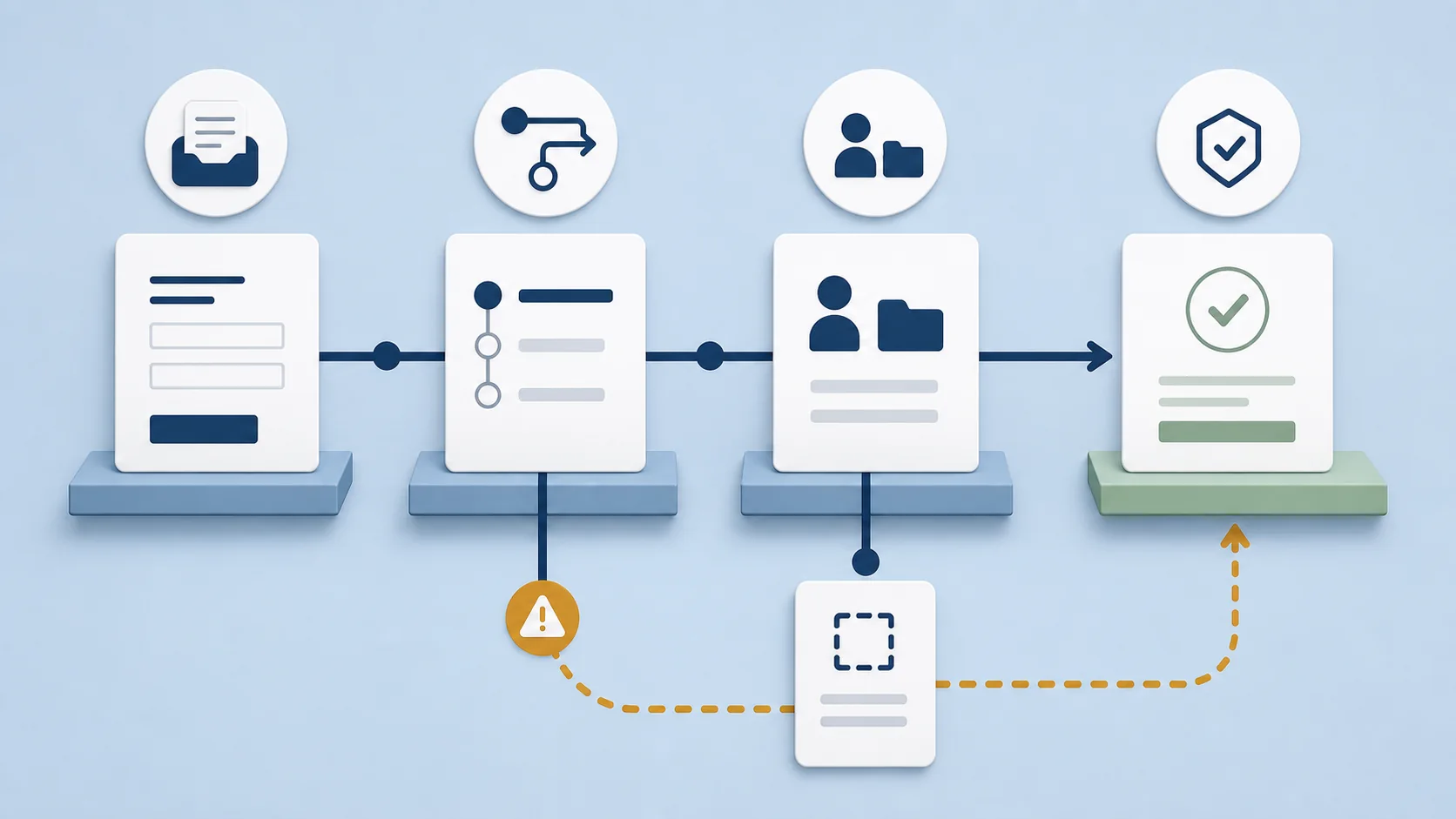
The pattern: a person fills out a form. Somewhere behind that form, a database gets a new row. And then — nothing visible happens. No confirmation beyond a generic "thank you" page. No timeline. No named owner. No indication of whether a human will read it, when, or what happens if they don't.
From the organization's side, the form did its job: it captured a lead, a question, a request. From the person's side, they did their job too — they expressed intent clearly enough for a machine to record it. The dead end sits exactly at the boundary between those two views: the organization considers the form "submitted." The person considers their question "unanswered."
Why this qualifies as a dead-end experience, not just weak follow-up
Applying the four-question test from What Are Dead-End Experiences?:
- Is there a next step the person can see? Usually not beyond a static "we'll be in touch."
- Is there an owner? Frequently unclear — the submission may route to a shared inbox, a CRM queue, or nowhere trackable at all.
- Is there a recovery path if the first attempt fails? Rarely. If no one responds, the person has no escalation option except submitting again or giving up.
- Is there an activation path for the intent that was expressed? Only if someone notices, interprets, and acts — which is exactly the recognition step that's missing.
This is what distinguishes a form dead end from ordinary friction: a slow-loading form is friction. A form that vanishes into silence after submission is a dead end, because the person has no way to know if anything is happening at all.
The commercial question left unanswered
The unresolved commercial question this dead end creates:
Which high-intent prospects or customers disappear because the organization collected evidence of what they wanted, but did not continue the experience?
This is deliberately a question, not a claim. Forms are often treated as clearer signals of intent than passive browsing, but the actual answer (how many, how valuable, how recoverable) depends entirely on an individual organization's own funnel data. No generic percentage belongs in this article without a verified, cited source behind it.
How the experience could keep moving
Applying the experience continuity discipline (see What Is Experience Continuity?) to this specific breakpoint:
- Acknowledgement continuity — a specific, human-legible confirmation of what was received and what happens next, not just "thank you."
- Timing continuity — a stated timeframe for response, and a system that actually holds someone accountable to it.
- Ownership continuity — a named function or role (not just a shared inbox) responsible for every submission type.
- Escalation continuity — a path for the person to follow up if the stated timeframe passes without a response.
- Context continuity — whatever the person said in the form should travel with them into whatever conversation happens next, so they never have to repeat themselves.
None of these require new technology. Most organizations already have the infrastructure (CRM, ticketing, email automation) to do this. What's usually missing is the decision to treat "form submitted" as the *start* of an owned process, not the end of a marketing funnel step.
The simplest test
If you want to check whether your own forms are dead ends, the fastest diagnostic is blunt: submit one yourself, from an account or email address that doesn't identify you internally, and count the days until a human responds — if one ever does. What you find is the actual state of continuity behind that form, regardless of what the process documentation says it should be.
Before, during and after the dead end
This pattern should be managed across three decision windows, not only after the failure becomes visible. Before the dead end, the organization should watch for the signals that intent, trust, value or responsibility is starting to stall. During the dead end, the priority is to preserve context, name an owner, keep a useful next step visible and protect whatever value can still be recovered. After the immediate moment passes, the organization should measure what changed, identify which Revenue Unknown remains unresolved and redesign the experience so the next cycle starts earlier.
When frontline teams repeatedly see the same customer or operational problem, is there a formal path for that evidence to reach the forum that can fund or change the decision?
FAQ
Why do form submissions often go unanswered?
This article addresses the question through the lens of experience continuity, the unresolved Revenue Unknown, and the decision window leaders still have before the pattern repeats.
What makes a contact form a dead-end experience?
This article addresses the question through the lens of experience continuity, the unresolved Revenue Unknown, and the decision window leaders still have before the pattern repeats.
How can organizations fix silent form submissions?
This article addresses the question through the lens of experience continuity, the unresolved Revenue Unknown, and the decision window leaders still have before the pattern repeats.
What is the Revenue Unknown created by unanswered forms?
This article addresses the question through the lens of experience continuity, the unresolved Revenue Unknown, and the decision window leaders still have before the pattern repeats.
Related intelligence
Article
Frontline Warnings Become Dead Ends Without Decision Ownership
A frontline employee raises a warning — a workload problem, a recurring customer issue, a capacity strain. It reaches a manager. Whether it reaches anyone who can actually decide something is a different question.
Article
When Flight Disruption Becomes a Dead-End Experience
A cancellation notice ends the airline's obligation. It doesn't end the traveler's trip. Here's why disruption recovery so often stops too early — and what continuity would look like instead.
Article
Discharge Is Not the End of Recovery Continuity
Discharge marks the end of a hospital stay, administratively. It doesn't mark the end of what a patient needs to recover safely. Here's why the gap between the two deserves close attention.