
Article
The 49-Point Gap Between AI Vendor Claims and What Actually Gets Resolved
Vendors advertise AI contact center resolution rates of 67-90%. A 2026 cross-industry benchmark measured the independent median at 41%. The 26 to 49 point gap is not a rounding error. It is the difference between a pilot and a production system.
- Published
- October 18, 2024
- Updated
- June 18, 2026
- Reading time
- 8 min
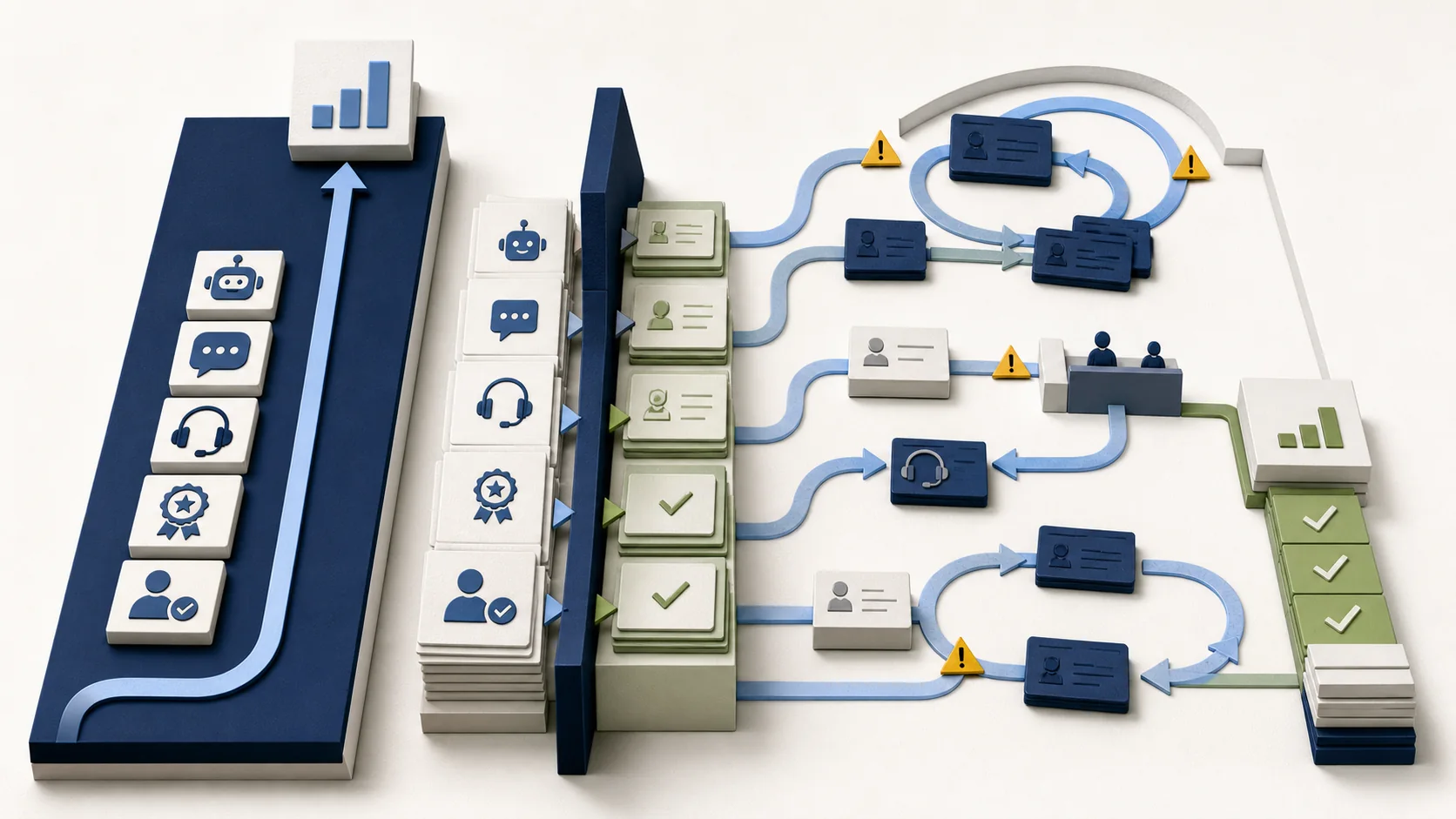
2026 updated analysis
What changed since the original article
This page keeps the original Transformidy article as the canonical record and leads with the current interpretation, source notes, and Revenue Unknown framing.
Two Numbers, Both Called "the Resolution Rate"
A 2026 cross-industry benchmark, built by Aissist.io, found vendor headline resolution rates running 67% to 90%, while an independent cross-program aggregate measured a median of approximately 41%, with top-quartile programs reaching around 59%. The benchmark's own authors called out the movement directly: one named vendor's advertised rate rose from 67% in 2025 to 76% in current marketing, a shift the benchmark treats as a marketing data point, not a verified field result.
Aissist.io co-founder Lifan framed the purpose of the exercise directly: "Resolution is the only number that pays the bill, and it deserves honest measurement. We published this benchmark with its caveats visible so buyers can compare systems instead of marketing claims."
The gap is not evenly distributed. Verified resolution rates ranged from 70% to 84% in ecommerce and retail, the simplest and most structured category, down to 40% to 60% in telecom, utilities, healthcare, and insurance, categories defined by regulatory complexity and less standardized customer requests. A business evaluating a vendor's advertised rate needs to know which end of that range its own industry sits at before treating a headline number as a forecast.
Vendor headline resolution rates against the independently measured cross-program median
Top-quartile programs reach roughly 59%, still below the low end of vendor marketing claims.
What Actually Moves the Number
The benchmark does not stop at naming the gap; it identifies what actually separates a top-quartile, 59% program from a median, 41% one. Agentic AI systems outperform simple retrieval-based bots by 10 to 20 points. Multi-agent designs add another 10 to 15 points on top of that. AI systems with real action capabilities, processing refunds or updating accounts rather than only answering questions, add 20 to 30 points over systems that can only inform, not act. Stacked together, those architectural differences can span the entire gap between a median and a top-quartile program.
The benchmark also surfaces a cost consequence that a headline resolution rate alone hides: a 2.3x repeat-contact rate for failed AI deflections. A customer whose issue the AI failed to resolve does not simply disappear; they contact the company again, at more than double the rate of a customer whose issue was resolved correctly the first time. That repeat contact carries its own cost, on top of the original failed interaction, and it does not appear in a vendor's advertised cost-per-resolution figure, which typically only counts the resolution event itself.
CSAT tells a similar story to resolution rate. Cross-industry average CSAT sits near 78 out of 100, with AI-handled interactions running 5 to 10 points below human-handled interactions on the same team. The benchmark's authors identify weak escalation handoffs, not the AI's initial response quality, as the factor most likely to damage satisfaction significantly, which points a business's improvement effort toward the handoff moment rather than the AI's core answer quality alone.
Budgeting on the Vendor Number vs. the Field Number
One produces a shortfall discovered after go-live. The other produces a plan that survives contact with reality.
Vendor-number budgeting: cost and staffing plans assume 67-90% resolution, leaving no buffer for the 2.3x repeat-contact cost on the share of interactions that fail. Field-number budgeting: plans anchor to the industry-specific verified range (40-84% depending on category), building in the repeat-contact cost from the outset and treating any performance above that range as upside, not baseline.
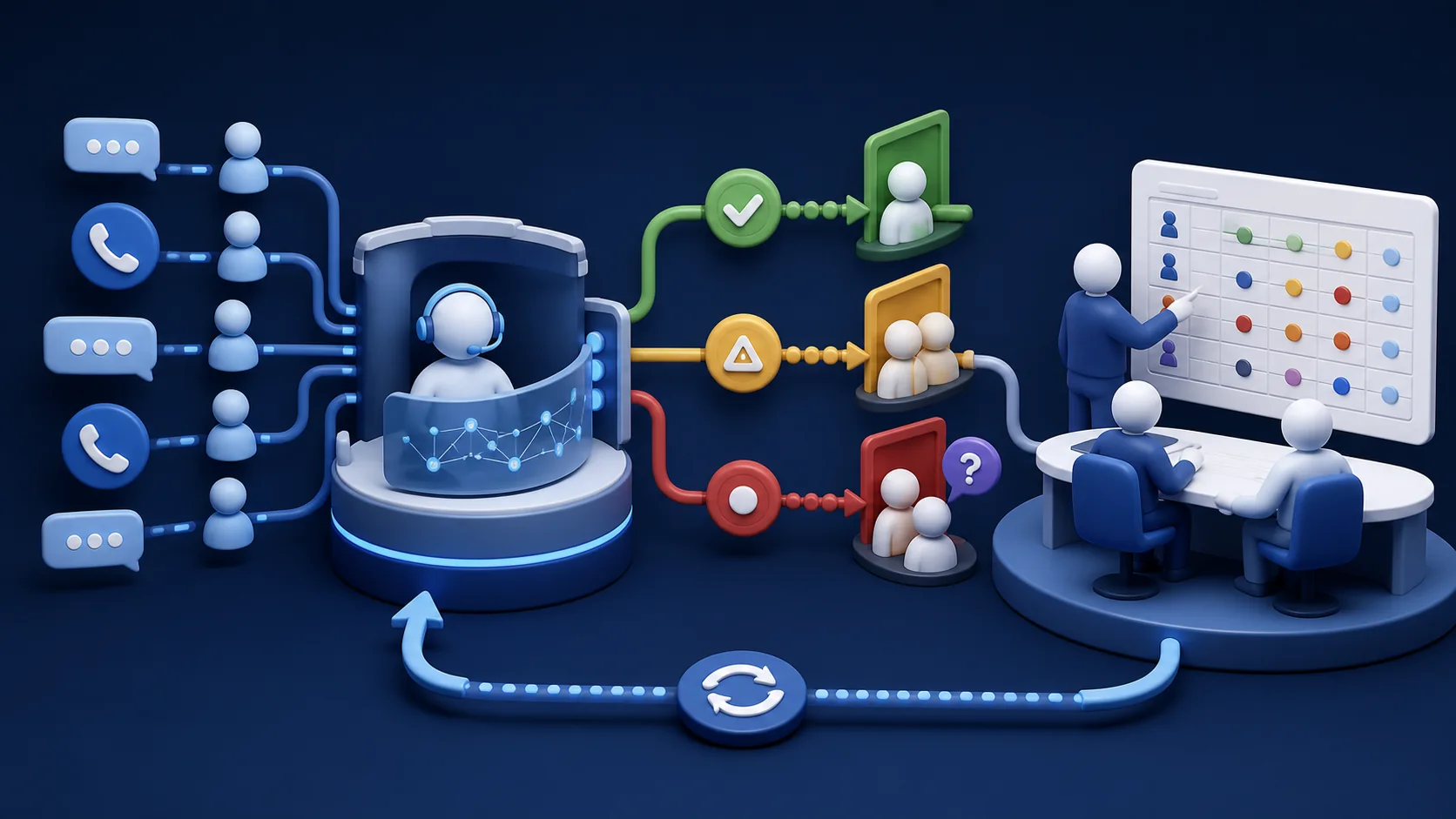
"Resolution is the only number that pays the bill, and it deserves honest measurement."
The Leadership Move
The structural choice for any CX or operations leader evaluating AI customer service is whether to plan around the vendor's marketed headline rate or around the independently verified, industry-specific range this benchmark provides.
- Ownership
CX and customer operations leadership own the decision to request and validate a vendor's resolution methodology before signing, and to budget staffing and cost-per-resolution against the conservative, industry-specific verified range rather than the vendor's headline figure.
- Tradeoff
Budgeting conservatively against the field-verified range, rather than the optimistic vendor number, means a lower projected ROI in the initial business case, which can be a harder pitch to leadership. The tradeoff against that harder pitch is avoiding a post-launch shortfall discovered only after staffing and cost commitments are already locked in, plus the compounding cost of the 2.3x repeat-contact rate on every failed resolution nobody planned for.
- Human consequence
A customer whose issue an AI system fails to resolve experiences that failure directly, then experiences it again when their repeat contact meets a system or team that was staffed for a higher success rate than the one actually being delivered. The gap between vendor claims and field reality is not abstract to that customer; it is a second unresolved interaction.
Next Move
If you are evaluating an AI customer service vendor: Ask for their resolution rate methodology directly, and compare their claim against this benchmark's verified range for your specific industry before building a business case around their headline number.
If you already run an AI customer service system: Measure your actual resolution rate and repeat-contact rate for the last full quarter, then compare both against this benchmark's median and top-quartile figures to see where your program actually sits.
FAQ
How big is the gap between AI vendor resolution claims and independently measured performance?
A 2026 cross-industry benchmark found vendor headline resolution rates of 67% to 90%, while an independent cross-program aggregate put the median at approximately 41%, with top-quartile programs reaching around 59%. That is a gap of roughly 26 to 49 percentage points between marketing claims and measured field performance.
Does the gap vary by industry?
Yes, substantially. Verified resolution rates ranged from 70-84% in ecommerce and retail, 60-75% in consumer fintech, and 50-70% in SaaS, down to 40-60% in telecom, utilities, healthcare, and insurance. The gap between vendor claims and reality is smallest in high-structure, low-complexity categories like retail and largest in regulated, high-complexity categories.
What architectural factors actually move resolution rates?
The benchmark found agentic AI systems outperforming simple retrieval-based bots by 10 to 20 points, multi-agent designs adding another 10 to 15 points on top of that, and AI systems with real action capabilities, such as processing refunds or updating accounts rather than only answering questions, adding 20 to 30 points over systems that can only inform, not act.
Is a lower resolution rate the only hidden cost of AI customer service?
No. The same benchmark identified a 2.3x repeat-contact rate for failed AI deflections, meaning a customer whose issue the AI failed to resolve contacts the company again at more than double the rate of a customer whose issue was resolved the first time, which quietly increases total handling cost beyond what the advertised per-resolution price implies.
Sources & References
Original article archive
Original article published October 18, 2024: "Transforming Contact Centers: Harnessing AI for Superior CX". Preserved here for provenance, historical context, and citation continuity.
The landscape of contact centers is undergoing a significant transformation, driven by advancements in artificial intelligence (AI) and automation. Traditionally, contact centers have relied heavily on human agents to manage customer inquiries, often leading to inefficiencies and inconsistent customer experiences. Today, the integration of AI technologies, particularly through tools like Copilots, presents an opportunity to redefine how contact centers operate across various industries.
Current Management of Contact Centers
Contact centers today are primarily managed through a combination of human agents and basic automated systems. While many organizations have adopted Virtual Agents to handle repetitive inquiries, these systems typically lack the sophistication needed to address complex customer issues effectively. This results in higher wait times, increased operational costs, and diminished customer satisfaction. The reliance on human agents remains high, but the shortage of skilled personnel exacerbates these challenges, creating a pressing need for innovative solutions.

What's Missing in the Status Quo?
Despite the advancements made with Virtual Agents, several gaps persist in the current management model:
- Limited Personalization: Current systems often fail to provide tailored experiences that meet individual customer needs.
- Inefficient Use of Agent Time: Agents spend significant time on routine queries that could be automated.
- Inadequate Training and Support: New agents often lack the necessary guidance during onboarding, leading to longer ramp-up times and potential errors.
Opportunities in AI for Contact Centers
AI technologies offer numerous advantages for contact centers. One of the most significant benefits is the enhancement of customer interactions. Companies like NICE leverage AI to analyze customer interactions in real time, providing agents with insights into customer sentiment and intent. This capability allows for more personalized service, leading to improved customer satisfaction rates. For instance, NICE’s Enlighten AI solutions empower agents by offering behavioral guidance and access to historical data during interactions.
Furthermore, AI-driven analytics tools can sift through vast amounts of data from agent interactions to identify trends and areas for improvement. This data-driven approach informs training programs and operational strategies, enabling businesses to adapt quickly to changing customer expectations.
For example, Zendesk utilizes AI to analyze ticket data and provide actionable insights that help businesses optimize their support processes. Another notable opportunity lies in scalability and efficiency. AI solutions enable contact centers to handle increased volumes of inquiries without a proportional increase in staffing costs. Generative AI technologies can automate responses to frequently asked questions, allowing human agents to focus on more complex issues. Amazon, through its Alexa for Business platform, exemplifies this by using AI to manage routine inquiries while freeing up human resources for higher-level tasks.
What is Copilot? How Does The Technology Aid Contact Center Operations?
Copilots are transforming the training and onboarding processes for new contact center agents, offering a unique blend of real-time support and advanced AI capabilities. As organizations face increasing demands for personalized customer service, the integration of Copilots—intelligent assistants powered by generative AI—has become essential in enhancing agent performance and reducing the time required for new hires to become proficient.
One of the primary advantages of using Copilots in contact centers is their ability to provide immediate, context-aware guidance to new agents. Traditional training methods often involve lengthy onboarding sessions and extensive manuals, which can be overwhelming for new hires. In contrast, Copilots act as real-time digital coaches, offering support tailored to the specific challenges that agents encounter during their interactions with customers.
For example, when a new agent receives a call, the Copilot can analyze the conversation in real-time, providing prompts and suggestions based on the customer's intent and sentiment. This immediate feedback helps agents navigate complex customer inquiries more effectively, minimizing rookie mistakes that can lead to customer dissatisfaction. By allowing agents to learn through hands-on experience while receiving guidance from their Copilot, organizations can significantly reduce the learning curve associated with onboarding.
Salesforce: Utilizing AI-driven coaching tools, Salesforce empowers new agents by providing them with instant access to knowledge bases and relevant resources during customer calls. This approach has led to higher first-call resolution rates among newly trained agents. The company reported that organizations using their Einstein AI platform have experienced substantial improvements in agent productivity and customer satisfaction metrics.
Key Capabilities of Copilots
Personalized Learning Experience
One of the most significant advantages of Copilots is their ability to tailor the onboarding experience to individual agents. Unlike traditional training methods, which often follow a one-size-fits-all approach, Copilots leverage data and AI algorithms to understand each agent's learning style, strengths, and weaknesses. This personalized approach allows Copilots to deliver customized training modules and resources that align with an agent's specific needs.For example, if a new agent struggles with handling customer complaints, the Copilot can provide targeted resources and practice scenarios focused on conflict resolution. This immediate access to relevant training materials not only enhances the learning experience but also boosts confidence, enabling agents to handle real customer interactions more effectively.
Real-Time Guidance and Feedback
During live interactions with customers, Copilots serve as real-time digital coaches. They analyze conversations as they unfold, offering prompts and suggestions based on the customer's intent and sentiment. This capability is particularly beneficial for new agents who may lack experience in navigating complex inquiries.
For instance, if a customer expresses frustration during a call, the Copilot can alert the agent and suggest de-escalation techniques or alternative responses tailored to the situation.This dynamic feedback loop helps agents learn in context, reinforcing best practices while minimizing the risk of errors that could lead to customer dissatisfaction. The ability to receive guidance during live interactions ensures that new agents are not only learning from their mistakes but also improving their performance on the spot.

Skill Development Through Simulation
Copilots can facilitate skill development by simulating various customer scenarios that new agents might encounter. These simulations allow agents to practice their responses in a controlled environment, building their skills without the pressure of real-time customer interactions.
For example, a Copilot might present a series of common customer queries and guide the agent through appropriate responses, helping them gain familiarity with potential challenges they will face on the job. This hands-on practice is crucial for building competence and confidence among new hires. By allowing agents to rehearse their skills in a safe space, organizations can ensure that they are better prepared when they begin interacting with actual customers.
Performance Analytics for Continuous Improvement
Another key feature of Copilots is their ability to provide performance analytics that inform ongoing training efforts. After each interaction, Copilots can analyze an agent's performance metrics—such as call resolution times and customer satisfaction scores—and identify areas for improvement. Supervisors receive detailed reports that highlight strengths and weaknesses, enabling targeted coaching sessions that focus on specific skills.
This data-driven approach not only helps new agents refine their abilities but also allows supervisors to tailor their coaching strategies based on individual performance trends. For instance, if multiple new agents struggle with product knowledge, supervisors can implement additional training sessions focused on this area.
24/7 Availability
Unlike traditional training methods that rely heavily on human supervisors' availability, Copilots are accessible around the clock. This 24/7 availability means that new agents can seek guidance whenever they need it, regardless of whether a supervisor is present. This flexibility is particularly valuable in remote or hybrid work environments where traditional oversight may be limited. The constant support provided by Copilots ensures that new hires feel empowered to ask questions and seek help without hesitation. This accessibility fosters a culture of continuous learning and improvement within contact centers.
Industries Well-Suited for AI and Copilot in Contact Center Management
AI and copilot technologies can significantly enhance contact center operations in various industries. Here are some sectors that particularly benefit from these advancements:
Industries with High Call Volumes and Repetitive Queries:
- Telecommunications: Handling inquiries about plans, billing, and technical support.
- Banking and Finance: Addressing questions related to accounts, transactions, and customer service.
- E-commerce: Assisting with order status, returns, and product information.
- Utilities: Providing support for billing, outages, and service requests.
Industries with Complex Customer Inquiries:
- Healthcare: Navigating insurance coverage, appointments, and medical information.
- Technology Support: Troubleshooting software issues, hardware problems, and device setup.
- Government Services: Guiding customers through bureaucratic processes and regulations.
Industries with a Need for 24/7 Customer Support:
- Travel and Hospitality: Handling booking changes, cancellations, and travel-related inquiries.
- Online Gaming: Providing technical assistance and customer support for game-related issues.
- Subscription Services: Addressing billing questions, account management, and content access.
Challenges of Implementing AI in Contact Centers
Despite the numerous advantages, organizations face several challenges when implementing AI solutions in contact centers. One significant hurdle is the complexity of integration with existing systems. Organizations may struggle to align new technologies with legacy systems, which can hinder the deployment of effective AI tools. Data privacy concerns also pose a challenge. Handling sensitive customer information requires strict compliance with regulations such as GDPR.
Companies must proactively address these concerns when deploying AI solutions that process personal data. Additionally, change management is crucial for successful implementation. Employees may resist adopting new technologies due to fears of job displacement or a lack of understanding regarding how these tools will enhance their roles. Effective change management strategies are essential to facilitate smooth transitions and ensure employee buy-in.
Companies must also pay attention to how accurate AI solutions are with data points through summarization, compiling, and other methods. It is not unusual for generative AI to "fill in the blanks" with information. It does not possess strong reasoning skills in its current technological state and can be easily distracted.
While many industries can benefit from AI and copilot, there are some industries where implementation might be more complex or require careful consideration:
- Highly Regulated Industries: Compliance with industry-specific regulations and data privacy laws can present challenges.
- Industries Requiring High Levels of Human Empathy: While AI can provide initial support, complex emotional issues may still require human intervention.
- Industries with Rapidly Evolving Products or Services: AI models may need frequent updates to keep pace with changes.
Return on Investment Considerations
Investing in AI for contact centers can yield significant ROI through various avenues:
- Cost Savings: Automating routine inquiries reduces the need for a large workforce.
- Increased Productivity: Agents equipped with AI tools can resolve issues faster and more effectively.
- Improved Customer Retention: Enhanced service quality leads to higher customer satisfaction and loyalty.
A study by McKinsey indicates that companies implementing AI in customer service can achieve a 20-30% reduction in operational costs while improving service levels. For instance, Business Growth Considerations
AI not only streamlines operations but also enables businesses to scale effectively:
- Market Differentiation: Companies leveraging AI can offer superior customer experiences, differentiating from competitors.
- Adaptability: With real-time data analysis, businesses can swiftly adapt their strategies based on customer feedback and market trends.
- Innovation: Continuous improvement in AI technologies fosters innovation within organizations, encouraging the exploration of new avenues for growth.
For example, Coca-Cola has utilized AI-driven insights to enhance its marketing strategies and improve customer engagement, demonstrating how data analytics can drive business growth.
Transform for the Better
As organizations navigate the evolving landscape of contact center technology, embracing AI offers a pathway toward transformation. By leveraging diverse tools beyond traditional Copilots—such as sentiment analysis and predictive analytics—brands can enhance their customer experience while achieving significant operational efficiencies. To successfully implement these changes, brands should consider the following strategies:
- Evaluate Use Cases: Identify specific areas where AI can add value within your contact center operations.
- Pilot Programs: Start with pilot programs to test the effectiveness of different AI solutions before full-scale implementation.
- Focus on Training: Invest in comprehensive training programs that empower agents to utilize AI tools effectively.
- Monitor Performance: Continuously assess the impact of AI on performance metrics and adjust strategies accordingly.
The integration of AI into contact centers offers transformational opportunities that can reshape customer experience strategies:
| Opportunity | Description |
|---|---|
| Enhanced Personalization | Tailoring interactions based on customer data leads to improved satisfaction. |
| Real-Time Support | Agents receive immediate assistance from Copilots during calls. |
| Improved Training | New agents benefit from simulated training scenarios powered by AI. |
| Data-Driven Insights | Organizations gain actionable insights into performance and customer behavior. |
By embracing these opportunities, businesses can not only improve their operational efficiency but also enhance their overall brand reputation. However, they must spend the time and resources to strategize, build, test, verify, and monitor how AI solutions can be maximized in the contact center environment. It is not a set-it-and-forget-it type solution.
How Can We Help?
Transformidy specializes in helping brands assess their contact center solutions and identify potential opportunities for improvement. Our expertise in harnessing AI technologies ensures that your brand is well-equipped to navigate this transformative landscape. Let us partner with you to explore the next steps toward optimizing your contact center operations.
Contact us or set up a 30-minute complimentary consultation for more information on our services, insights, or showcases. We look forward to hearing from you.
FAQ
How big is the gap between AI vendor resolution claims and independently measured performance?
A 2026 cross-industry benchmark found vendor headline resolution rates of 67% to 90%, while an independent cross-program aggregate put the median at approximately 41%, with top-quartile programs reaching around 59%. That is a gap of roughly 26 to 49 percentage points between marketing claims and measured field performance.
Does the gap vary by industry?
Yes, substantially. Verified resolution rates ranged from 70-84% in ecommerce and retail, 60-75% in consumer fintech, and 50-70% in SaaS, down to 40-60% in telecom, utilities, healthcare, and insurance. The gap between vendor claims and reality is smallest in high-structure, low-complexity categories like retail and largest in regulated, high-complexity categories.
What architectural factors actually move resolution rates?
The benchmark found agentic AI systems outperforming simple retrieval-based bots by 10 to 20 points, multi-agent designs adding another 10 to 15 points on top of that, and AI systems with real action capabilities, such as processing refunds or updating accounts rather than only answering questions, adding 20 to 30 points over systems that can only inform, not act.
Is a lower resolution rate the only hidden cost of AI customer service?
No. The same benchmark identified a 2.3x repeat-contact rate for failed AI deflections, meaning a customer whose issue the AI failed to resolve contacts the company again at more than double the rate of a customer whose issue was resolved the first time, which quietly increases total handling cost beyond what the advertised per-resolution price implies.
Related intelligence
Article
AI in Hospitality: Personalization and Guest Experience Risk
Hotels deployed AI for personalization and staff augmentation. But automation that removes human touch from high-stakes moments (room issues, service recovery) creates guest frustration. Successful properties used AI to enable staff, not replace judgment.
Article
AI Personalization Strategy: Segmentation Before Algorithms
Personalization programs split: those with explicit segment strategy maintained customer satisfaction. Those optimizing for individual conversion without boundaries experienced satisfaction decline and program abandonment.
Article
SharePoint's Real 2025-2026 Story Was Nation-State Attacks, Not CX Strategy
Nation-state hackers exploited on-premises SharePoint servers in 2025, confirmed by Shadowserver at over 300 victims worldwide. In 2026, a new vulnerability rated 9.8 out of 10 severity emerged in the same product line. SharePoint did not quietly rewire anyone's CX strategy. It became a sustained target.