
Article
Loyalty Program Transformation: From Points to Personalization
Loyalty programs transformed from points-based accumulation to 1:1 personalization and emotional engagement. Research shows roughly 70% of brand preference decisions are now driven by emotional factors, not point mechanics. The shift marks maturation from mechanic to psychology.
- Published
- March 18, 2025
- Updated
- June 18, 2026
- Reading time
- 8 min
2026 updated analysis
What changed since the original article
This page keeps the original Transformidy article as the canonical record and leads with the current interpretation, source notes, and Revenue Unknown framing.
From Points to Personalization
Loyalty programs divided into two eras between 2024 and 2026. Era 1 (Points-Based): Customers earn generic points for purchases. Points accumulate. Customers redeem for standardized rewards. Simple. Scalable. Often low engagement. Era 2 (Personalized): Customers earn personalized rewards based on preferences and behavior, with recognition delivered in the moment rather than after a delay.
Named examples illustrate the shift. Petco redesigned its program to recognize customers as pet owners rather than generic shoppers, using pet-specific data to inform breed- and age-relevant offers, while Giant Eagle rebuilt its longstanding FuelPerks program into the digital-first myPerks platform to unify personalization across touchpoints. Eagle Eye's own chief revenue officer frames the underlying shift plainly: AI is what makes true one-to-one personalization possible at a scale no retailer could build by hand.
The direction is clear even where precise lift numbers are not: points-only programs are giving way to programs built around real-time recognition and emotional engagement. Points-based programs scale mechanically. Personalized programs require data, AI, and constant optimization.
Of brand preference decisions are now based on emotional factors, per Open Loyalty
Point mechanics alone no longer explain why members stay loyal.
Emotional Engagement Over Mechanics
The transformation is psychological, not mechanical. 75% of businesses now prioritize real-time rewards as baseline expectation, signaling a shift from delayed point accumulation to immediate recognition.
Examples: A customer makes a purchase and immediately sees their reward tier increase. A milestone is celebrated with a personalized message and exclusive offer. A valued customer receives early access to new products. These moments create emotional connection that point accumulation never could.
Traditional programs delay gratification: earn 100 points, save for months, redeem for generic reward. Emotional programs celebrate immediately: "You are 50 purchases away from VIP status. Here is an exclusive offer to get you there faster."
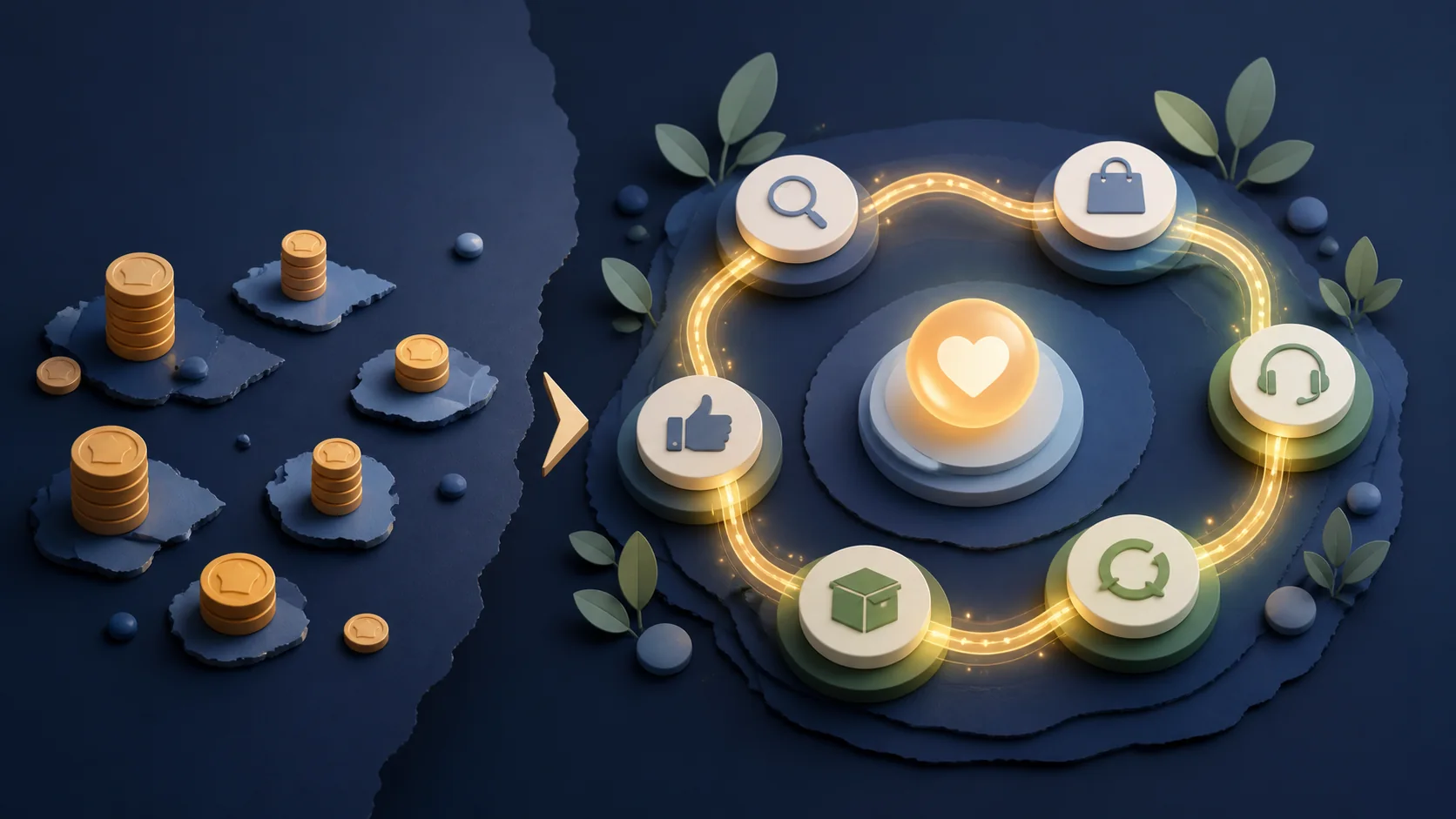
Traditional Points vs. Emotional Personalization Programs
Two loyalty philosophies. Different engagement and spending outcomes.
Traditional: standardized rewards, delayed gratification, transactional focus. Personalized: tailored recognition, real-time celebration, emotional connection.
Real-Time and Omnichannel Evolution
The final transformation layer is omnichannel seamlessness. Customers earn and recognize rewards across mobile, web, in-store, email, SMS. Preferences and recognition follow them everywhere. This requires unified data and experience design.
Organizations that implement true omnichannel loyalty consistently report higher engagement than single-channel programs, though no single verified figure quantifies the exact multiple. Implementation is complex regardless: API integration, data synchronization, experience consistency across touchpoints.
Future programs will combine: AI personalization (tailored rewards based on preference prediction), emotional recognition (celebration and belonging), and omnichannel seamlessness (recognition and earning across all touchpoints). The programs that master all three will dominate retention and expansion.
Points are the mechanism. Emotion is the driver. Personalization is the multiplier. Programs that combine all three transform loyalty into competitive advantage.
The Leadership Move
The structural choice is whether to maintain points-based simplicity or to invest in personalization and emotional engagement complexity. Simplicity scales; personalization compounds loyalty.
- Ownership
Chief Customer Officer owns loyalty experience and member lifetime value. Chief Technology Officer owns data infrastructure and personalization capability. Chief Merchant owns recognition strategy and emotional design. When any one leader dominates without the others, programs fail: tech-only is cold, merchants-only is irrelevant, customer experience alone lacks data foundation.
- Tradeoff
Leaders must choose between simple scalable programs (points accumulation) and complex high-impact programs (personalization + emotion + omnichannel). Simple programs are easier to launch and maintain. Complex programs consistently report higher engagement and lifetime value, though the size of the lift is retailer-specific. The investment case rests on emotional engagement mattering more than mechanics to most members today.
- Human consequence
Simple programs require basic operations and mechanics expertise. Complex programs require data scientists, experience designers, and cross-functional coordination. Organizational capability must match program sophistication. Growing from simple to complex requires hiring and cultural shift.
Next Move
If you have a traditional points-based program: Audit member engagement honestly rather than by enrollment count alone—90% of US adults already belong to at least one loyalty program, so enrollment is not a meaningful signal of success. Redesign around personalization and emotional recognition before scaling further. Test real-time recognition and see if engagement improves.
If you are transforming to personalized loyalty: Start with data foundation: can you predict member preferences? Can you deliver personalization across channels? Then layer in emotional recognition: celebrate milestones, recognize valued behaviors, create belonging. Measure member lifetime value, not just enrollment.
FAQ
What is the difference between traditional and AI-personalized loyalty programs?
Traditional: earn points, accumulate, redeem for standard rewards. Everyone gets the same offer. AI-personalized: members get tailored rewards, personalized recommendations, and real-time recognition. Roughly 70% of brand preference decisions now come from emotional factors, which points-only programs are not built to address.
Why do emotional loyalty programs outperform transactional ones?
Because humans are not calculators. Recognition, belonging, values alignment matter as much as points. Programs that celebrate milestones, recognize achievements, and align with customer values drive deeper engagement and higher lifetime value than programs optimizing purely for transaction volume.
What is real-time rewards in loyalty?
Recognition and reward in the moment, not delayed accumulation. A customer completes purchase, they immediately see reward or recognition. 75% prioritize real-time rewards as baseline. Delayed point accumulation feels bureaucratic; immediate recognition feels personal.
How does omnichannel loyalty work?
Customers earn and redeem across all touchpoints—mobile, web, in-store, email, SMS—seamlessly. Recognition and preferences follow customers. This requires unified data and seamless design. Organizations integrating omnichannel loyalty consistently report higher engagement than single-channel programs, though the exact lift is retailer-specific.
Sources & References
Original article archive
Original article published March 18, 2025: "Boost Loyalty Programs: Amazing CX Transformation". Preserved here for provenance, historical context, and citation continuity.
Customer loyalty programs have undergone a radical transformation, shifting from transactional point systems to dynamic, experience-driven ecosystems that prioritize emotional connections over mere transactions. This evolution mirrors broader shifts in consumer expectations, technological capabilities, and competitive market dynamics, with CX now standing as the cornerstone of modern loyalty strategies.

What are Loyalty or Reward Programs?
Loyalty or reward programs are structured marketing strategies designed to incentivize repeat business by rewarding customers for ongoing engagement or purchases. These programs have evolved from simple transaction-based systems into sophisticated tools that blend customer retention, data collection, and personalized experiences.
Core Mechanics
At their foundation, loyalty programs:
- Reward specific actions: Purchases, app downloads, social media follows, or reviews16
- Convert engagement to value: Points, discounts, exclusive access, or charitable donations37
- Leverage data: Collect zero-party data (preferences shared voluntarily) and purchase patterns to refine offers
For example, Sephora’s Beauty Insider program grants 1 point per U.S. dollar spent, redeemable for US$10 off after accumulating 500 points.
The earliest loyalty programs like S&H Green Stamps (1896) and Raleigh Cigarettes coupons (1950s) focused on simple reward mechanics. These evolved into airline mileage programs (American Airlines’ AAdvantage, 1981) and hotel status tiers (Hilton HHonors, 1980s), which introduced spend-based earning and aspirational benefits.
The 2000s marked a digital inflection point:
- Mobile integration: Starbucks’ 2009 app allowed real-time rewards redemption, blending digital convenience with in-store CX
- Omnichannel unification: Brands like Sephora synchronized online/offline data to offer personalized beauty consultations
- Data democratization: Tesco’s Clubcard (1995) pioneered using purchase data to tailor offers, a precursor to AI-driven insights
By 2024, 73% of brands leveraged AI for hyper-personalization, analyzing behavioral patterns to predict preferences before customers explicitly express them.
Key Program Types
| Type | Description | Example |
|---|---|---|
| Points-Based | Earn points per transaction | Starbucks Rewards (stars) |
| Tiered | Unlock benefits as spending increases | Hilton Honors status tiers |
| Paid/Subscription | Upfront fee for premium perks | Amazon Prime ($139/year) |
| Coalition | Cross-brand rewards partnerships | Air Miles (300+ retailers) |
| Mission-Driven | Donations tied to purchases | Patagonia’s 1% for the Planet |
| Cash-Back | Percentage returned as credit | Chase Freedom credit card |
Strategic Benefits
- Customer Retention: 80% of consumers are more likely to stay with brands offering loyalty programs.
- Increased Spending: Members spend 18% more on average than non-members.
- Data-Driven Insights: Track purchasing habits and preferences to personalize marketing.
- Cost Efficiency: Retaining customers costs 5-25x less than acquiring new ones.
Critical Considerations
- Redemption Simplicity: 68% abandon programs with cumbersome processes
- Ethical Data Use: 64% of consumers prioritize privacy; opt-in zero-party data models are rising
- Emotional Resonance: Experiential rewards drive 2.3x higher lifetime value vs. discounts
As of 2025, 85% of consumers say loyalty programs influence their brand choices, making them indispensable for CX-centric businesses. Whether through points, tiers, or cause alignment, these programs transform transactional relationships into enduring brand partnerships.
The Customer Experience-Driven Loyalty Revolution
The Customer Experience-Driven Loyalty Revolution has transformed how brands engage with consumers, shifting focus from transactional rewards to holistic, personalized experiences. This evolution reflects the changing expectations of customers in 2025, who now demand more than just points or discounts.
Hyper-Personalization at Scale
Brands are leveraging advanced data analytics and AI to deliver tailored experiences:
- 73% of brands have increased efforts to provide personalized experiences
- Amazon Prime and Sephora set the standard with customized recommendations and rewards
- AI-driven systems analyze customer behavior to offer real-time, relevant communications
Experiential Rewards
The focus has shifted from transactional benefits to memorable experiences:
- 47% of consumers seek more immersive experiences incorporating gamification
- Sephora's Beauty Insider program offers personalized beauty consultations and exclusive shopping events
- Nike's membership program provides customized training recommendations based on athletic preferences
Sustainability Integration
Eco-conscious rewards have gained significant traction:
- 52% of consumers would remain loyal to brands with eco-friendly practices
- 38% of consumers consider reducing plastic waste a critical initiative
- Brands like H&M and IKEA reward sustainable actions, such as buying second-hand products
Emotional Resonance and Trust-Building
Programs now aim to foster deeper emotional connections:
- Experiential rewards drive 2.3x higher lifetime value compared to discounts
- Brands are refocusing on relationship-driven experiences to build trust
- Loyalty strategies mature to bring perceived personal value to new levels
Omni-channel Integration
Seamless experiences across all touchpoints have become crucial:
- Brands utilize customer data from various sources (online purchases, social media, in-store visits) to create a unified experience
- Over 30% of brands are investing in automation to optimize interactions across channels4
Premium Loyalty Models
Paid membership programs offering immediate, high-value benefits are on the rise:
- Amazon Prime and Walmart+ demonstrate customers' willingness to pay for ongoing value
- These programs offer instant benefits like discounts, early access, and exclusive events
The CX-driven loyalty revolution in 2025 emphasizes that loyalty is no longer just about rewards—it's about creating a continuous value conversation that anticipates needs, deepens engagement, and builds lasting emotional connections with customers.
Tiered Value Exchange
Programs now reward engagement beyond spending:
| Metric | Traditional Programs | Modern Programs |
|---|---|---|
| Earning Mechanism | Dollar spend | Social shares, reviews |
| Redemption Options | Products/Discounts | Charitable donations |
| Status Triggers | Annual revenue | Community participation |

Successful Loyalty Programs
Successful omnichannel loyalty programs have become essential for brands aiming to create seamless, personalized experiences across digital and physical channels. These programs leverage technology, data integration, and creative engagement strategies to foster deeper customer connections and drive retention. Below are standout examples from diverse industries:
The North Face VIPeak/XPLR Pass
This program rewards both purchases and experiential actions like national park check-ins via its mobile application. Key features:
- Omnichannel earning: Points for in-store purchases, online orders, and outdoor activities (e.g., park visits)
- Unified redemption: Points convert to rewards tiers (2,000–5,000+ points) for member-only sales and limited-edition gear
- App integration: Real-time point tracking and personalized product recommendations across devices
Costa Coffee
Costa’s loyalty program bridges digital convenience with in-store efficiency:
- Mobile-first ordering: Customers pre-order via app to skip queues, with payment and reward redemption handled digitally
- Personalized history: The app tracks past orders and tailors rewards (e.g., free drink after 8 purchases)
- Cross-channel sync: Rewards earned online apply automatically to in-store purchases
Nestlé’s Gamified Ecosystem
Nestlé partnered with KlikNGo to overhaul its loyalty strategy with omnichannel features3:
- Packaging integration: QR codes on products unlock app-based games and points
- Multi-brand partnerships: Points redeemable for theme park tickets, hotel stays, and partner vouchers
- Event-driven campaigns: Seasonal promotions sync in-store purchases with digital point accrual
Omusubi’s Messaging App Integration
This Japanese sushi chain blended loyalty with popular chat platforms:
- WeChat/WhatsApp integration: Customers check points, redeem coupons, and contact support directly via messaging apps
- AI-driven personalization: Dynamic coupons (e.g., 20% off for $60+ spenders) based on purchase history
- Community missions: Family challenges (e.g., “Eat 20 sushi dishes weekly”) tracked across app and in-store visits
PAYBACK Coalition Program
Germany’s largest multi-retailer program excels in cross-channel synergy4:
- 600+ partners: Earn/redeem points at brands like DM Drugstore and Aral gas stations
- Mobile number as ID: Unified profile tracks online and offline transactions
- Hyper-targeted offers: Real-time promotions based on combined purchase data from all partners
Chipotle Rewards’ Gamified Experience
Chipotle bridges digital engagement with in-person fulfillment9:
- “Extras” challenges: App-based missions (e.g., “Buy 3 bowls in March”) unlock bonus points
- Omnichannel redemption: Points convert to food, merch, or charity donations via web/app
- Badge system: Achievements like “Burrito Buff” visible across platforms
IKEA Family’s Data-Driven Loyalty
IKEA’s program uses machine learning to enhance cross-channel relevance:
- Personalized offers: App notifications for in-store deals based on online browsing history
- Workshop integration: Attendance at in-store DIY classes boosts digital reward tiers
- Scan & Go feature: App users scan products in-store for instant inventory checks and online wishlist sync
Comparative Insights: Traditional vs. Omni-channel Loyalty
| Feature | Traditional Programs | Omni-channel Leaders |
|---|---|---|
| Earning Channels | In-store purchases | Purchases, UGC, experiences |
| Redemption Flexibility | Limited to catalog items | Digital/physical/charitable |
| Personalization | Basic tiered rewards | AI-driven dynamic offers |
| Tech Stack | Isolated POS systems | Integrated CRM + mobile apps |
These programs demonstrate that successful omnichannel loyalty hinges on three pillars:
- Seamless integration: Unify app, web, and in-store interactions (e.g., Costa’s mobile ordering)
- Experiential value: Reward non-transactional engagement (e.g., The North Face’s park check-ins)
- Data fluidity: Leverage cross-channel insights for personalization (e.g., IKEA’s ML-powered offers)
As noted in recent case studies, brands with mature omnichannel loyalty programs see 2.4x higher repeat purchase rates compared to single-channel approaches. The future lies in programs that don’t just span channels but erase the boundaries between them entirely.
Loyalty Programs - Why Partnerships Matter?
Partnerships have become the linchpin of modern loyalty strategies, transforming programs from transactional point systems into interconnected ecosystems that drive engagement, personalization, and competitive differentiation. By bridging complementary brands and industries, these collaborations create value that individual companies can’t achieve alone.

1. Expanding Reward Value Through Cross-Industry Synergy
Partnerships multiply redemption options while reducing program costs:
- Uber x Marriott Bonvoy: Rideshare users earn hotel points for everyday travel, with Marriott reporting 1 new account link every 2 minutes post-launch
- Starbucks x Delta: Members convert coffee purchases into airline miles, blending daily habits with aspirational rewards
- Air Miles Coalition: Over 300 partners (including Pharmasave and Hilton) increased member engagement by 35% through diversified redemption options
2. Data Democratization for Hyper-Personalization
Shared customer insights enable predictive experiences:
- Nike x Dick’s Sporting Goods: Combined app data tailors product recommendations across both brands, driving "deeper engagement" through sport-specific offers
- 7-Eleven x Velocity: Fuel purchases inform travel reward suggestions via airline partners
- PAYBACK Coalition: 600+ German retailers pool transaction data to deliver real-time, location-based promotions
3. Breaking Frequency Barriers
Low-purchase-cycle brands leverage partners to maintain top-of-mind engagement:
- Louis Erard x Etihad: Luxury watch buyers earn airline miles, keeping the brand relevant between infrequent purchases
- Pharmasave x Air Miles: Pharmacy visits now contribute to vacation rewards, increasing front-store sales by 18%
- IKEA Family: Partners with EV charging networks to engage customers between furniture purchases
4. Demographic Expansion & Trust Transfer
Strategic alliances attract new audiences through reputation borrowing:
- Walmart+ x Burger King: The retail giant gained 24% more Gen Z members via fast-food discounts
- Luxury Collaborations: Brands like Louis Erard use airline partnerships to appeal to affluent travelers without diluting exclusivity
- Regional Partnerships: Localized coalitions like Japan’s Omusubi x WeChat increased community loyalty by 27% through culturally relevant rewards
5. Operational Efficiency & Revenue Streams
Shared infrastructure reduces costs while creating new income channels:
- Coalition Programs: Air Miles’ 300+ partners share CRM costs, lowering per-brand expenses by 40%
- B2B Data Licensing: Retailers monetize anonymized purchase data to CPG partners for $0.03-$0.12 per record
- Blockchain Platforms: qiibee’s tokenized rewards reduced partnership onboarding time from 6 months to 3 weeks
Emerging Partnership Models
| Type | Example | Impact |
|---|---|---|
| Gamified Ecosystems | Nike .SWOOSH x Snapchat | 42% higher app retention |
| Sustainability Networks | Patagonia x REI Recycling Hubs | 2.1x redemption rate for eco-rewards |
| Web3 Collectives | Starbucks Odyssey x Polygon | NFT holders spend 3.5x more |
The Strategic Imperative
Successful partnerships require:
- Alignment: 73% of consumers reject mismatched brand pairs (e.g., luxury x discount)10
- Tech Integration: APIs reduced redemption friction by 68% in top programs331
- Value Transparency: Programs with clear point valuations see 2.4x higher engagement10
As EY’s 2024 study notes, brands with mature partnership strategies achieve 3.1x higher customer lifetime value than solo programs4. The future belongs to ecosystems where loyalty isn’t earned at individual brands but through curated networks that mirror customers’ multidimensional lives.
2025: The Immersive Loyalty Frontier
Emerging trends redefine loyalty as a 24/7 brand relationship:
1. Gamified Ecosystems
- Nike’s .SWOOSH platform lets users design virtual sneakers for real-world perks[35]
- Duolingo’s streak counters boost language-learning retention through playful competition[24]
2. Web3 Integration
- Starbucks Odyssey rewards NFT collectors with espresso-making classes[35]
- Air France-KLM pilots blockchain-based miles that never expire[9]
3. Sustainability as Currency
- Patagonia’s Worn Wear program grants points for recycling gear
- Lush’s Bring It Back initiative ties free products to packaging returns
4. Paid Premium Tiers
- Amazon Prime members spend 3x more than non-members
- Walmart+ saw 74% retention by bundling streaming with grocery discounts
The CX Imperative
Loyalty’s evolution reveals three CX truths:
- Convenience is table stakes: 68% of consumers abandon programs with clunky redemption processes
- Emotional > transactional: Programs with experiential rewards see 2.3x higher lifetime value
- Adapt or perish: 58% of Gen Z will switch brands for better personalization
As Cognizant’s 2024 analysis notes, future winners will treat loyalty not as a program but as “a continuous value conversation” – using AI/ML to anticipate needs, AR/VR to deepen engagement, and ethical data practices to build trust. The brands succeeding will be those recognizing that CX isn’t a loyalty component – it’s the entire equation.
FAQ - Loyalty Programs
- What are loyalty programs?
Loyalty or reward programs are structured marketing strategies designed to incentivize repeat business by rewarding customers for ongoing engagement or purchases. - How have loyalty programs changed over time?
They've evolved from simple transaction-based systems to sophisticated tools that blend customer retention, data collection, and personalized experiences. Early programs focused on simple reward mechanics, then evolved into spend-based earning and aspirational benefits, and now emphasize digital integration, omnichannel unification, and AI-driven personalization. - What are some examples of different types of loyalty programs?
Examples include points-based programs (like Starbucks Rewards), tiered programs (like Hilton Honors), paid/subscription programs (like Amazon Prime), coalition programs (like Air Miles), mission-driven programs (like Patagonia's 1% for the Planet), and cash-back programs (like the Chase Freedom credit card). - What are the strategic benefits of loyalty programs for businesses?
They help with customer retention, increase customer spending, provide data-driven insights, and are more cost-efficient than acquiring new customers. - What factors are critical to consider for a successful loyalty program?
Key considerations include redemption simplicity, ethical data use, emotional resonance, and creating a continuous value conversation. - How are brands using data and technology to enhance loyalty programs?
Brands are leveraging advanced data analytics and AI to deliver tailored experiences, including personalized recommendations, real-time communications, and customized training. - What is the role of experiential rewards in modern loyalty programs?
There is a shift from transactional benefits to memorable experiences, with consumers seeking more immersive experiences incorporating gamification. Experiential rewards also drive higher customer lifetime value compared to discounts. - Why are partnerships important in loyalty programs?
Partnerships transform programs into interconnected ecosystems that drive engagement, personalization, and competitive differentiation by expanding reward value, enabling data democratization, breaking frequency barriers, expanding demographics, and improving operational efficiency. - What are some emerging trends in loyalty programs?
Emerging trends include gamified ecosystems, Web3 integration, sustainability as currency, and paid premium tiers. - What is the role of customer experience (CX) in loyalty programs?
CX is paramount; loyalty is no longer just about rewards but about creating a continuous value conversation that anticipates needs, deepens engagement, and builds lasting emotional connections with customers.
How Transformidy Can Help?
At Transformidy, we specialize in helping brands navigate the complex world of maximizing customer experience for improved engagement, satisfaction, and business growth. Our team of experts can assist you in assessing, tailoring, and implementing the right customer experience strategy for your company.
Contact us or set up a 30-minute complimentary consultation for more information on our services, insights, or showcases. We look forward to hearing from you.
FAQ
What is the difference between traditional and AI-personalized loyalty programs?
Traditional: earn points, accumulate, redeem for standard rewards. Everyone gets the same offer. AI-personalized: members get tailored rewards, personalized recommendations, and real-time recognition based on their preferences. Research shows roughly 70% of brand preference decisions now come from emotional factors, which points-only programs are not built to address.
Why do emotional loyalty programs outperform transactional ones?
Because humans are not calculators. Recognition, belonging, values alignment matter as much as points accumulation. Programs that celebrate customer milestones, recognize achievements, and align with customer values drive deeper engagement and higher lifetime value than programs optimizing purely for transaction volume.
What is real-time rewards in loyalty?
Recognition and reward in the moment, not delayed point accumulation. A customer completes a purchase, they immediately see their reward or recognition. 75% of businesses now prioritize real-time rewards as baseline expectation. Delayed point accumulation feels bureaucratic; immediate recognition feels personal.
How does omnichannel loyalty work?
Customers earn and redeem across all touchpoints—mobile, web, in-store, email, SMS—seamlessly. Recognition and preferences follow customers across channels. This requires unified data and seamless experience design. Organizations that integrate omnichannel loyalty consistently report higher engagement than single-channel programs, though the exact size of the lift is retailer-specific.
Related intelligence
Article
Department Store Strategy: Identity vs. Omnichannel
Department stores pursued omnichannel integration to compete with specialists and e-commerce. But integration without identity eroded customer loyalty. Successful stores rebuilt around curation and experience, not channel consolidation.
Article
Millennials Are Going to Dine Out 14 Times a Month in 2026
Millennials plan to dine out 14 times a month in 2026, well above the 10-times average across all Americans. 55% say they will spend even more on restaurants next year. The generation restaurants most need to design a dine-in experience for has already told OpenTable who they are.
Article
Loyalty Programs as Business Model: Strategy Over Retention Tactics
Loyalty programs matured from retention tactics to business model drivers. Industry data shows 90% of programs report positive ROI, but the returns are concentrated among members who actually redeem and engage—not the full enrolled base.