
Article
AI-Referred Shoppers Convert at Twice the Rate of Everyone Else
A new buyer arriving at a Shopify store through AI-driven traffic converts at twice the rate of one arriving through any other channel. AI-originated orders tripled year over year. That is not a traffic story. It is evidence AI referrals are pre-qualifying purchase intent before the customer even lands on the page.
- Published
- February 4, 2026
- Updated
- June 18, 2026
- Reading time
- 7 min
2026 updated analysis
What changed since the original article
This page keeps the original Transformidy article as the canonical record and leads with the current interpretation, source notes, and Revenue Unknown framing.
Tripled Orders, Doubled Conversion
That last figure is the one worth isolating from the broader growth numbers. A tripling of AI-originated orders could, in principle, simply reflect more total traffic being routed through AI channels, a volume effect. The 2x new-buyer conversion rate rules out that simpler explanation as the whole story: AI-referred traffic is not just larger, it is converting into actual purchases at meaningfully higher rates than the channels merchants have traditionally relied on.
The likely mechanism is straightforward once named: a shopper who arrives at a product page after asking an AI assistant a specific question, "which running shoes work best for flat feet," "find me a gift under $50 for a coffee lover," has already done a meaningful amount of intent-clarification before landing on the page. That shopper resembles a customer who searched with a specific, considered query far more than one who arrived via a broad display ad or a generic social feed impression, and the conversion data reflects that difference in purchase readiness.
Higher new-buyer order rate from AI-driven traffic vs. other channels
AI traffic to storefronts tripled year over year; AI-originated orders also tripled.
The Merchant Side of the Same Story
Shopify's data also shows a parallel AI adoption pattern on the merchant operations side, distinct from customer-facing discovery traffic. Sidekick, Shopify's merchant-facing AI assistant, handled 34 million merchant conversations in Q2 2026, with daily active merchant usage up 3.6x year over year. Merchants used Sidekick to create 36,000 custom apps in the quarter, up from 12,000 in Q1 2026, a threefold increase in a single quarter.
That merchant-side growth is a distinct signal from the customer-facing conversion data, but it reinforces the same underlying pattern: AI tools are being adopted rapidly on both sides of the Shopify platform, by merchants managing their operations and by shoppers discovering products, and both adoption curves are accelerating simultaneously rather than one lagging the other.
For a merchant evaluating where to invest limited time and resources, this dual pattern suggests treating AI adoption as infrastructure investment on two fronts at once: optimizing storefront visibility and content for AI-driven discovery to capture the higher-converting traffic, while also adopting merchant-facing AI tools like Sidekick to manage the resulting operational complexity more efficiently. Neither investment substitutes for the other; the data suggests both are compounding simultaneously for merchants already engaged with the platform's AI capabilities.
Optimizing for Traffic Volume vs. Optimizing for AI-Referral Quality
One treats all visitors as equal. The other targets the channel converting twice as well.
Traffic volume optimization: broad marketing spend across established channels, treating each visitor as roughly equivalent regardless of source. AI-referral quality optimization: deliberate investment in AI-driven discoverability, content structured for AI assistant queries, given the documented 2x conversion advantage this specific traffic source carries.
The Leadership Move
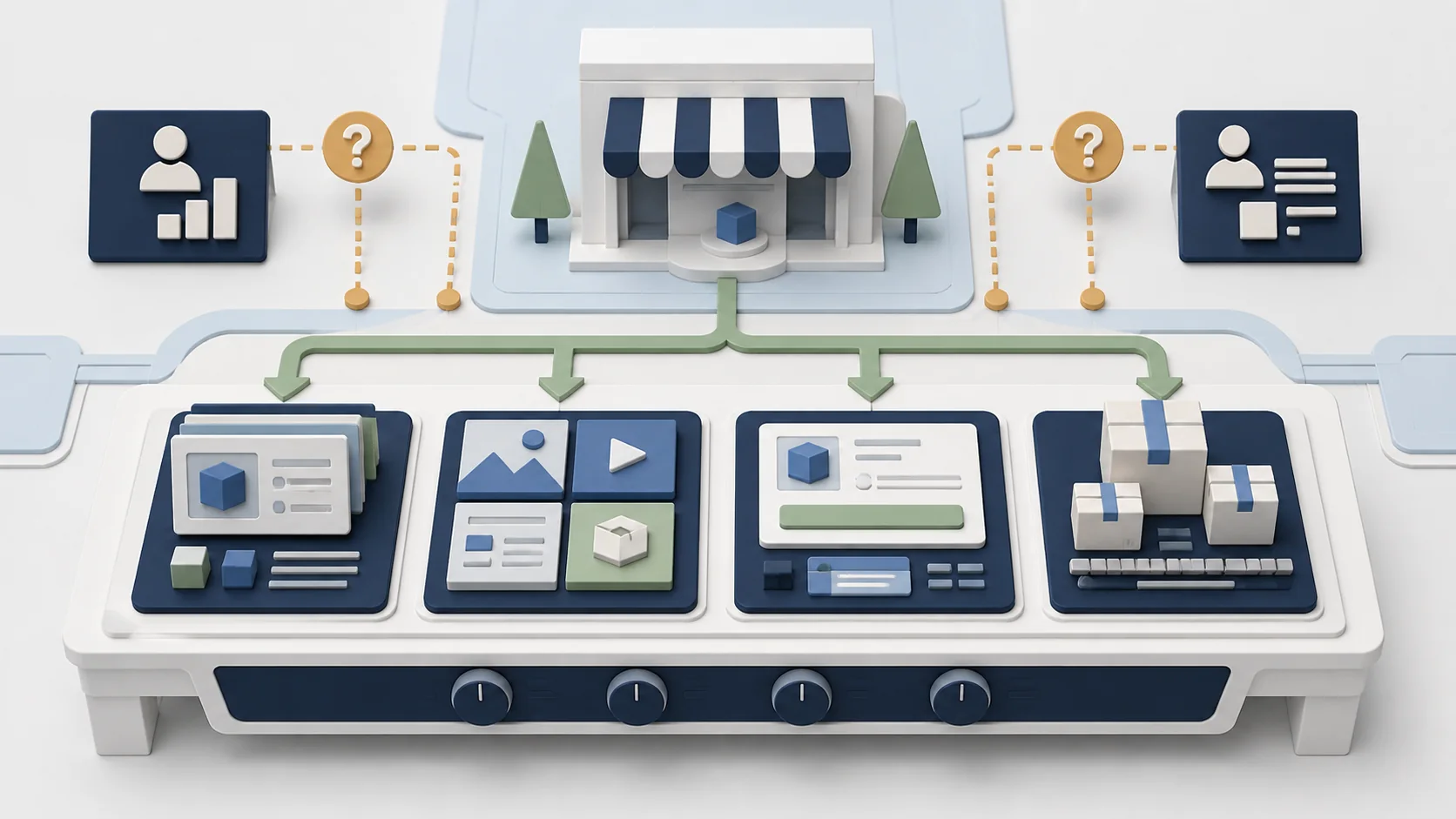
The structural choice for merchant marketing and discovery strategy is whether to continue treating AI-driven traffic as an emerging, secondary channel, or to prioritize it given its documented, quantified conversion advantage over established channels.
- Ownership
Merchant marketing and e-commerce strategy leadership own the decision to specifically measure and prioritize AI-driven discovery traffic, given its 2x new-buyer conversion advantage, rather than folding it into general traffic optimization efforts without channel-specific attention.
- Tradeoff
Investing specifically in AI-discoverability, structuring product content and data for AI assistant comprehension, requires resources that could otherwise go toward established, better-understood marketing channels. The tradeoff against that investment is under-capturing a traffic source that Shopify's own data shows converting at meaningfully higher rates than the alternatives merchants already understand well.
- Human consequence
Shoppers arriving at a merchant's storefront via AI referral are experiencing a more pre-qualified, intent-clarified shopping journey, a genuinely different and, per the conversion data, more satisfying discovery experience than a cold, broad-channel arrival.
Next Move
If you run a Shopify store or similar e-commerce operation: Measure your own conversion rate specifically for AI-referred traffic against other channels, and reallocate discovery investment if the 2x pattern holds true for your business.
If you are structuring product content and merchandising: Optimize specifically for AI assistant comprehension and query-matching, not just traditional search engine or social advertising formats, given the documented conversion advantage this channel now carries.
FAQ
How much did AI-driven traffic and orders grow for Shopify merchants?
In Q2 2026, AI traffic to Shopify storefronts increased 3x year over year, and AI-originated orders tripled in the same period. Shopify's overall GMV reached $116 billion, up 32% year over year, and revenue reached $3.7 billion, up 34%.
Do customers arriving via AI referral actually convert into buyers?
Yes, at a notably higher rate. Shopify's data showed new buyer order rates from AI-driven traffic running 2x higher than orders originating from other channels, suggesting AI-referred shoppers arrive with more pre-qualified purchase intent than traffic from other sources.
How are Shopify merchants themselves using AI, separate from customer-facing traffic?
Shopify's Sidekick AI assistant, used directly by merchants for store management and operations, handled 34 million merchant conversations in Q2 2026, with daily active merchant usage up 3.6x year over year. Merchants also used Sidekick to create 36,000 custom apps in Q2, up from 12,000 in Q1 2026.
What does the higher AI-referral conversion rate suggest for merchant strategy?
That AI-driven discovery channels may be pre-filtering for purchase intent more effectively than traditional traffic sources, meaning merchants optimizing primarily for total traffic volume, rather than for visibility within AI-driven discovery and referral systems specifically, may be under-investing in the channel showing the strongest conversion performance.
Sources & References
Original article archive
Original article published February 4, 2026: "Shopify Wins Great Experience Award For Jan 2026". Preserved here for provenance, historical context, and citation continuity.
The Transformidy Great Experience Award for January 2026 recognizes Shopify for its transformational approach to post-purchase customer experience through its Smart Fulfillment Network initiative, launched in 2025. This new model redefines what last-mile and post-purchase engagement can mean for both merchants and consumers, setting a new success standard across digital retail.
For a decade, Shopify has empowered entrepreneurs to build and scale online stores, but customers increasingly pointed to one consistent friction point: delivery delays and limited fulfillment transparency. With Smart Fulfillment, Shopify has directly addressed this challenge by blending predictive logistics, AI-driven personalization, and sustainability tracking into one integrated experience.
Great Experience Award January 2026
What IS Shopify’s Smart Fulfilment Network?
Shopify’s Fulfilment Network is a geographically distributed grid of third‑party and Shopify‑controlled fulfilment centres connected by machine‑learning that predicts demand, allocates inventory and routes orders intelligently. Inventory is positioned closer to demand hotspots using forecasting models with reported accuracy around 85 percent, which reduces shipping distances and delivery times at scale.
The network syncs in real time with a merchant’s Shopify admin, unifying inventory, order routing, tracking and returns in one place rather than forcing merchants to stitch together multiple 3PL (third party logistics) dashboards. It also supports custom packaging, value‑added services like kitting and returns, and advanced options such as split shipments and dropshipping, so merchants can design fulfilment around their brand rather than a one‑size‑fits‑all workflow.eels personal and intelligent.
Why It Won the Great Experience Award
This initiative stands out because it is designed first for the merchant experience, not just logistics efficiency, fully aligned with Shopify’s philosophy of tying its growth to customer success. By embedding fulfilment inside the existing Shopify experience and removing operational friction, merchants can focus on differentiation and customer relationships while the network quietly handles complexity in the background.
CX Impact: Speed, Transparency and Control
Fast, predictable delivery is now a core CX expectation rather than a “nice to have”, and Shopify’s network responds with 2‑day delivery coverage for most orders in supported regions, which materially increases conversion and repeat purchase intent. Real‑time inventory sync across warehouses prevents overselling and “out‑of‑stock after checkout” moments that erode trust and create avoidable support contacts.

Customers receive integrated tracking, clear shipping options surfaced at checkout and consistent packaging experiences that the merchant controls, so the post‑purchase journey feels coherent instead of outsourced. For merchants, a unified dashboard with live order statuses and alerts means issues can be resolved proactively before they become CX fires, embodying a proactive rather than reactive service posture.
How It Lifts Revenue, Satisfaction and Engagement
Faster fulfilment and reliable 2‑day delivery windows typically drive higher cart conversion and reduce checkout abandonment, particularly on mobile. Data‑driven inventory placement reduces shipping costs and stockouts, simultaneously protecting margins and revenue while maintaining on‑time delivery performance.
Because SFN removes operational overhead, merchants have more bandwidth to invest in acquisition, lifecycle marketing and experience design, reinforcing Shopify’s broader CX flywheel where the platform grows as merchants grow. Over time, smoother post‑purchase experiences increase NPS and repeat purchase rates, turning logistics into a revenue multiplier rather than a hidden tax on growth.
Competitive Landscape: Why Other Brands Should Pay Attention
Shopify’s move positions it as a CX‑first alternative to marketplaces like Amazon, which offer strong logistics but often dilute brand control and direct customer relationships. By combining a powerful logistics backbone with merchant‑owned branding, data and packaging, Shopify narrows the fulfilment gap while preserving the DTC relationship that many brands value.
Other ecosystem players are evolving too: partnerships like Shopify’s collaboration with ShipBob for complex and high‑growth merchants show how platform‑plus‑partner models are emerging as a credible rival to vertically integrated fulfilment giants. For retailers and platforms, the message is clear: the future advantage lies in intelligent orchestration of a network, not just building more warehouses.
Fulfilment Experience Snapshot
Lessons for the CX Community
Shopify’s success story offers a strategic roadmap for CX leaders across sectors. Key takeaways include:
- CX ownership extends beyond the transaction. The moment a product ships, the emotional arc of the experience continues. Effective brands manage this with care and clarity.
- AI transparency builds confidence. Rather than hiding automation, Shopify surfaced it—showing customers why a delivery estimate changed in plain language.
- Sustainability now equals loyalty. Shopify’s optional green-route fulfillment taps into the rise of purpose-driven purchasing, with consumers rewarding brands that help them make responsible decisions.
- CX data must serve both efficiency and empathy. By linking logistic data with emotional cues (e.g., proactive reassurance triggers), Shopify turned insights into personalized action.
Shopify’s Smart Fulfillment Network doesn’t merely enhance operational metrics. It reshapes post-purchase emotional engagement. That balance of speed, trust, and sustainability embodies the essence of modern CX maturity.
Why Other Brands Should Take Notice
CX leaders across industries from financial services to healthcare ecan learn from Shopify’s shift from reactive service recovery to proactive experience orchestration.
- Retailers can replicate predictive fulfillment logic for service appointment scheduling.
- Telecom and utilities can adopt Shopify’s transparency playbook to improve digital billing journeys.
- B2B SaaS platforms can emulate real-time status dashboards to reduce anxiety during onboarding.
This initiative signals the broader 2026 trend: the fusion of logistics and empathy as the new competitive frontier in customer experience. Creating value beyond the sale is now a differentiator, not a delight.
Transform for Better
The Transformidy Great Experience AwardTM for January 2026 celebrates Shopify not only for delivery optimization but for rewriting the post-purchase playbook altogether. Its Smart Fulfillment Network proves that CX excellence begins where the cart ends: in every touchpoint that reassures, informs, and empowers the customer.
Transform for better means rethinking what customers value most: transparency, emotional certainty, and purpose-driven experience. Shopify delivers on all three.
---
GREAT EXPERIENCE AWARDTM
Transformidy’s Great Experience AwardTM is presented monthly and showcases excellence in experience strategy design or execution. Companies are welcomed to submit entrants with support like demos, pictures, videos, press release or description (no bigger than 5Mb in size), for this monthly award with experience ideas, innovations, or initiatives curated for customers, employees, or stakeholders.
Transformidy will evaluate all entrants and will make the final decision on the winner based on factors including but not limited to how the experience(s) transform or improve the way the company engages, acquires, supports, or maintains its customers, employees, or stakeholders. The experience(s) for consideration can be physical, online, or virtual.
HOW CAN WE HELP?
Transformidy is available to assist in helping you understand trust and assess how trustworthy your company is.
Contact us or set up a 30-minute complimentary consultation for more information on our services, insights, or showcases. We look forward to hearing from you.
FAQ
How much did AI-driven traffic and orders grow for Shopify merchants?
In Q2 2026, AI traffic to Shopify storefronts increased 3x year over year, and AI-originated orders tripled in the same period. Shopify's overall GMV reached $116 billion, up 32% year over year, and revenue reached $3.7 billion, up 34%.
Do customers arriving via AI referral actually convert into buyers?
Yes, at a notably higher rate. Shopify's data showed new buyer order rates from AI-driven traffic running 2x higher than orders originating from other channels, suggesting AI-referred shoppers arrive with more pre-qualified purchase intent than traffic from other sources.
How are Shopify merchants themselves using AI, separate from customer-facing traffic?
Shopify's Sidekick AI assistant, used directly by merchants for store management and operations, handled 34 million merchant conversations in Q2 2026, with daily active merchant usage up 3.6x year over year. Merchants also used Sidekick to create 36,000 custom apps in Q2, up from 12,000 in Q1 2026.
What does the higher AI-referral conversion rate suggest for merchant strategy?
That AI-driven discovery channels may be pre-filtering for purchase intent more effectively than traditional traffic sources, meaning merchants optimizing primarily for total traffic volume, rather than for visibility within AI-driven discovery and referral systems specifically, may be under-investing in the channel showing the strongest conversion performance.
Related intelligence
Article
A Third of Walmart's Operating Income Now Comes From Ads and Memberships
Advertising and membership fees now account for a third of Walmart's operating income. Walmart Connect grew 41% in a quarter when retail sales grew about 5%, eight times faster. Retail media margins exceed 70%. Walmart is no longer just a retailer that also sells ads.
Article
Department Store Strategy: Identity vs. Omnichannel
Department stores pursued omnichannel integration to compete with specialists and e-commerce. But integration without identity eroded customer loyalty. Successful stores rebuilt around curation and experience, not channel consolidation.
Article
Millennials Are Going to Dine Out 14 Times a Month in 2026
Millennials plan to dine out 14 times a month in 2026, well above the 10-times average across all Americans. 55% say they will spend even more on restaurants next year. The generation restaurants most need to design a dine-in experience for has already told OpenTable who they are.