
Article
1.66 Million Delayed Flights and a Right Most Travelers Never Check
US airlines had their worst on-time performance since 2014 in 2025: 1.66 million delayed flights, more than 100,000 cancellations. Compensation rights exist in some markets and not others. Many travelers do not know which category their own delay falls into.
- Published
- June 14, 2024
- Updated
- June 18, 2026
- Reading time
- 7 min

2026 updated analysis
What changed since the original article
This page keeps the original Transformidy article as the canonical record and leads with the current interpretation, source notes, and Revenue Unknown framing.
The Worst Year Since 2014
Department of Transportation data shows nearly 1.66 million flights, close to one in four of all flights, failed to arrive on time in 2025, with more than 100,000 flights cancelled by the largest US carriers alone, the worst year for US on-time performance since 2014. That scale of disruption is large enough on its own to be the whole story: roughly one in four passengers flying in the US in 2025 experienced a flight that did not arrive as scheduled.
The regulatory response to disruption at this scale differs sharply depending on where a passenger is flying. Under EU Regulation EC 261/2004, passengers delayed three or more hours at arrival on a qualifying flight can claim between 250 and 600 euros in direct cash compensation from the airline, a legally guaranteed entitlement independent of any goodwill gesture from the carrier. In the US, current Department of Transportation rules guarantee ticket refunds for delays exceeding three hours domestically or six hours internationally, but cash compensation for airline-caused disruptions specifically is not currently mandated.
That gap is under active legislative attention. Representative Emilia Sykes introduced the Airline Passenger Compensation Act, which would require US airlines to provide cash compensation and rebooking assistance to passengers affected by airline-caused delays and cancellations, a framework closer to EU261's guaranteed structure. As of this writing, that legislation remains proposed rather than enacted, leaving a real gap between the two systems for the millions of US passengers affected by 2025's disruption volume.
Flights that failed to arrive on time, close to one in four, the worst year since 2014
Plus more than 100,000 cancellations from the largest US carriers alone.
A Threshold Nobody Checks
Beyond the raw disruption numbers, industry claims-processing patterns point to a consistent secondary gap: a substantial share of EU261-eligible passengers reportedly never file a claim at all, largely because travelers rarely check whether their specific delay crossed the qualifying threshold. No single, precisely quantified figure captures exactly how large that non-filing share is, and this piece will not manufacture one where the underlying data does not support a specific number. But the pattern itself, observed consistently across claims-processing services, is worth taking seriously as a real, if imprecisely sized, gap.
The mechanism behind it is straightforward and worth naming directly: EU261 compensation activates based on a specific, checkable threshold, three or more hours delayed at arrival, on a qualifying route and carrier. A passenger delayed two hours and fifty minutes gets nothing under the regulation; a passenger delayed three hours and five minutes on the identical route can claim real money. Most travelers experiencing the frustration of a delay are not thinking in those precise terms in the moment, and by the time the frustration fades, the specific delay-length detail, and the motivation to check it against a regulatory threshold, often fades with it.
This is a solvable gap, not an inherent one. A passenger, or a business travel program managing disruption on behalf of employees, that builds a simple habit, check the exact delay length against the applicable threshold immediately after any disruption, closes most of this gap without needing new legislation or airline policy change. Given 2025's disruption volume, that habit is worth more in expected value this year than in almost any prior year on record.
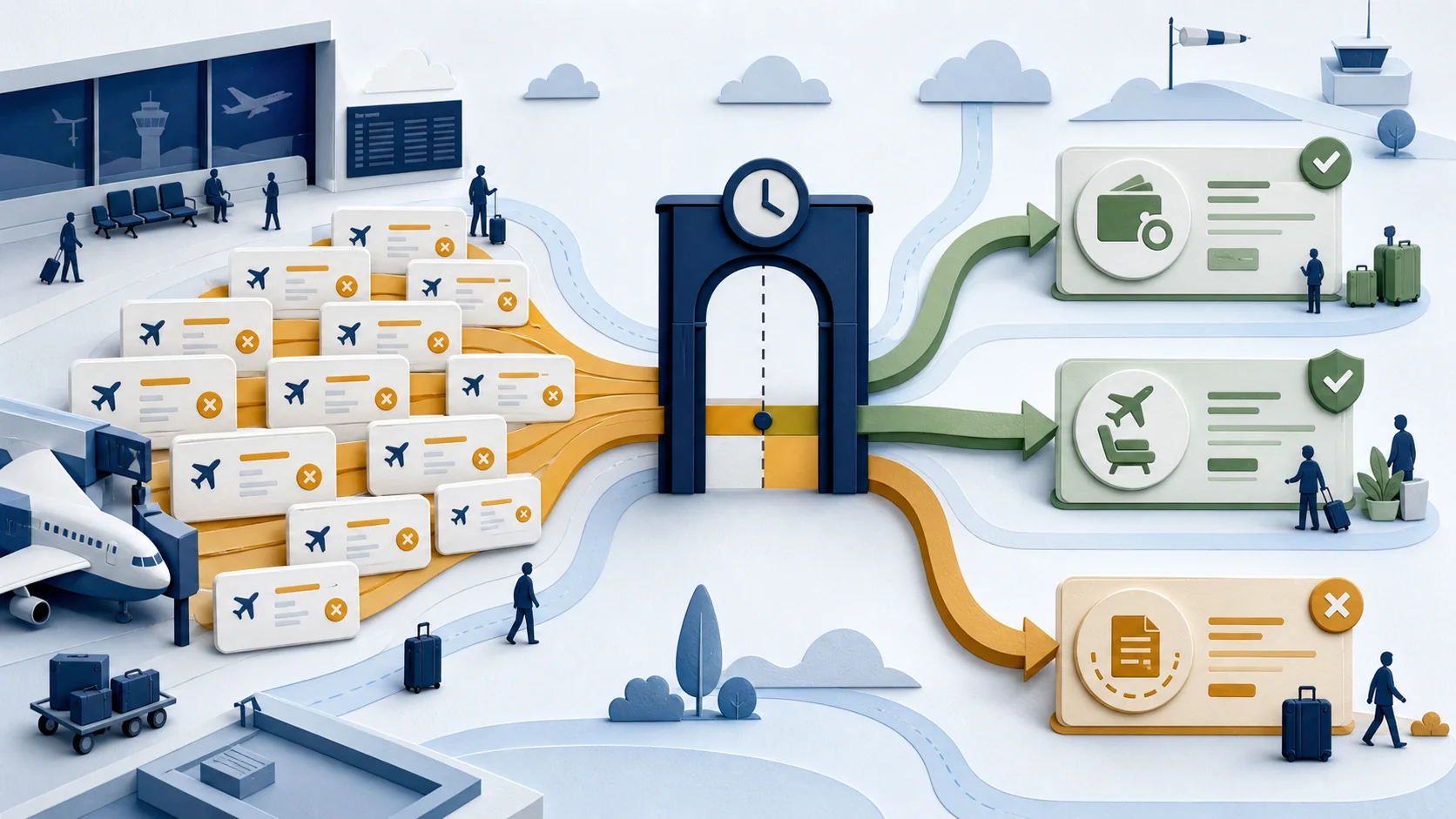
Experiencing the Delay vs. Checking the Threshold
One is unavoidable. The other is a habit most travelers skip.
Experiencing the delay: frustration and lost time, felt by every affected passenger regardless of the delay's exact length. Checking the threshold: comparing the specific delay duration against the applicable regional compensation rule (three hours for EU261, three or six hours for US refund eligibility), a simple step that determines whether the frustration also comes with an entitlement.
The Leadership Move
The structural choice for a business travel program, or any organization booking significant air travel on behalf of employees, is whether to leave compensation claims to individual traveler initiative, or to build a standard process for checking every qualifying disruption against the applicable threshold.
- Ownership
Travel and expense program leadership own the decision to build a standard post-disruption checklist, checking delay length against EU261 or applicable US refund thresholds, rather than relying on individual employees to remember and pursue claims on their own after a stressful travel disruption.
- Tradeoff
Building a systematic disruption-tracking and claims process takes administrative setup that a business may not have previously considered necessary. The tradeoff against that setup is leaving real, quantifiable compensation, up to 600 euros per qualifying EU passenger, unclaimed across a workforce experiencing 2025's record disruption volume.
- Human consequence
An employee or traveler who experiences a qualifying delay and never claims the compensation they were legally entitled to absorbs both the disruption and the missed entitlement, a double cost that a simple checking habit could have prevented.
Next Move
If you manage business travel for a team: Build a standard step into your post-trip process, checking any delay or cancellation against the applicable regional compensation threshold before the claims window closes.
If you travel frequently yourself: Note the exact delay length immediately after any disruption and check it against the relevant threshold, EU261's three hours or the US's three-to-six-hour refund rules, rather than assuming no compensation exists.
FAQ
How bad was US airline on-time performance in 2025?
Department of Transportation data shows nearly 1.66 million flights, close to one in four, failed to arrive on time in 2025, with more than 100,000 flights cancelled by the largest US carriers alone, making it the worst year for US on-time performance since 2014.
What compensation are delayed or cancelled passengers entitled to?
It depends heavily on the market. Under EU Regulation EC 261/2004, passengers delayed three or more hours at arrival on a qualifying flight can claim between 250 and 600 euros in cash compensation. In the US, current DOT rules guarantee ticket refunds for delays exceeding three hours domestically or six hours internationally, but cash compensation for airline-caused disruptions is not currently mandated, though the proposed Airline Passenger Compensation Act would change that if enacted.
Do most eligible passengers actually claim the compensation they are owed?
Industry claims-processing data suggests a substantial share of EU261-eligible passengers never file a claim, largely because travelers do not routinely check whether their specific delay crossed the relevant compensation threshold. No single authoritative figure quantifies the exact non-filing rate, but the pattern is consistently observed across claims-processing services.
What should a traveler or business do given this compensation gap?
Treat checking delay length against the applicable compensation threshold, three hours for EU261, three or six hours for US refund eligibility, as a standard post-disruption step, since the entitlement does not activate automatically and is easy to miss without deliberately checking.
Sources & References
Original article archive
Original article published June 14, 2024: "Travel Disruptions-How The Right Customer Experience Can Build Loyalty". Preserved here for provenance, historical context, and citation continuity.
Travel disruptions are an undeniable fact of life for any traveler. From canceled flights to lost luggage, these unexpected events can throw a wrench into even the most meticulously planned itinerary. However, travel companies have the power to significantly influence how customers experience these disruptions by focusing on customer experience (CX). This article will explore the various types of disruptions that can occur at each stage of travel, the importance of CX during these times, and how travel companies can leverage it to transform a negative situation into a positive brand experience.
The Many Faces of Travel Disruptions
Travel disruptions can occur at any point in the journey, from booking to arrival. Here's a breakdown of some of the most common ones:
- Flight Cancellations: Weather, mechanical issues, and staffing shortages can all lead to flight cancellations. Flight cancellations averaged 2% per month in the first quarter of 2023.
- Flight Delays: Similar factors can cause flight delays, leading to missed connections and disrupted itineraries. The same Airlines for America report states that on-time arrival rates for domestic flights averaged 78.1% in the first quarter of 2023.
- Lost or Delayed Luggage: Checked luggage can be mishandled, causing delays or even getting lost entirely. SITA [SITA. (2023, February 9). Baggage mishandling report 2023. sita.aero] reported a baggage mishandling rate of 6.5 per thousand passengers in 2023.
- Natural Disasters: Hurricanes, floods, and other natural disasters can disrupt travel plans by causing airport closures or forcing changes in itineraries.
- Travel Restrictions: Pandemics, political unrest, and other events can lead to travel restrictions, requiring travelers to adjust their plans.
Why Customer Experience Matters During Travel Disruptions
Travel disruptions are stressful for everyone involved. However, a positive customer experience during these times can go a long way in mitigating frustration and fostering loyalty. Here's why CX is crucial:
- Builds Trust: When a travel company prioritizes customer needs during disruptions, it builds trust and demonstrates a commitment to passenger well-being.
- Reduces Customer Effort: Clear communication, proactive solutions, and a streamlined process for rebooking or compensation minimize the time and effort required from the customer during a stressful situation.
- Enhances Brand Reputation: A positive experience during disruptions can turn a potentially negative situation into a positive brand story, encouraging customer loyalty and positive word-of-mouth marketing.
Before, During and After Travel Disruptions
Before Travel: Proactive Measures Set the Stage
Disruptions can arise even before the journey begins. Here's how CX can make a difference:
- Transparency in Booking: During peak seasons, in weather-prone regions, or during periods of known travel restrictions, clearly communicate potential disruptions to travelers. Avoid sugarcoating the situation; instead, present the facts alongside alternative options. This fosters trust and empowers travelers to make informed decisions.
- Flexible Booking Options: Offer refundable or changeable fares for a modest fee, allowing travelers to adjust plans if unforeseen circumstances arise. This empowers customers and demonstrates the company's understanding that unexpected situations can occur.
- Travel Insurance Recommendations: Educate customers about travel insurance options and their benefits during disruptions such as cancellations or lost luggage. Provide clear information and resources without being pushy, so travelers can make informed choices about protecting their investment.
- Proactive Communication: Utilize email, SMS, or dedicated app notifications to provide real-time updates on potential disruptions. Don't wait until the last minute; keep customers informed throughout the booking process, especially if there are any potential issues on the horizon. This transparency builds trust and demonstrates a commitment to customer well-being right from the start.
By being upfront about potential issues and offering tools to mitigate them, travel companies build trust and demonstrate a commitment to customer well-being right from the outset. This foundation of positive CX sets the stage for a smoother travel experience, even if disruptions occur.
During Travel: Turning Disruptions into Solutions
When travel disruptions occur mid-journey, a positive CX approach is paramount:
- Immediate and Clear Communication: As soon as a potential travel disruption arises, notify customers through multiple channels (email, SMS, app notifications) explaining the situation and offering apologies. Don't leave them in the dark; transparency is key.
- Multiple Rebooking Options: Present clear and concise options for rebooking, including alternative flights, different airlines, or itinerary adjustments. Empower customers by giving them choices and control over their travel plans, even in a disrupted situation.
- 24/7 Customer Support: Ensure readily available customer support through phone lines, live chat features, or social media to address concerns and answer questions promptly. Don't make customers wait on hold or struggle to find help. Be there for them when they need it most.
- Airport Assistance: Offer guidance and support at the airport, helping customers navigate rebooking processes, locate amenities, or arrange accommodations if needed. Go the extra mile by providing dedicated personnel to assist stranded travelers during disruptions. This demonstrates that the company cares about their well-being beyond just a confirmation email.
By prioritizing clear communication, offering flexible solutions, and going the extra mile to assist during disruptions, travel companies can minimize customer frustration and turn a negative experience into a positive one. This focus on CX fosters loyalty; customers are more likely to return to a company that helped them navigate a challenging situation effectively.
After Travel: Addressing Concerns and Building Loyalty
The impact of travel disruptions can linger even after the journey. Here's how CX can continue to shine:
- Post-Travel Communication: Follow up with customers after a travel disruption to ensure their needs were met and gather feedback on their experience. Don't assume everything is fine; actively seek their input to identify areas for improvement.
- Efficient Claims Resolution: Streamline the process for filing and resolving claims related to cancellations, delays, or lost luggage. Don't make customers jump through hoops to get what they're owed. Make the process clear, efficient, and hassle-free.
- Compensation Options: Offer fair compensation for disruptions, such as vouchers for future travel or airport lounge access, demonstrating a commitment to customer satisfaction. Go beyond a simple apology; show customers that you value their business and understand the inconvenience they experienced.
- Personalized Recovery Efforts: Go beyond basic compensation by offering personalized gestures of goodwill, such as a discount on a future trip or complimentary upgrades based on the severity of the disruption. A handwritten note of apology or a targeted promotion tailored to the customer's preferences shows that the company cares about the individual customer and their experience.
Case Study: Turning Travel Disruption Into Delight
Let's consider a fictional example: Sarah books a family vacation to Hawaii through TravelEase, a travel agency known for its exceptional customer service. Unfortunately, their flight is cancelled due to a sudden snowstorm. Here's how TravelEase (a can leverage CX to manage the situation:
- Proactive Communication: TravelEase immediately sends an email and SMS notification to Sarah, informing her of the cancellation and offering apologies. They also provide a dedicated phone number for assistance.
- Multiple Rebooking Options: TravelEase agents work with Sarah to explore various rebooking options, including flights on different airlines, alternative travel dates, or even a full refund if needed.
- Accommodation Assistance: If Sarah's original hotel reservation is affected by the delay, TravelEase helps her contact the hotel to adjust her booking or find alternative accommodations.
- Keeping Sarah Informed: TravelEase provides regular updates on the situation and any changes to her rebooked flights or itinerary.
By prioritizing clear communication, offering flexible solutions, and going the extra mile to assist Sarah, TravelEase can turn a frustrating situation into a positive experience that builds brand loyalty and encourages her to recommend them to others.
This example can also be extended for online travel agencies, airlines, airports, and other travel aligned companies serving customers.
Southwest
During the 2022 holiday period, Southwest Airlines experienced unexpected system issues that created travel disruptions for thousands of travellers looking to spend time with family and friends in a crucial period. The airline went above and beyond to reach out to affected customers with daily alerts, refund options, and obtained feedback to be a better airline.
With the new processes in place, the airline recovered and scored first in the J.D. Power 2023 North America Airline Satisfaction Index.

Measuring the Impact of CX During Disruptions
To understand how CX impacts travel disruptions, travel companies can utilize various metrics:
- Customer Satisfaction Scores: Gather feedback through surveys or reviews to gauge customer satisfaction with how their disruption was handled. Consider using other scores in combination to Net Promoter Score to segment out the beyond, during, and after travel support satisfaction.
- Resolution Time: Track the average time it takes to resolve customer issues arising from travel disruptions. This might include resolving a flight cancellation with alternatives, processing claims, serving a delight during/after travel for a before travel disruption.
- Number of Rebooked Flights: Monitor the number of flights rebooked due to disruptions and customer retention rates after rebooking.
- Social Media Sentiment: Analyze social media mentions to understand customer sentiment during disruptions and identify areas for improvement.
- Customer Effort Score (CES): Measure the effort required by customers to resolve issues related to disruptions, aiming for a low CES score.
By tracking these metrics, travel companies can identify areas where CX can be improved during disruptions. There is no one metric to understand all the signals provided in managing travel disruptions. Feeling overwhelmed with data? Operators should focus on where the travel disruptions are impacting customers' trust the most (especially those that would impact future travel choices).
How Can We Help?
Transformidy is available to assist in different aspects of your company’s customer experience journey from transformation work, training, and partnership.
Contact us or set up a 30 minute complimentary consultation for more information on our services, insights, or showcases. We look forward to hearing from you.
FAQ
How bad was US airline on-time performance in 2025?
Department of Transportation data shows nearly 1.66 million flights, close to one in four, failed to arrive on time in 2025, with more than 100,000 flights cancelled by the largest US carriers alone, making it the worst year for US on-time performance since 2014.
What compensation are delayed or cancelled passengers entitled to?
It depends heavily on the market. Under EU Regulation EC 261/2004, passengers delayed three or more hours at arrival on a qualifying flight can claim between 250 and 600 euros in cash compensation. In the US, current DOT rules guarantee ticket refunds for delays exceeding three hours domestically or six hours internationally, but cash compensation for airline-caused disruptions is not currently mandated, though the proposed Airline Passenger Compensation Act would change that if enacted.
Do most eligible passengers actually claim the compensation they are owed?
Industry claims-processing data suggests a substantial share of EU261-eligible passengers never file a claim, largely because travelers do not routinely check whether their specific delay crossed the relevant compensation threshold. No single authoritative figure quantifies the exact non-filing rate, but the pattern is consistently observed across claims-processing services.
What should a traveler or business do given this compensation gap?
Treat checking delay length against the applicable compensation threshold, three hours for EU261, three or six hours for US refund eligibility, as a standard post-disruption step, since the entitlement does not activate automatically and is easy to miss without deliberately checking.
Related intelligence
Article
A Domestic Airport Bet Its Rebrand on a Character the World Already Knew
Oita rebranded its airport, which primarily serves domestic flights, into Hello Kitty Airport for six months in 2025, betting Sanrio's global fame could redirect Tokyo and Osaka's Expo crowds toward Kyushu. Public results remain limited. The bet itself is the story.
Article
Loyalty Programs as Business Model: Strategy Over Retention Tactics
Loyalty programs matured from retention tactics to business model drivers. Industry data shows 90% of programs report positive ROI, but the returns are concentrated among members who actually redeem and engage—not the full enrolled base.
Article
Eleven Straight Years Is Not an Execution Score
Air France has won France's Customer Relations Award for transport 11 years running. The survey behind it scores three separate things: execution, bond, and emotion. Eleven straight years suggests the company is not just executing well, it is winning on the two harder-to-fake dimensions.