
Article
Southwest's CEO Says 80% Wanted This. The Backlash Says Otherwise.
Southwest ended more than five decades of open seating on January 27, 2026. Its CEO says 80% of customers wanted assigned seats. The backlash that followed suggests the number and the reaction are measuring two different things.
- Published
- September 27, 2024
- Updated
- June 18, 2026
- Reading time
- 8 min
2026 updated analysis
What changed since the original article
This page keeps the original Transformidy article as the canonical record and leads with the current interpretation, source notes, and Revenue Unknown framing.
Ending a 54-Year-Old Signature
Southwest rolled out assigned seating on January 27, 2026, ending more than five decades of its signature open-seating boarding process, replacing it with four fare categories, Basic, Choice, Choice Preferred, and Choice Extra, each carrying different levels of seat selection privilege and boarding priority. The airline also introduced checked bag fees for the first time, $35 for a first bag and $45 for a second, effective May 2025, on a carrier that carried 134 million passengers in 2025 and holds an 18% share of the US market, tied with United.
One of the stated justifications for the shift is direct: revenue diversification. Under the old open-seating system, Southwest had limited ability to monetize seat selection the way competitors long have. CEO Bob Jordan has publicly defended the change with a specific number: 80% of Southwest customers would prefer an assigned seat. That figure, whatever survey or research it draws from, is the company's primary evidence that this was a customer-driven decision, not just a revenue-driven one.
What followed launch complicates that framing. Social media reaction skewed sharply negative, with representative complaints centering on paying more for what customers experienced as an identical economy seat, and a broader sense of losing the airline's distinctive culture. One customer's comment, quoted in coverage, was blunt: "They've ruined their brand." That is not the reaction typically associated with implementing a change 80% of your customer base already wanted.
Of customers, per Southwest's CEO, would prefer an assigned seat
Cited as justification for ending 54 years of open seating; visible backlash and rapid post-launch fixes followed regardless.
The Fixes Tell You What the Survey Missed
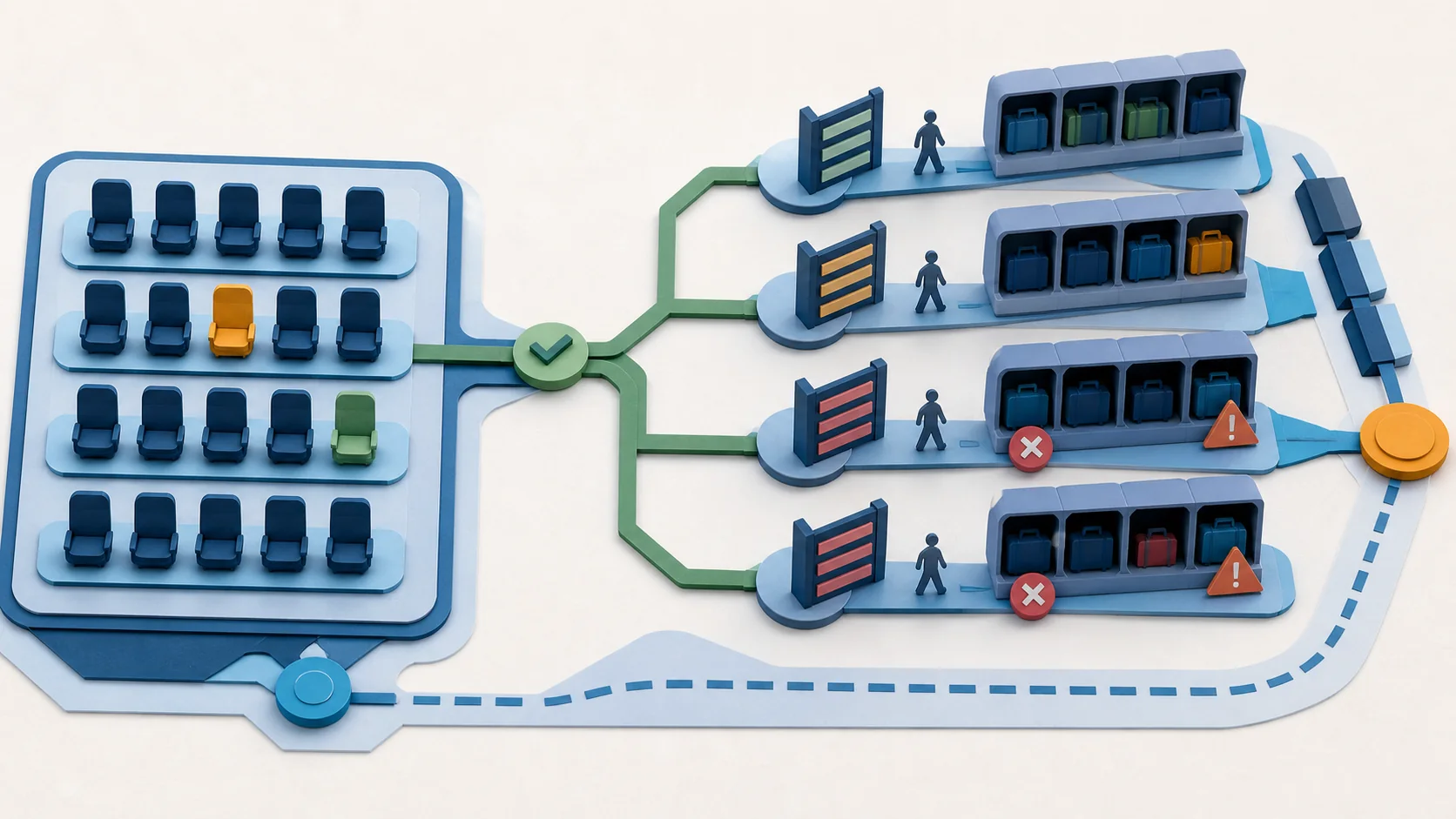
The most reliable evidence in this story is not the 80% figure and not the social media backlash individually; it is what Southwest chose to actually change after launch. A company confident that its rollout matched customer expectation does not commit, within weeks, to fleet-wide overhead bin upgrades, revised boarding-group logic, and relocated crew storage. Those are specific, costly, operationally significant corrections, and they target exactly the friction points customers were complaining about: bin access and boarding order confusion.
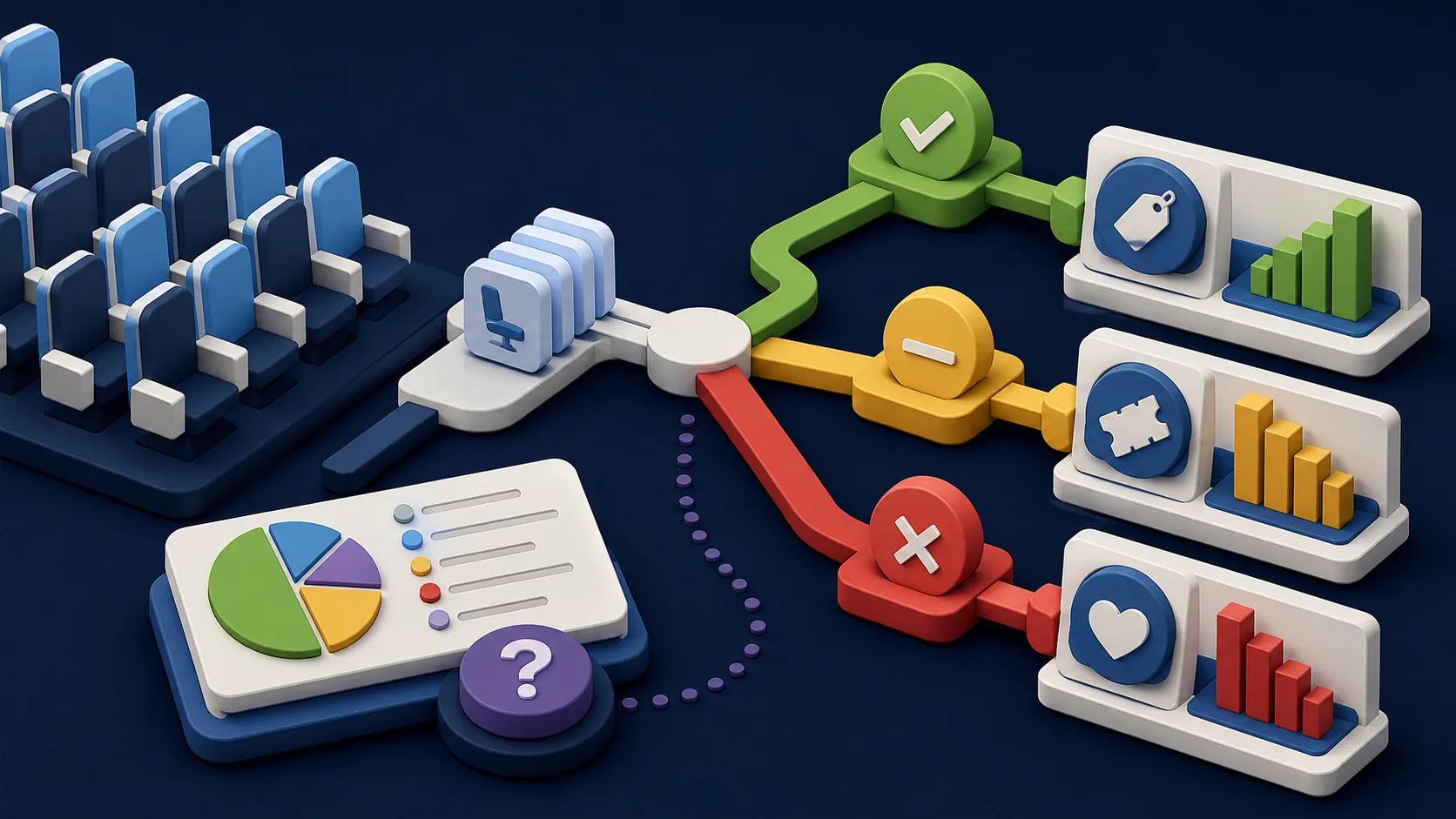
That gap between the survey number and the operational response is instructive beyond this one airline. An abstract preference question, would you prefer X in general, routinely returns more favorable numbers than the same customers give once X arrives with a price tag, a new fee structure, and predictable early-rollout bugs. Southwest's 80% figure may be entirely accurate as a response to the abstract question. It was never going to be a reliable predictor of reaction to the specific, monetized, imperfectly executed version of that preference that actually shipped.
The distinction matters for any business using a preference survey to justify a major experience change. The survey answer measures intent under ideal, hypothetical framing. The customer reaction after launch measures the actual implementation, fees and all. Treating the first as proof the second will go smoothly is the mistake Southwest's own post-launch corrections now quietly acknowledge.
Abstract Preference vs. Priced Reality
One measures intent. The other measures the actual bill.
Abstract preference: "Would you prefer an assigned seat?" answered favorably at 80%, in isolation from price or process. Priced reality: the same customers experiencing new fare tiers, checked-bag fees, and overhead-bin scarcity simultaneously, producing a measurably different reaction that required Southwest to revise its own rollout within weeks.
The Leadership Move
The structural choice for any leadership team using a customer preference survey to justify a major, monetized experience change is whether to treat the survey number as sufficient validation, or to pressure-test it against the specific, priced version of the change before full rollout.
- Ownership
Product and customer experience leadership own the responsibility to test a preference finding against the actual priced, operational implementation, not just the abstract version of the question, before committing to a full-scale rollout of a brand-defining change.
- Tradeoff
Southwest gained the ability to monetize seat selection, a real and previously unmonetized revenue opportunity given its market position among the Big Four carriers controlling 75% of US industry seats. The tradeoff has been visible, public brand-loyalty friction and the cost of rapid post-launch operational fixes it might have avoided with more implementation-specific testing beforehand.
- Human consequence
Longtime Southwest customers who valued the airline's open-seating culture specifically are experiencing the loss of that distinctive identity, a felt consequence a preference survey framed around seat assignment alone did not capture.
Next Move
If you are using a preference survey to justify a major experience or pricing change: Test the priced, operational version of the change, not just the abstract preference question, with a representative customer group before full rollout.
If you already launched and are seeing backlash despite favorable survey data: Treat the gap itself as the signal. Southwest's rapid operational corrections show that acting on the gap quickly, rather than defending the original survey number, is the more credible response.
FAQ
When did Southwest Airlines end open seating?
Southwest rolled out assigned seating on January 27, 2026, ending more than five decades of its signature open-seating boarding process. The airline moved to four fare categories, Basic, Choice, Choice Preferred, and Choice Extra, each offering different levels of seat selection and boarding priority.
Did customers actually want this change?
Southwest CEO Bob Jordan has stated that 80% of Southwest customers would prefer an assigned seat, a figure the company has used to justify the change. But that stated preference did not prevent significant customer backlash after launch, including complaints about paying more for equivalent economy seats and losing the airline's distinctive boarding culture, with the company acknowledging it needed to refine the policy in response.
What is Southwest actually changing in response to the backlash?
Southwest is installing larger overhead bins with up to 50% more capacity across most of its fleet by the end of 2026, adding signage for bin space above extra-legroom seats, revising boarding group logic to better reward loyalty and higher-fare passengers, and moving the crew's overhead bin section to the rear of the aircraft, all changes aimed at fixing operational friction the new system introduced.
Why does an 80% preference statistic and visible backlash coexist?
A stated preference collected in survey form (would you prefer an assigned seat, in the abstract) can differ substantially from a customer's reaction to the specific, priced implementation of that preference, including new fees, fare-tier complexity, and operational bugs like overhead bin access. The two numbers answer different questions, even when both are accurate.
Sources & References
Original article archive
Original article published September 27, 2024: "5 Ways Southwest Improves Revenue With Best In Class Customer Experience". Preserved here for provenance, historical context, and citation continuity.
Southwest Airlines has taken a bold step with its “Southwest Even Better” initiative, a multi-year, multi-billion strategy designed to enhance customer experience (CX) and drive revenue growth. The Dallas-based airline highlighted key pieces of its strategic roadmap during Investor Day on September 26, 2024. The Transformidy insight explore the five key ways the airline embodies customer experience to drive revenue growth in the next three ways.
Southwest Airlines - Introduction
Southwest Airlines, founded in 1967 by Herb Kelleher and Rollin King, has grown into one of the largest and most profitable airlines in the world, known for its low-cost, customer-centric approach. Initially, the airline started as a regional carrier in Texas, serving three cities—Dallas, Houston, and San Antonio—with a focus on point-to-point routes instead of the traditional hub-and-spoke model used by most airlines.
This operational efficiency allowed Southwest to offer lower fares and attract a loyal customer base. Today, it serves over 100 destinations across the U.S. and international markets, flying more passengers domestically than any other U.S. airline.
Customer Experience Achievements
Southwest's reputation for customer service is a cornerstone of its success. The airline has consistently been recognized for its friendly, helpful staff, no-frills approach, and transparent pricing (no hidden fees). Its Net Promoter Score is a +47 and is consistently one of the best in the airline industry.
Southwest was the only North Americas airline to not charge fees for baggages and changes for all fare types. Its Rapid Rewards loyalty program is also highly regarded for its simplicity and value, offering customers flexible ways to earn and redeem points.
Southwest has won numerous accolades over the years, including the J.D. Power Award for customer satisfaction, ranking at the top for customer service among North American airlines in the low to ultra low cost segment. The company’s commitment to customer service extends beyond the flight experience to its proactive engagement with customers, including its social media presence and customer care teams as shown during the system disruptions back in 2022 (Read more on the airline's recovery below).
What Is The “Southwest Even Better” Initiative?
The "Southwest Even Better" initiative unveiled during its 2024 Investor Day is aimed to extend its financial success through customer experience enhancements, operational maximization, and disciplined management. The goal of the initiative is to improve revenue by US$4 billion by 2027 while providing customers with better overall experiences.
Customer Experience Drives Future Growth
Over the past five years, Southwest embarked on a journey to obtain a deep understanding of customer expectations, actions, and behaviors through analyzing surveys, studies, search data, transaction data, and other data. Thousands of its passengers participated and the airline determined five key customer experience areas that will drive future growth.
1. Premium Seating and Upgraded Cabin Design
Southwest has long maintained its open seating policy, but in response to evolving customer preferences, the airline plans to introduce premium (extra pitch of up to 5") seating options (see below for more comparison). In addition, open seating many customers shy away from has been replaced with advanced seating selection (complimentary for most of its fare types). This shift is a direct response to feedback from frequent travellers who have expressed interest in more comfortable for longer flights and assigned seating arrangement for consistency with other airlines.


This offering will help the airline attracts both leisure and business travellers looking for an enhanced in-flight experience without the high price tag often associated with other premium airlines. The old boarding concept with pillars will be modified so that passengers can still line up earlier if they wish.
In addition to seating changes, the airline continues to modernize its cabin interiors, introducing new designs that feature 20-40% larger overhead bins, in-seat power outlets (USB-A/USB-C), and increased WiFi capabilities. These upgrades are aimed at addressing some of the most common customer complaints—lack of storage space, limited in-flight connectivity, and the inability to charge personal devices during flights. The refreshed cabin designs will make long flights more enjoyable, attracting tech-savvy passengers and those who prioritize comfort (StreetInsider.com).

2. Modernized Fleet for Better Efficiency, Global Partner Program, Red-Eye Flight Additions and Getaway Vacations.
Southwest is not only focused on upgrading its cabin design but also on modernizing its entire fleet. With the help of newer Boeing 737 MAX aircrafts, the airline aims to have an average fleet age of just five years by 2031. The fleet of nearly 700 aircrafts will significantly reduce operational costs and improve flight efficiency. A newer fleet translates to fewer mechanical issues, lower fuel consumption, and, most importantly, fewer delays—one of the biggest contributors to a negative customer experience in the airline industry.
The fleet modernization is a direct response to passenger concerns about punctuality and flight reliability. The new aircraft models are also designed to provide a quieter, more comfortable ride, enhancing the in-flight experience from takeoff to landing. Southwest’s strategy here focuses on both operational efficiency and customer satisfaction, ensuring passengers experience fewer disruptions during their travel.
Low cost and ultra low costs carrier often work as an independent entity and do not always have the capability and technology to partner with other airlines. Southwest's recent reservation system upgrades allow the airline to build a new partnership network to cross sell seats in one itinerary in 2025/6. The first announced airline partner is Icelandair with flights being sold from Baltimore, Maryland.

Additionally, the airline will start flying red-eye flights from the west coast and Hawaii to the east coast to better align with customers' schedules. This enhancement contributes to higher utilization, yields, and more flight options without the need for more aircrafts.
Getaways by Southwest will replace the Southwest Vacations brand that is outsourced to the Apple Leisure Group currently. By operating the business entirely in house, the airline will be able to form relationships with hotel chains, car rental companies, tour groups, and other vendors directly and negotiate the best deal for its customers. The Getaways by Southwest packages will be available sometime in 2025 and will be sold directly within Southwest's website and at other direct channels.
3. Enhanced Loyalty Program and More Customer Perks
While Southwest’s Rapid Rewards loyalty program has been a major success, the airline is not sitting still and will revamp the program along with its credit card offering in a bid to be more appealing to customers. By offering more flexibility in redeeming points and adding new perks for frequent flyers, Southwest aims to boost customer retention and encourage repeat business (e.g., for more leg room seats, red-eye flights, and vacation packages). These improvements come as a response to frequent travellers who want more value from loyalty programs. The goal is get travellers to fly more, spend more, and redeem more flights.

By improving its loyalty program, Southwest not only strengthens its relationship with existing customers but also makes its offerings more competitive against other airlines. Passengers who are loyal to other competing airlines like Frontier, Spirit, JetBlue and others may consider Southwest as an alternative that offers a more straightforward and rewarding loyalty experience with faster redemption options.
4. Streamlined Operations for Improved On-Time Performance
Operational efficiency has always been at the heart of Southwest’s business model, and the company is taking steps to ensure that its flights remain on schedule. Through optimized scheduling, enhanced supply chain management, and better use of data analytics, Southwest is tackling one of the biggest pain points in air travel: delays.
Customers have made it clear that they value punctuality, and Southwest is listening. By investing in technology that improves flight scheduling and reduces turnaround times, the airline aims to deliver on-time performance that rivals, or even exceeds, that of its competitors. This focus on operational efficiency also aligns with Southwest’s larger goal of reducing costs, which will help the airline keep ticket prices competitive while still offering a superior customer experience.
5. Investment in Technology and Customer-Centric Innovation
Finally, Southwest is focusing heavily on technology to enhance the overall customer journey. From improvements to the mobile app to AI-driven solutions for customer service, the airline is leveraging cutting-edge innovations to make the travel experience smoother and more personalized. Customers have come to expect seamless, tech-enabled interactions with brands, and Southwest is responding to this demand by making it easier for passengers to book flights, check in, and manage their trips online.
In addition to app enhancements, Southwest is also exploring ways to use data analytics to better understand customer preferences and tailor its offerings accordingly. This approach will allow Southwest to not only improve the in-flight experience but also deliver more relevant marketing and loyalty incentives to its passengers.
Finally, Southwest worked hard on building better fare discovery over the years. Passengers doing price comparisons can find the airline featured on Google Flights along with Kayak. Skyscanner will be the next in line to be integrated to maximize customer reach.

Transform For The Better
Southwest Airlines is well-positioned to continue its legacy of superior customer experience while driving revenue growth. The “Southwest Even Better” initiative is a testament to the airline’s commitment to listening to its customers and building a travel experience that meets their needs. By focusing on premium seating, fleet modernization, loyalty program enhancements, operational efficiency, and technology innovation, Southwest is setting itself apart from competitors.
Looking to the future, the airline must continue to adapt to the evolving needs of travellers, particularly as competitors push the envelope with premium offerings and technological advancements. If it can maintain its unique blend of affordability, customer-centric service, and operational excellence, the airline will continue to dominate the low coat segment while delivering on its promise of a truly exceptional customer experience.
Finally, in a nod to paying close attention to customer needs, two pieces of baggage will continue to be a complimentary and differentiating feature on Southwest Airlines.
How Can We Help?
Transformidy is available to assist in helping you understand your brand's value proposition and maximize your customer experience strategy for business growth, engagement, and satisfaction.
Contact us or set up a 30-minute complimentary consultation for more information on our services, insights, or showcases. We look forward to hearing from you.
FAQ
When did Southwest Airlines end open seating?
Southwest rolled out assigned seating on January 27, 2026, ending more than five decades of its signature open-seating boarding process. The airline moved to four fare categories, Basic, Choice, Choice Preferred, and Choice Extra, each offering different levels of seat selection and boarding priority.
Did customers actually want this change?
Southwest CEO Bob Jordan has stated that 80% of Southwest customers would prefer an assigned seat, a figure the company has used to justify the change. But that stated preference did not prevent significant customer backlash after launch, including complaints about paying more for equivalent economy seats and losing the airline's distinctive boarding culture, with the company acknowledging it needed to refine the policy in response.
What is Southwest actually changing in response to the backlash?
Southwest is installing larger overhead bins with up to 50% more capacity across most of its fleet by the end of 2026, adding signage for bin space above extra-legroom seats, revising boarding group logic to better reward loyalty and higher-fare passengers, and moving the crew's overhead bin section to the rear of the aircraft, all changes aimed at fixing operational friction the new system introduced.
Why does an 80% preference statistic and visible backlash coexist?
A stated preference collected in survey form (would you prefer an assigned seat, in the abstract) can differ substantially from a customer's reaction to the specific, priced implementation of that preference, including new fees, fare-tier complexity, and operational bugs like overhead bin access. The two numbers answer different questions, even when both are accurate.
Related intelligence
Article
AI in Hospitality: Personalization and Guest Experience Risk
Hotels deployed AI for personalization and staff augmentation. But automation that removes human touch from high-stakes moments (room issues, service recovery) creates guest frustration. Successful properties used AI to enable staff, not replace judgment.
Article
Loyalty Programs as Business Model: Strategy Over Retention Tactics
Loyalty programs matured from retention tactics to business model drivers. Industry data shows 90% of programs report positive ROI, but the returns are concentrated among members who actually redeem and engage—not the full enrolled base.
Article
The Fault That Shut Heathrow Was Flagged Seven Years Earlier
A moisture reading flagged a failing transformer bushing at Heathrow's power substation in 2018. Nobody replaced it. Seven years later, that exact part failed, shut the airport for 18 hours, and disrupted 270,000 passengers. The warning was not missing. It was ignored.